


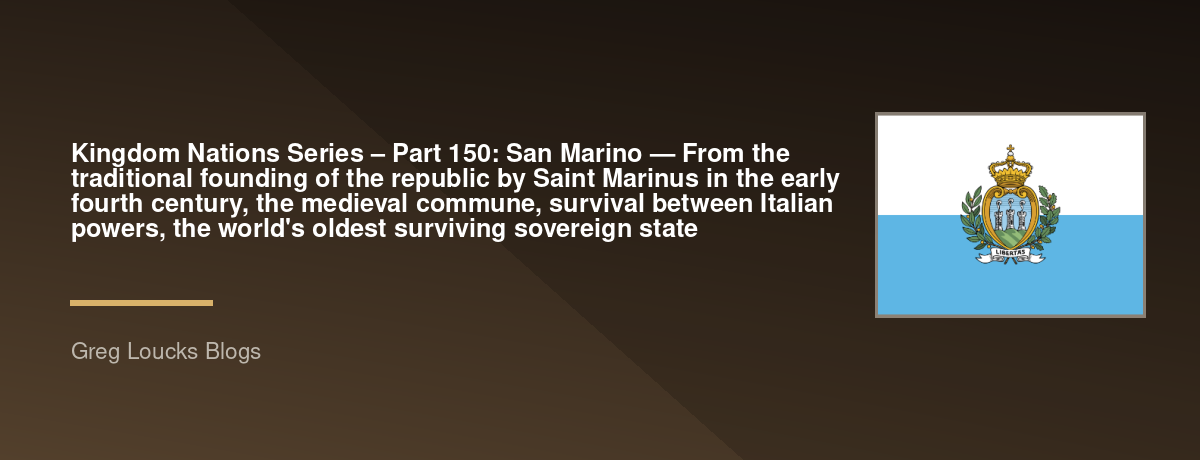
🌎 Kingdom Nations Series – Part 150: 🇸🇲 San Marino — From the traditional founding of the republic by Saint Marinus in the early fourth century, the medieval commune, survival between Italian powers, the world's oldest surviving sovereign state
🌎 Kingdom Nations Series – Part 150 🇸🇲 Chapter 1 – Part 1 San Marino: The Ancient Republic on the Mountain Saint Marinus, the Founding Tradition, the World's Oldest Surviving Republic, Monte Titano, the Three Towers, Borgo Maggiore, Serravalle, Catholic Christianity, Giuseppe Garibaldi, Italian Unification, World War II, Neutrality, Modern San Marino, Tourism, Culture, and San Marino's Kingdom Calling "The LORD shall preserve thy going out and thy coming in from this time forth, and even for evermore." — Psalm 121:8 Introduction San Marino is one of the world's most remarkable countries. It is: Tiny. Ancient. Independent. And: Surrounded completely by Italy. The Republic of San Marino occupies a small mountainous territory on the: Italian Peninsula. Its capital is: San Marino. Its most famous landmark is: Monte Titano. Three medieval towers stand upon the mountain: Guaita. Cesta. and: Montale. Together they have become the defining symbols of: San Marino. The country's traditional founding story reaches back to: Saint Marinus. According to tradition, Marinus was a Christian stonemason from the island of: Rab in the Adriatic. He came to the area around: Rimini and eventually established a Christian community on: Monte Titano. Tradition places the founding of San Marino in: 301 AD. Whether every detail of the traditional account can be historically verified is a separate question. But the tradition itself became foundational to: San Marino's identity. For more than a millennium, the community developed institutions of: Local government. Self-rule. Christian faith. Communal responsibility. And: Political independence. San Marino therefore became an extraordinary historical survivor. While kingdoms, empires, republics, and city-states rose and disappeared around it: San Marino endured. Where Is San Marino? San Marino is located in: Southern Europe. Italian Peninsula The republic lies on: The Italian Peninsula. Enclave San Marino is: Completely surrounded by Italy. Italy Its only neighboring country is: Italy. Adriatic Sea The Adriatic coast lies: East of San Marino. Rimini The Italian city of: Rimini is nearby. Monte Titano The country's dominant geographical feature is: Monte Titano. Monte Titano The mountain rises to approximately: 739 meters. Three Towers The summit contains: Guaita. Cesta. Montale. Guaita Guaita is the oldest and most famous of the: Three Towers. Cesta Cesta stands on another summit of: Monte Titano. Montale Montale is the smallest of the: Three Towers. UNESCO The historic center of San Marino and Mount Titano are recognized as: A: UNESCO World Heritage Site. Historic Center The capital's historic center preserves: Medieval streets. Stone buildings. Churches. Government buildings. Fortifications. Capital The capital is: City of San Marino. Borgo Maggiore Borgo Maggiore is one of the republic's major: Municipalities. Serravalle Serravalle is the largest municipality by population. Castello San Marino's municipalities are traditionally known as: Castelli. Nine Castelli The republic is divided into: Nine castelli. Small Country San Marino is one of the: Smallest sovereign states in Europe. Microstate It is classified as: A European microstate. Ancient Republic But its historical significance is: Far larger than its territory. Saint Marinus The nation's traditional founder is: Saint Marinus. Marinus Tradition says Marinus was: A Christian stonemason. Dalmatia He is traditionally associated with: Dalmatia. Rab Tradition places his birthplace on: Rab in the Adriatic. Rimini Marinus came to the region around: Rimini. Christian Community He established a: Christian community. Monte Titano He eventually established himself on: Monte Titano. 301 AD Traditional founding date: 301 AD. Foundation Tradition The traditional story is central to: San Marino's national identity. Saint Marinus His name became: San Marino. Republic San Marino developed into: A self-governing community. Christian Republic Its identity became closely associated with: Christianity. Catholic Christianity Roman Catholicism remains: The dominant religion. Basilica The: Basilica of San Marino stands in the capital. Basilica di San Marino The basilica is dedicated to: Saint Marinus. Saint Marinus The saint became: The republic's patron. Faith Christianity influenced: San Marino's culture. Community Religious and civic life historically developed: Together. Medieval San Marino During the Middle Ages, San Marino developed: Fortifications. Government institutions. Territorial independence. Fortifications Monte Titano provided: A natural defensive position. Towers The Three Towers protected: The mountain community. Guaita Guaita served as: A fortress. Cesta Cesta also served: A defensive purpose. Montale Montale formed part of: The defensive system. Medieval Europe San Marino survived among: Competing Italian powers. City-States Medieval Italy contained: Many independent cities and territories. Papal States San Marino existed near: The Papal States. Dukedoms It also existed near: Italian duchies. Republics Other Italian republics included: Venice. Genoa. Independence San Marino's survival depended upon: Diplomacy. Geography. Local institutions. And: Careful neutrality. Sovereignty The republic gradually developed: A durable tradition of sovereignty. Government San Marino is: A parliamentary republic. Captains Regent One of the country's most unusual institutions is: The: Captains Regent. Two Heads of State San Marino has: Two Captains Regent serving simultaneously. Term Their term lasts: Six months. Ancient Institution The system dates back: To the medieval period. Checks and Balance Having two heads of state reflects: A long tradition of shared authority. Parliament The legislature is: The: Grand and General Council. Council The council is: The national legislative body. Democracy Modern San Marino is: A democratic republic. Constitution Its constitutional system developed through: Centuries of statutes and institutions. Statutes San Marino's legal tradition is: Extremely old. Political Survival The republic survived by: Adapting. Italian Unification The nineteenth century brought: The unification of Italy. Giuseppe Garibaldi San Marino is associated with: Giuseppe Garibaldi. Garibaldi Garibaldi, one of the central figures of Italian unification, sought refuge in: San Marino during: Garibaldi San Marino granted: Protection. Garibaldi's Army Garibaldi and his followers were: In a difficult position. Republic San Marino's neutrality and independence helped: Protect the community. Italian Unification When Italy unified, San Marino: Remained independent. Sovereignty This was one of the great achievements of: San Marino's diplomacy. Italy San Marino developed a close relationship with: Italy. Treaty The republic entered into: Treaties with: Italy. Cooperation The two states maintain: Close economic and political relations. World War I San Marino maintained: Its independent identity. World War II San Marino attempted to remain: Neutral. Refugees During World War II, San Marino became a refuge for: People fleeing the conflict. Thousands Large numbers of displaced people sought: Safety. Neutrality Neutrality became: A humanitarian responsibility. Bombing San Marino itself was mistakenly bombed by: British forces in: World War II The event demonstrated: The dangers facing small neutral states. Postwar After the war, San Marino rebuilt: Its economy. Modern Republic San Marino became increasingly connected with: Italy. Europe The republic developed: Strong European relationships. Council of Europe San Marino is a member of: The: Council of Europe. United Nations San Marino joined: The: United Nations. International Diplomacy The country participates in: International organizations. Microstate Diplomacy Small states can have: Diplomatic influence. Tourism Tourism is a major: Economic activity. Medieval City Visitors come to experience: The medieval capital. Monte Titano Monte Titano provides: Panoramic views. Three Towers The Three Towers are: Major tourist attractions. Guaita Visitors can explore: Guaita. Cesta Visitors can also visit: Cesta. Montale Montale remains: A historic tower. Fortress The mountain's fortifications create: A dramatic skyline. Historic Streets The capital's narrow streets contain: Shops. Restaurants. Museums. Churches. Tourism San Marino attracts visitors from: Around the world. Italian Connection Many visitors arrive from: Italy. Cultural Tourism The republic's main attraction is: Its history. Museums San Marino contains: Museums. State Museum The: State Museum preserves: Historical artifacts. Philately San Marino is famous for: Stamps. Stamps Its postage stamps are: Highly collected. Coins San Marino also issues: Euro coins. Euro Although San Marino is not a member of the European Union, it uses: The euro. Economy San Marino's economy is based on: Tourism. Services. Manufacturing. Finance. Retail. Manufacturing The country has: Industrial activity. Ceramics Traditional and modern: Craft production is part of the economy. Banking Financial services have historically played: An important role. Economic Regulation Modern financial systems require: Transparency. Cross-Border Economy San Marino's economy is deeply connected with: Italy. Agriculture Agriculture is: Limited. Wine San Marino produces: Wine. Olive Oil Olive cultivation also occurs. Food San Marino shares many culinary traditions with: Northern and central Italy. Pasta Pasta is: Common. Bread Bread remains: Important. Cheese Cheese forms part of: Local cuisine. Torta Tre Monti One famous confection is: Torta Tre Monti. Three Mountains Its name references: The Three Towers. Culture San Marino's culture is closely connected to: Italian culture. Language The official language is: Italian. Sammarinese A local dialect known as: Sammarinese is also part of: Local heritage. Identity San Marino demonstrates that: Political independence does not require cultural isolation. Italian Culture San Marino remains: Culturally Italian. National Identity Yet it remains: Politically independent. Religion Catholic Christianity remains: Central to national heritage. Churches Historic churches preserve: Religious architecture. Basilica The Basilica of San Marino remains: A national symbol. Saint Marinus The founder's story remains: Central to national identity. Faith and Government San Marino's history demonstrates: The relationship between faith and civic institutions. Kingdom Perspective The Kingdom of God is: Not identical with any earthly republic. Republic San Marino is: A republic. Kingdom The biblical Kingdom is: The reign of God. Faith The Christian calling is: To serve God. Justice That includes: Justice. Mercy It includes: Mercy. Truth It includes: Truth. Stewardship It includes: Stewardship. Peace It includes: Peace. Small Nation San Marino's survival teaches: Smallness does not mean insignificance. Sovereignty Its history demonstrates: The importance of institutions. Diplomacy Its survival also demonstrates: The power of diplomacy. Neutrality Neutrality can provide: Protection. But it also requires: Responsibility. Humanitarianism During wartime, small nations can provide: Refuge. Refugees San Marino's wartime history reminds: Nations have moral responsibilities. Freedom Political independence is: A responsibility. Republic Government exists: To serve people. Leaders Leaders require: Wisdom. Captains Regent The Captains Regent represent: Shared leadership. Service Leadership should be: Service. San Marino's Kingdom Assignment San Marino's Kingdom assignment can be summarized as: European nation. Italian Peninsula nation. Microstate. Ancient republic. Christian heritage nation. Catholic nation. Diplomatic nation. Neutrality nation. Fortress nation. Mountain nation. Cultural heritage nation. Tourism nation. European bridge. Historic republic. Refuge nation. Peace nation. Stewardship nation. Sovereignty nation. Diplomatic witness. Prayer for San Marino Pray: For the Captains Regent. For the Grand and General Council. For the government. For judges. For public servants. For local leaders. For wisdom. For justice. For integrity. For national unity. For City of San Marino. For Borgo Maggiore. For Serravalle. For all nine castelli. For families. For children. For young people. For elderly citizens. For workers. For entrepreneurs. For business owners. For teachers. For students. For doctors. For nurses. For artists. For historians. For museum workers. For tourism workers. For churches. For priests. For Christian communities. For spiritual renewal. For biblical teaching. For Christian unity. For religious freedom. For the Basilica of San Marino. For the preservation of Saint Marinus's legacy. For Catholic communities. For Sammarinese cultural traditions. For the Italian language. For the Sammarinese dialect. For historic architecture. For Monte Titano. For Guaita. For Cesta. For Montale. For the protection of the historic center. For UNESCO heritage preservation. For museums. For libraries. For archives. For historians. For artists. For craftsmen. For traditional industries. For agriculture. For vineyards. For olive growers. For food producers. For tourism. For responsible tourism. For financial integrity. For transparent government. For ethical business. For international diplomacy. For the Council of Europe. For the United Nations. For relations with Italy. For European peace. For humanitarian efforts. For refugees. For people fleeing war. For San Marino to remain: A nation of peace. A nation of wisdom. A nation of justice. A nation of hospitality. A nation of historical preservation. For the nations. San Marino Before the Throne San Marino has experienced: Saint Marinus. Christian settlement. Medieval self-government. Fortification. Italian city-state politics. Papal influence. The rise and fall of neighboring powers. Italian unification. Garibaldi. World War I. World War II. Refugees. Neutrality. Modern European diplomacy. From Saint Marinus to the Republic The traditional founder established: A Christian community. From Community to Republic The community developed: Self-government. From Mountain to Fortress Monte Titano became: A defensive stronghold. From Fortress to Nation The mountain community became: A sovereign state. From Medieval Europe to Modern Europe San Marino adapted: Without surrendering its identity. From Garibaldi to Italian Unification The republic survived: The creation of modern Italy. From Neutrality to Humanitarianism During World War II, San Marino offered: Refuge. From Ancient Institutions to Modern Democracy The republic continues: Its ancient political traditions. From Towers to Tourism The Three Towers became: Symbols of national identity. From Saint Marinus to Modern San Marino The founding tradition remains: A national foundation. Kingdom Perspective San Marino's story teaches: Endurance matters. Endurance Empires can disappear. Republic Governments can change. Culture But communities can: Survive. Faith Faith can preserve: Identity. Institutions Institutions can preserve: Freedom. Diplomacy Diplomacy can protect: Sovereignty. Memory History can preserve: Wisdom. San Marino's Future San Marino can continue serving as: A center of European heritage. A center of historical preservation. A center of microstate diplomacy. A center of tourism. A center of Christian heritage. A center of peace. Heritage The country can preserve: Its medieval identity. Diplomacy San Marino can continue: Peaceful diplomacy. Humanitarianism It can remember: Its wartime refugee history. Stewardship It can protect: Monte Titano. Tourism It can develop: Sustainable tourism. Culture It can preserve: Sammarinese identity. Europe It can contribute: A small-state perspective. Kingdom Calling San Marino's calling can be summarized as: To demonstrate that endurance, peace, community, and principled self-government can preserve a people through centuries of political change. Final Commission May San Marino remain: A nation of peace. A nation of wisdom. A nation of justice. A nation of hospitality. A nation of historical memory. A nation of responsible government. May the Captains Regent lead: With wisdom. May Parliament govern: With integrity. May judges uphold: Justice. May public servants serve: The people. May families flourish. May children flourish. May young people find: Purpose. May elders receive: Honor. May businesses prosper: Ethically. May workers receive: Fair treatment. May teachers educate: With wisdom. May students learn: With diligence. May doctors heal: With compassion. May nurses serve: With mercy. May artists create: With excellence. May historians preserve: Truth. May museums preserve: Memory. May churches preserve: Faith. May priests serve: With humility. May Christians demonstrate: The love of Christ. May the legacy of Saint Marinus remain: A testimony of endurance. May the Basilica remain: A place of prayer. May Monte Titano remain: Protected. May Guaita remain: Preserved. May Cesta remain: Preserved. May Montale remain: Preserved. May the historic center remain: Protected. May UNESCO heritage remain: Safeguarded. May tourism remain: Sustainable. May visitors respect: The nation's heritage. May the economy remain: Strong. May financial institutions remain: Transparent. May businesses operate: With integrity. May relations with Italy remain: Peaceful. May European cooperation remain: Strong. May San Marino continue: To practice peaceful diplomacy. May its neutrality remain: Responsible. May its humanitarian tradition remain: Strong. May refugees fleeing war find: Compassion. May small nations around the world find: A voice. May San Marino demonstrate: That sovereignty can coexist with cooperation. May San Marino demonstrate: That ancient institutions can coexist with democracy. May San Marino demonstrate: That cultural identity can coexist with international friendship. May San Marino demonstrate: That a small territory can carry a great history. May its history produce: Wisdom. May its Christian heritage produce: Compassion. May its independence produce: Responsibility. May its diplomacy produce: Peace. May its mountains produce: Perspective. May its towers produce: Remembrance. May its people produce: Goodness. And may the people of San Marino, together with every nation, tribe, people, and language, one day stand before the throne and proclaim: "Blessed be the peacemakers: for they shall be called the children of God." (Matthew 5:9) Amen. 🇸🇲 Kingdom Nations Series – Part 150 San Marino From Saint Marinus to the republic. From Dalmatia to Monte Titano. From Christian settlement to self-government. From a mountain community to a sovereign state. From medieval fortifications to the Three Towers. From Guaita to Cesta. From Cesta to Montale. From fortress to heritage. From medieval Italy to the modern Italian Peninsula. From neighboring empires to independent sovereignty. From Catholic Christianity to civic tradition. From Saint Marinus to the Basilica. From the medieval republic to modern democracy. From Captains Regent to shared leadership. From the Grand and General Council to parliamentary government. From Giuseppe Garibaldi to Italian unification. From Italian unification to continued independence. From neutrality to humanitarian refuge. From World War II to national survival. From Monte Titano to UNESCO heritage. From medieval streets to modern tourism. From stamps and coins to national identity. From Italian culture to Sammarinese identity. From San Marino to Europe. From Europe to international diplomacy. From ancient institutions to modern government. From a tiny republic to a global historical witness. From San Marino to the nations. From San Marino to the Kingdom. From San Marino to the throne. End of Kingdom Nations Series – Part 150: 🇸🇲 San Marino Coming Next: 🌎 Kingdom Nations Series – Part 151: 🇸🇹 São Tomé and Príncipe — From the discovery and settlement of the volcanic islands, Portuguese colonization, African communities, plantation slavery, cocoa and coffee, the islands' role in the Atlantic world, Christianity, independence, São Tomé, Santo António, Príncipe, Pico de São Tomé, Pico de Príncipe, tropical rainforest, UNESCO heritage, biodiversity, sea turtles, fishing, tourism, Gulf of Guinea culture, and São Tomé and Príncipe's Kingdom calling.

Comments and reactions 0
No comments yet. Yours would be the first.