



🌍🎨 COLOR REVOLUTION SERIES — PART 19 🇰🇬 KYRGYZSTAN
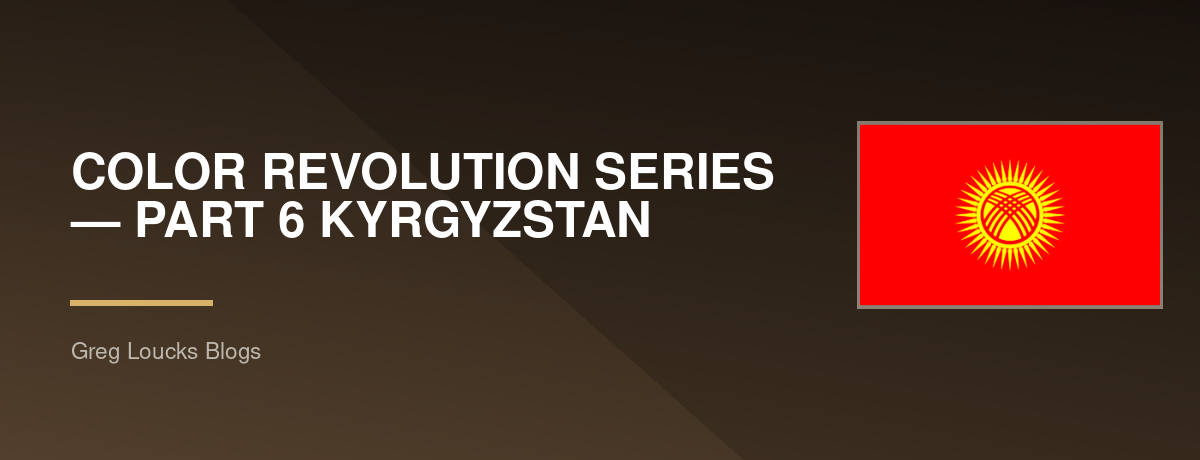
🌍🎨 COLOR REVOLUTION SERIES — PART 25 🇰🇬 KYRGYZSTAN The Tulip Revolution: Askar Akayev, Election Fraud, Corruption, Opposition, Mass Protests, the Fall of the Government, Russia, the United States, and the Revolution That Didn't End the Cycle By Greg Loucks Introduction: The Tulip Revolution In March 2005, another government in the former Soviet Union suddenly collapsed. This time, the country was: Kyrgyzstan The president was: Askar Akayev He had governed Kyrgyzstan since independence from the Soviet Union. For much of his presidency, Akayev was presented internationally as something unusual in Central Asia: a relatively liberal and reform-minded leader. Kyrgyzstan was sometimes described as: "the island of democracy" in a region dominated by authoritarian governments. But beneath that reputation, serious problems were developing. There were accusations of: Corruption Nepotism Election manipulation Increasing presidential power Restrictions on opposition Economic inequality Political favoritism Then came parliamentary elections in 2005. Opposition politicians accused the government of manipulating the election. Protests erupted. The demonstrations began in the southern regions. Then they spread north. Eventually, protesters entered the capital: Bishkek Government buildings were seized. The political system collapsed. Akayev fled the country. And the world watched another former Soviet government fall through mass protest. The movement became known as the: Tulip Revolution The name joined a growing collection of revolutionary colors and symbols: Georgia — Rose Revolution Ukraine — Orange Revolution Kyrgyzstan — Tulip Revolution The pattern appeared to be spreading. But Kyrgyzstan would reveal an important problem with the Color Revolution model. Removing a president did not necessarily remove: Corruption Patronage Clan politics Economic inequality Weak institutions Presidential authoritarianism And five years later, Kyrgyzstan would experience another revolution. The Tulip Revolution therefore became a story not just about the fall of a government, but about: what happens when a revolution changes leaders without changing the political system underneath them. 🇰🇬 Chapter 1: Kyrgyzstan Kyrgyzstan is a mountainous country in: Central Asia It borders: Kazakhstan Uzbekistan Tajikistan China 🏔️ Chapter 2: The Mountains Much of Kyrgyzstan is mountainous. The: Tien Shan mountain system dominates the landscape. This geography has historically shaped Kyrgyz culture, transportation, agriculture, and politics. 🐎 Chapter 3: Nomadic Heritage Kyrgyz culture developed around nomadic pastoral traditions. Horses played an especially important role. The famous Kyrgyz epic: Manas is one of the world's great oral literary traditions. 🇷🇺 Chapter 4: Russian Expansion During the nineteenth century, the Russian Empire expanded into Central Asia. Kyrgyz territory eventually came under Russian imperial control. ☭ Chapter 5: Soviet Kyrgyzstan After the Russian Revolution, Kyrgyzstan became part of the Soviet political system. It eventually became the: Kyrgyz Soviet Socialist Republic 🏭 Chapter 6: Soviet Development The Soviet period transformed Kyrgyzstan. The state developed: Roads Schools Hospitals Industry Agricultural systems Universities But political power remained centralized. 🕊️ Chapter 7: Independence When the Soviet Union collapsed in 1991, Kyrgyzstan became independent. The country suddenly had to build a political system of its own. 👤 Chapter 8: Askar Akayev The first president of independent Kyrgyzstan was: Askar Akayev Originally a scientist and academic, Akayev had not entered politics as a traditional authoritarian strongman. 🧑🔬 Chapter 9: The Scientist-President Akayev was a physicist and academic. His intellectual background helped create his early reputation as a modernizing leader. 🌍 Chapter 10: The "Island of Democracy" During the 1990s, Kyrgyzstan developed a reputation as one of the more politically open countries in Central Asia. Opposition parties existed. Independent newspapers operated. Civil society organizations developed. International organizations became active. 🇺🇸 Chapter 11: Western Support The United States and European governments encouraged Kyrgyzstan's democratic development. Western aid supported: Civil society Economic reform Education Democratic institutions Independent media 🧠 Chapter 12: The Contradiction But Kyrgyzstan's political openness existed alongside increasing presidential power. Akayev gradually became more dominant. 🏛️ Chapter 13: Presidential Power Constitutional changes strengthened the presidency. The parliament became less powerful. The executive branch gained influence. ⚠️ Chapter 14: The Central Asian Pattern Kyrgyzstan began resembling other post-Soviet states: Strong president ↓ Weak institutions ↓ Patronage networks ↓ Corruption ↓ Political opposition ↓ Election disputes 💰 Chapter 15: Economic Problems Kyrgyzstan was one of the poorest countries to emerge from the Soviet Union. The collapse of Soviet economic structures caused enormous disruption. 🏭 Chapter 16: Economic Transition State industries declined. Unemployment increased. Poverty became widespread. Many people depended upon agriculture, migration, and informal economic activity. 🇷🇺 Chapter 17: Russia Russia remained an important economic and political partner. Kyrgyz citizens migrated to Russia for work. Remittances became important to the economy. 🇨🇳 Chapter 18: China China also became increasingly important. Trade routes through Central Asia connected Kyrgyzstan to China's western regions. 🧠 Chapter 19: Geopolitical Competition Kyrgyzstan therefore existed between several powerful influences: Russia China United States European governments The country's location gave it strategic importance beyond its size. 🪖 Chapter 20: The U.S. Military Presence After the September 11 attacks and the beginning of the war in Afghanistan, the United States established a military presence at: Manas Air Base near Bishkek. ✈️ Chapter 21: Manas The Manas facility became an important logistical hub for U.S.-led operations in Afghanistan. Russia also had military interests in Kyrgyzstan. This made the country strategically important. 🧠 Chapter 22: The Great-Power Question Kyrgyzstan was not simply a domestic political story. Its government was connected to: Russia United States China Central Asian neighbors 🗳️ Chapter 23: Elections Elections became increasingly controversial. Opposition groups accused the government of manipulating the political system. 👨👩👧 Chapter 24: Nepotism Akayev's family became increasingly involved in politics and business. His opponents accused him of creating: a family-centered political system. 👩 Chapter 25: Bermet Akayeva Akayev's daughter: Bermet Akayeva became politically prominent. Her involvement intensified accusations of nepotism. 🧠 Chapter 26: Family Power Critics argued that political influence was increasingly concentrated among: The president His family Close associates Regional elites ⚠️ Chapter 27: Corruption Corruption became one of the central grievances against the government. Opposition activists argued that economic opportunities were distributed through political connections. 🗳️ Chapter 28: The 2005 Parliamentary Elections The parliamentary elections became the immediate trigger for the revolution. ⚠️ Chapter 29: Allegations of Fraud Opposition groups accused the authorities of: Manipulating candidate registration Interfering with opposition candidates Using administrative resources Manipulating results The government denied systematic fraud. 🧠 Chapter 30: The International Observers International election observers raised concerns about the electoral process. The: OSCE reported significant shortcomings. 🌍 Chapter 31: The Election Crisis The opposition argued that the elections demonstrated that the government was no longer willing to tolerate meaningful political competition. ✊ Chapter 32: Protests Begin Demonstrations first became particularly strong in southern Kyrgyzstan. Cities such as: Jalal-Abad and Osh became important centers of opposition activity. 🏙️ Chapter 33: Southern Kyrgyzstan The south had its own powerful political networks. Regional rivalries would become extremely important later. 🧠 Chapter 34: Regional Politics Kyrgyzstan's political system was strongly influenced by regional relationships. People often described politics in terms of: north versus south although the reality was more complicated. 🌷 Chapter 35: The Tulip The opposition adopted the: tulip as a revolutionary symbol. Tulips represented: Renewal Spring Change Peace 🎨 Chapter 36: Another Color Revolution The symbolism fit the emerging Color Revolution pattern. Georgia had: Roses Ukraine had: Orange Kyrgyzstan had: Tulips 🧠 Chapter 37: The Pattern The symbolism made revolutionary movements easier to identify. A single image could represent an entire political movement. 🌱 Chapter 38: Springtime Politics The revolution happened in spring. The tulip therefore carried a natural association with: political renewal. 📱 Chapter 39: Communications Unlike later movements, Kyrgyzstan's 2005 revolution occurred before smartphones and social media dominated political organizing. Activists relied heavily on: Mobile phones Independent newspapers Television Word of mouth Local organizations 🧑🎓 Chapter 40: Youth Young people played an important role. They were increasingly dissatisfied with the political system. ✊ Chapter 41: Civil Society Civil society organizations helped create networks capable of mobilizing citizens. 🌍 Chapter 42: International NGOs Western-funded organizations were active in Kyrgyzstan. They supported: Civic education Election observation Human rights Independent media Youth programs 🧠 Chapter 43: The Foreign Influence Debate As with Ukraine and Georgia, critics argued that foreign organizations helped prepare the infrastructure for political change. Supporters argued that these organizations were simply supporting democratic development. ⚖️ Chapter 44: The Evidence Foreign assistance clearly existed. But that does not automatically mean foreign governments controlled the protests. Thousands of Kyrgyz citizens had their own grievances. 🧠 Chapter 45: Domestic Causes The most important domestic grievances included: Corruption Nepotism Poverty Election manipulation Presidential dominance Regional inequality 🏛️ Chapter 46: Government Buildings As protests spread, demonstrators seized government buildings in several areas. ⚠️ Chapter 47: The Government Loses Control The government struggled to contain the protests. The opposition movement was gaining momentum. 🏙️ Chapter 48: Bishkek The movement eventually reached the capital: Bishkek 🧑🤝🧑 Chapter 49: Mass Demonstrations Large crowds gathered in the capital. The government appeared increasingly powerless. 🏛️ Chapter 50: The White House One of the most important government buildings in Bishkek was the: White House the seat of the country's parliament and presidency. 🚨 Chapter 51: The Government Collapses Protesters entered the building. Government control over the capital deteriorated. ✈️ Chapter 52: Akayev Flees President Akayev left Kyrgyzstan. He eventually traveled to: Russia 🏃 Chapter 53: The President Is Gone For the second time in less than a year in the post-Soviet world, a long-serving leader had been forced out through mass protests. The pattern looked remarkably similar to Ukraine. 🌷 Chapter 54: The Tulip Revolution Succeeds The immediate revolutionary objective had been achieved: Akayev was gone. 🧠 Chapter 55: But Who Would Rule? The opposition now faced the same problem that had confronted Ukraine: Winning a revolution is easier than governing after one. 👤 Chapter 56: Kurmanbek Bakiyev A prominent opposition leader: Kurmanbek Bakiyev emerged as the country's new political leader. 🏛️ Chapter 57: The New Government Bakiyev became president. Supporters hoped he would establish a more democratic system. 🌅 Chapter 58: Revolutionary Hope The early post-revolution period generated optimism. Citizens hoped for: Democratic reform Less corruption Economic improvement Greater political freedom ⚠️ Chapter 59: The Old System Returns But many of the same problems soon reappeared. 🧠 Chapter 60: Bakiyev's Consolidation Bakiyev increasingly concentrated political power. His family became politically influential. 👨👩👧 Chapter 61: Family Government Bakiyev's relatives gained important positions. His son: Maxim Bakiyev became particularly powerful. 💰 Chapter 62: Corruption Allegations Critics accused the new government of reproducing the same patronage politics that had existed under Akayev. 🧠 Chapter 63: The Revolution's Paradox The people had overthrown a government because it was: corrupt and family-centered. Now the new government was accused of becoming: corrupt and family-centered. 🔄 Chapter 64: The Political Cycle The pattern became: Old president ↓ Mass protests ↓ Revolution ↓ New president ↓ New patronage network ↓ Public disappointment ↓ Another revolution This would eventually happen. 🪖 Chapter 65: Russia and the United States Bakiyev faced another complicated geopolitical problem. Kyrgyzstan hosted both: Russia's military presence and the U.S. military presence. ✈️ Chapter 66: Manas Becomes Leverage Bakiyev realized that the Manas base could be used as a bargaining chip. 🇺🇸 Chapter 67: The United States Wants Manas The United States needed the base to support operations in Afghanistan. 🇷🇺 Chapter 68: Russia Wants Manas Closed Russia wanted to reduce U.S. military influence in Central Asia. 🧠 Chapter 69: Competing Powers Kyrgyzstan could negotiate with both powers. This gave Bakiyev leverage. 💰 Chapter 70: Russian Financial Assistance Russia offered substantial financial support to Kyrgyzstan. 🇺🇸 Chapter 71: The Base Agreement Bakiyev initially announced that the United States would lose access to Manas. The decision was presented as a major geopolitical shift. 🧠 Chapter 72: The Bargaining Game The Manas dispute demonstrated how small states can use great-power rivalry to their advantage. ⚠️ Chapter 73: But the Domestic Problems Continued Geopolitics did not solve: Poverty Corruption Electricity shortages Political repression Family patronage ⚡ Chapter 74: Energy Problems Electricity shortages became increasingly severe. Prices increased. Public frustration grew. 💰 Chapter 75: Utility Prices The government increased prices for utilities and energy. For ordinary citizens, this was devastating. 😡 Chapter 76: Public Anger Returns The revolutionary coalition began losing patience with Bakiyev. 🧠 Chapter 77: The Second Revolution In 2010, Kyrgyzstan experienced another major political uprising. This time: Bakiyev was the target. 📅 Chapter 78: April 2010 Protests erupted over: Utility prices Corruption Government repression Nepotism Political centralization 🏙️ Chapter 79: Bishkek Again The capital once again became the center of mass protests. ⚠️ Chapter 80: Violence This revolution became considerably more violent than the 2005 uprising. Security forces fired on protesters. Dozens were killed. 🩸 Chapter 81: The Death Toll More than 80 people were killed during the April 2010 uprising. The violence shocked the country. 🏛️ Chapter 82: Government Buildings Seized Protesters again took control of government buildings. 🏃 Chapter 83: Bakiyev Flees Bakiyev fled the capital. He eventually left Kyrgyzstan. 🧠 Chapter 84: The Second Revolution Succeeds For the second time in five years: a Kyrgyz president had been removed by mass uprising. 🌷 Chapter 85: The Tulip Revolution's Failure The 2010 revolution was effectively an indictment of the 2005 revolution. The original movement had removed Akayev. But it had failed to build a stable democratic system. 🧠 Chapter 86: Institutional Failure The central problem was: weak institutions. The presidency remained extremely powerful. Political parties remained fragile. The courts remained weak. Corruption remained widespread. ⚠️ Chapter 87: The Constitution After Bakiyev's removal, Kyrgyzstan attempted something different. Rather than simply replacing the president: the country restructured the political system. 🏛️ Chapter 88: Parliamentary System Kyrgyzstan moved toward a parliamentary-style system. The goal was to prevent another president from becoming too powerful. 🧠 Chapter 89: A Revolutionary Lesson The reformers had learned: Changing the person at the top is not enough. The constitution itself needed to change. 🗳️ Chapter 90: Parliamentary Politics Political parties gained a more important role. Parliament gained greater authority. ⚠️ Chapter 91: But Problems Remained The new system did not eliminate: Corruption Regional divisions Economic weakness Political instability 🌍 Chapter 92: Ethnic Conflict The country then faced another major crisis. In June 2010, serious ethnic violence erupted in southern Kyrgyzstan. ⚠️ Chapter 93: Osh The city of: Osh became the center of the violence. 🧑🤝🧑 Chapter 94: Kyrgyz-Uzbek Conflict The violence primarily involved ethnic Kyrgyz and Uzbek communities. Hundreds were killed. Hundreds of thousands were displaced. 🧠 Chapter 95: Why It Matters The ethnic violence demonstrated how quickly political instability can interact with existing social divisions. 🌍 Chapter 96: Uzbekistan Many displaced ethnic Uzbeks fled toward the border with: Uzbekistan 🧠 Chapter 97: Regional Instability The violence threatened to destabilize the entire region. 🇷🇺 Chapter 98: Russian Response Russia was asked to provide military assistance. Moscow did not immediately intervene militarily in the way some Kyrgyz officials requested. 🧠 Chapter 99: The Russian Calculation Russia had to balance: Supporting stability Avoiding a deeper military commitment Maintaining influence Avoiding an ethnic conflict 🇺🇸 Chapter 100: American Concerns The United States was also deeply concerned because of its continuing military logistics operations. ✈️ Chapter 101: Manas Again The Manas facility remained strategically important to the war in Afghanistan. 🧠 Chapter 102: The Great-Power Balancing Act Kyrgyzstan continued balancing between: Russia United States China This made its domestic political instability an international concern. 🌍 Chapter 103: China's Role China had economic interests in Kyrgyzstan and wanted stability along its western border. 🧠 Chapter 104: A Small Country With Big Strategic Importance Kyrgyzstan demonstrates how a relatively small country can become strategically important because of geography. 🏔️ Chapter 105: Geography Again The country sits: between China and Central Asia and within Russia's historical sphere of influence. 🧠 Chapter 106: Why Color Revolutions Matter Here Kyrgyzstan is particularly important because it demonstrates that a Color Revolution can: remove a government without necessarily producing: a stable democratic order. 🎨 Chapter 107: The Color Revolution Formula The classic model was: Election controversy ↓ Public anger ↓ Mass demonstrations ↓ Government buildings occupied ↓ President flees ↓ New government But Kyrgyzstan added another stage: ↓ New government becomes corrupt ↓ Another revolution 🔄 Chapter 108: Revolution as a Cycle This is perhaps Kyrgyzstan's greatest contribution to the Color Revolution story. Revolution did not necessarily produce: political stability. It could produce: revolutionary repetition. 🧠 Chapter 109: The "Revolutionary Trap" When institutions remain weak, people may repeatedly rely on street protest to change governments. Instead of: elections → institutional accountability the system becomes: crisis → protests → government collapse ⚠️ Chapter 110: Why This Is Dangerous Repeated revolutions can weaken the state. Investors become uncertain. Political institutions lose legitimacy. Security forces become politicized. Regional divisions deepen. 🧠 Chapter 111: The Strongman Problem Every new president may begin promising: reform but eventually discover that controlling the state provides enormous advantages. 🏛️ Chapter 112: Presidential Temptation If the constitution permits too much presidential authority, the cycle can repeat. 🧠 Chapter 113: Institutional Solution Kyrgyzstan attempted to address this by strengthening parliament. ⚠️ Chapter 114: But Institutions Need Time Changing a constitution does not instantly create: Independent courts Political parties Anti-corruption systems Rule of law Those institutions require years to develop. 🌍 Chapter 115: The Role of Civil Society Kyrgyz civil society remained one of the country's greatest democratic strengths. 🧑🤝🧑 Chapter 116: NGOs Civil society organizations continued documenting: Corruption Human-rights abuses Election problems Government misconduct 📰 Chapter 117: Independent Media Kyrgyzstan maintained a relatively diverse media environment compared with many neighboring authoritarian states. 🧠 Chapter 118: Why That Matters Independent media can expose government corruption. But media freedom alone cannot create functioning institutions. ⚖️ Chapter 119: Courts Judicial independence remained a major problem. 🧠 Chapter 120: Rule of Law Without strong courts: political change becomes personal rather than institutional. 💰 Chapter 121: Corruption Corruption remained one of Kyrgyzstan's deepest structural problems. 👨👩👧 Chapter 122: Family Networks Both Akayev and Bakiyev were accused of allowing relatives to accumulate political and economic power. This suggests that the problem was larger than either individual. 🧠 Chapter 123: The Systemic Problem The problem was: patronage politics. Political power provided access to: Jobs Contracts Businesses Government resources Influence ⚠️ Chapter 124: Why Revolutions Don't Automatically End Patronage If the underlying incentives remain unchanged, a new political elite can simply replace the old elite. 🧠 Chapter 125: The New Boss Problem One of the oldest political patterns is: The new boss becomes the old boss. Kyrgyzstan demonstrated this dramatically. 🌷 Chapter 126: What the Tulip Symbol Meant The tulip represented: Spring Renewal Hope But political spring does not automatically create institutional renewal. 🧠 Chapter 127: The Symbol Versus the System A revolution can change: flags leaders slogans public symbols without changing: institutions incentives economic structures political culture 🎨 Chapter 128: The Color Revolution Lesson The deeper lesson is: Symbols can mobilize people, but institutions determine what happens afterward. 🌍 Chapter 129: Kyrgyzstan Compared With Georgia Georgia Rose Revolution → Saakashvili → major institutional reforms. Kyrgyzstan Tulip Revolution → Bakiyev → renewed corruption → another revolution. The outcomes were dramatically different. 🇺🇦 Chapter 130: Kyrgyzstan Compared With Ukraine Ukraine Orange Revolution → Yushchenko → coalition collapse → Yanukovych returns. Kyrgyzstan Tulip Revolution → Bakiyev → authoritarian consolidation → second revolution. Both demonstrate the difficulty of turning protest victories into permanent institutional change. 🧠 Chapter 131: Kyrgyzstan Compared With Sudan The pattern also resembles Sudan. Sudan: Bashir removed ↓ Military remains Kyrgyzstan: Akayev removed ↓ Patronage system remains In both cases: The old structure proved more durable than the old leader. 🌍 Chapter 132: Color Revolution Criticism Critics of Color Revolutions often argue that foreign governments can help destabilize existing governments without being able to construct stable replacements. Kyrgyzstan provides evidence that this can happen. 🧠 Chapter 133: But Domestic Agency Still Matters It would be wrong to conclude that foreign organizations created the revolution from nothing. Kyrgyz citizens had legitimate grievances. The demonstrations were real. The anger was real. The corruption was real. The election disputes were real. ⚖️ Chapter 134: The Balanced Conclusion The best interpretation is: External assistance can strengthen a domestic movement, but it cannot substitute for functioning institutions. 🧠 Chapter 135: The Foreign-Power Game Kyrgyzstan also demonstrates that outside powers can have conflicting objectives. The United States wanted: access to Manas Russia wanted: regional influence China wanted: stability Kyrgyz leaders wanted: money and political survival The result was a complicated geopolitical balancing act. ✈️ Chapter 136: Manas as a Bargaining Chip Kyrgyz presidents could threaten to close the American base. Then negotiate better terms. Then reopen the relationship. This gave the government leverage. 🧠 Chapter 137: Small-State Strategy A small country can sometimes exploit competition between major powers. But it can also become dependent upon those powers. ⚠️ Chapter 138: Dependency If a country's economy depends heavily on: Remittances Foreign aid Military rents Trade with neighbors its political independence can become fragile. 🌍 Chapter 139: Russia's Influence Russia remained especially influential through: Migration Remittances Security Trade Language Culture 🇨🇳 Chapter 140: China's Influence China increasingly became important through: Trade Infrastructure Loans Investment 🇺🇸 Chapter 141: America's Influence The United States exercised influence primarily through: Development assistance Civil society programs Diplomatic engagement Military logistics 🧠 Chapter 142: Three External Powers Kyrgyzstan therefore found itself balancing: Russia China United States ⚠️ Chapter 143: The Cost of Instability Every revolution disrupted this balance. Foreign governments had to renegotiate relationships. Businesses faced uncertainty. Security arrangements changed. 🧠 Chapter 144: Political Memory The 2005 revolution created a powerful precedent. Citizens learned: If enough people take to the streets, a president can fall. That knowledge remained powerful. 🔥 Chapter 145: The 2010 Revolution Five years later, the lesson was applied again. Bakiyev discovered that the same mechanism that had removed Akayev could remove him. 🧠 Chapter 146: The Revolutionary Boomerang The revolution can become a weapon that eventually turns against the revolutionary government itself. 🌷 Chapter 147: The Tulip Revolution's Legacy The 2005 movement remains an important moment in Kyrgyzstan's history. It demonstrated: Public resistance Political mobilization Government vulnerability Civil society power But it also demonstrated: the limits of regime change without institutional transformation. 🧠 Chapter 148: The Central Lesson A revolution should not ask only: "Who should leave?" It must also ask: "What institutions will replace them?" 🏛️ Chapter 149: Constitutional Engineering Kyrgyzstan's later parliamentary reforms represented an attempt to answer that question. The goal was to prevent another all-powerful presidency. ⚖️ Chapter 150: Separation of Power The country attempted to strengthen: Parliament Political parties Coalition governments 🧠 Chapter 151: Political Competition This created more opportunities for political competition. But it also produced unstable coalitions. ⚠️ Chapter 152: Stability Versus Democracy A democratic system can be messy. The alternative may be stability under an authoritarian ruler. Kyrgyzstan repeatedly struggled with this balance. 🌍 Chapter 153: The Central Asian Exception Kyrgyzstan remains unusual in Central Asia. It has experienced repeated mass political upheavals. It has also maintained a more competitive political environment than many neighboring states. 🧠 Chapter 154: But Democracy Is Not Guaranteed Repeated revolutions do not automatically equal democracy. Democracy requires: Institutions Elections Rule of law Accountability Peaceful transfers of power 🕊️ Chapter 155: The Peaceful Transfer Problem The ultimate test of democracy is not: Can you remove a government? It is: Can you replace a government without overthrowing the state? 🧠 Chapter 156: Kyrgyzstan's Contradiction Kyrgyzstan repeatedly demonstrated the first. It struggled with the second. 🌍 Chapter 157: The Color Revolution Series The sequence now looks increasingly clear: 🇬🇪 Georgia Rose Revolution 🇺🇦 Ukraine Orange Revolution 🇰🇬 Kyrgyzstan Tulip Revolution 🇸🇩 Sudan Sudanese Revolution Each involved different circumstances. But recurring themes appeared: Economic grievances Political corruption Election disputes Mass protests Youth participation Civil society Government repression Elite defections International involvement 🧠 Chapter 158: The Biggest Difference The outcomes varied dramatically. Some produced: reform Some produced: new authoritarianism Some produced: political instability And some eventually produced: war. ⚠️ Chapter 159: The Revolutionary Gamble Every revolution is a gamble. The people may remove a government. But they cannot perfectly predict what replaces it. 🧠 Chapter 160: The Unintended Consequences The Tulip Revolution illustrates unintended consequences better than almost any other Color Revolution. The protesters wanted: democracy But the immediate result was: another powerful political elite. Then came: another revolution. 🌷 Chapter 161: The Tulip The tulip remains a powerful symbol. It represents the hope that political spring will finally arrive. But Kyrgyzstan's experience demonstrates: Spring must be cultivated. It does not simply appear because a president falls. Conclusion: The Revolution That Became a Cycle The Tulip Revolution began with hope. Kyrgyz citizens looked at their government and saw: corruption nepotism election manipulation and growing presidential power. They decided they had had enough. They protested. They occupied government buildings. The government collapsed. President Askar Akayev fled. The revolution had succeeded. But then the difficult part began. Kurmanbek Bakiyev took power. And slowly, the same patterns returned. Family members gained influence. Political power became concentrated. Corruption accusations returned. The president became increasingly authoritarian. And the people once again took to the streets. In 2010: Bakiyev fell. Kyrgyzstan had experienced two revolutions in five years. That makes the country one of the most important cases for understanding the limits of the Color Revolution phenomenon. The lesson is not that the revolution was fake. It was not. The people genuinely protested. The grievances were real. The corruption was real. The political frustration was real. And the government really did collapse. But: A revolution is not a constitution. A protest is not a government. Removing a president is not the same as reforming a state. Kyrgyzstan demonstrated that a political system can survive the removal of its leader. The faces change. The slogans change. The flags change. The revolutionary color changes. But the underlying incentives can remain. If politicians still benefit from patronage, if courts remain weak, if corruption remains profitable, if political parties remain dependent upon wealthy patrons, and if the presidency remains too powerful, then the next leader can simply reproduce the same system. That is exactly what happened. The Tulip Revolution therefore leaves us with one of the most important questions in the entire Color Revolution series: What happens when revolution becomes the normal mechanism for changing governments? Because once citizens believe that governments can only be changed through mass street mobilization, the political system itself becomes unstable. And Kyrgyzstan's experience would eventually provide another lesson: A revolution can remove a dictator. A second revolution can remove his replacement. But eventually the country must find a way to make: institutions stronger than individuals. Otherwise, the revolution never truly ends. It simply waits for the next crisis. And that brings us to another fascinating case. Not a former Soviet republic. Not Europe. Not Central Asia. But a country in North Africa where a desperate act by one ordinary citizen ignited a revolutionary wave that would spread across the Arab world. The next case is: 🇹🇳 TUNISIA The: Jasmine Revolution and the event that became the opening spark of the: Arab Spring. 🌍🎨 NEXT — PART 26 🇹🇳 TUNISIA The Jasmine Revolution & the Birth of the Arab Spring: Mohamed Bouazizi, Zine El Abidine Ben Ali, Corruption, Social Media, Youth Unemployment, the Police State, Mass Protests, and the Fall of a Dictator The next chapter will examine: Tunisia after independence Habib Bourguiba Zine El Abidine Ben Ali The 1987 transition The Tunisian police state The Trabelsi family Corruption Youth unemployment Economic inequality Mohamed Bouazizi His self-immolation The first protests Facebook and social media The role of lawyers Trade unions The Tunisian military Ben Ali's attempts to remain in power The January 2011 collapse Ben Ali fleeing to Saudi Arabia Why Tunisia succeeded where Syria failed The first Arab Spring revolution The role of the United States and Europe Wikileaks and the Tunisian political system The debate over whether Tunisia was a Color Revolution And the question that changed the Middle East: How could one street vendor's act of desperation ignite a revolution across an entire region?
Read more 🌍🎨 COLOR REVOLUTION SERIES — PART 19 🇰🇬 KYRGYZSTAN





Comments and reactions 0
No comments yet. Yours would be the first.