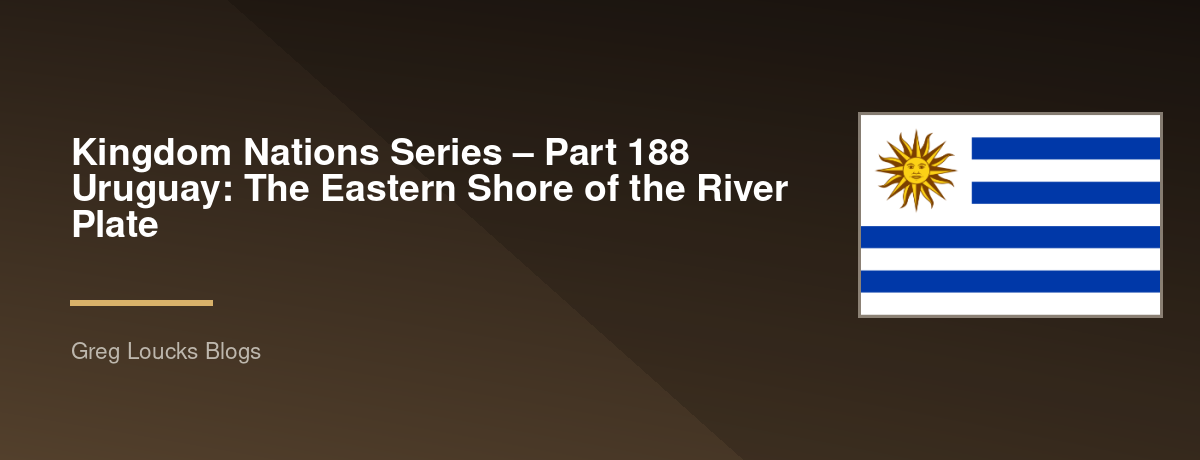
🌎 Kingdom Nations Series – Part 188 🇺🇾 Uruguay: The Eastern Shore of the River Plate

🌎 Kingdom Nations Series – Part 187 🇺🇾 Chapter 1 – Part 1 Uruguay: The Eastern Shore of the River Plate Montevideo, the Río de la Plata, the Uruguay River, the Atlantic Ocean, the Pampas, the Gaucho, Indigenous Heritage, Charrúa History, Spanish Colonization, Portuguese Rivalry, José Gervasio Artigas, Independence, the Oriental Republic, Art Nouveau, Candombe, Tango, Mate, Beef, Estancias, Agriculture, Soccer, Colonia del Sacramento, Punta del Este, Rocha, Salto, Paysandú, Tacuarembó, Renewable Energy, Education, Democracy, and Uruguay's Kingdom Calling "The earth is the LORD'S, and all its fullness, the world and those who dwell therein." — Psalm 24:1 Introduction The: Oriental Republic of Uruguay is: A: Country in: South America. It: Occupies: The: Eastern: Side of: The: Río: De: La: Plata. Uruguay Uruguay is: One of: South: America's: Smaller: Countries by: Area. Yet: Its: Geographic: Position has: Given: It: An: Important: Role in: The: Southern: Cone. Southern Cone Uruguay lies between: Argentina and: Brazil. Argentina To: The: West and: Southwest lies: Argentina. Brazil To: The: North and: Northeast lies: Brazil. Atlantic Ocean To: The: Southeast lies: The: Atlantic Ocean. Río de la Plata The: Río de la Plata forms: A: Massive: Estuary between: Uruguay and: Argentina. Uruguay River The: Uruguay River forms: Much of: Uruguay's: Western: Border. Uruguay River The: River flows Southward toward: The: Río: De: La: Plata. Montevideo Montevideo is: The: Capital of: Uruguay. Montevideo Montevideo is: The: Country's: Largest: City. Montevideo The: City stands along: The: Río: De: La: Plata. Montevideo Montevideo became: The: Political. Economic. Cultural. And: Maritime: Center of: Uruguay. Ciudad Vieja Ciudad Vieja contains: Some of: Montevideo's: Oldest: Historic: Buildings. Plaza Independencia Plaza Independencia is: One of: Montevideo's: Most: Important: Public: Spaces. Palacio Salvo The: Palacio Salvo became: One of: Montevideo's: Most: Recognizable: Landmarks. Rambla Montevideo's: Rambla stretches: Along: The: Waterfront. Río de la Plata The: Rambla connects: Urban: Life with: The: Wide: Waters of: The: Río: De: La: Plata. Uruguay's Landscape Uruguay is: Known for: Rolling: Grasslands. Pastures. Rivers. Lagoons. Wetlands. Forests. And: Atlantic: Coastline. Pampas The: Country forms: Part of: The: Broader: Pampas: Landscape of: The: Southern: Cone. Grasslands Grasslands have: Played: A: Central: Role in: Uruguay's: Economy. Cattle Cattle: Ranching became: One of: The: Foundations of: Uruguay's: Economy. Beef Uruguay became: Internationally: Known for: Its: Beef: Production. Estancias Traditional: Estancias are: Large: Rural: Properties associated with: Livestock. Agriculture. And: Gaucho: Culture. Gauchos The: Gaucho became: One of: The: Most: Important: Symbols of: Uruguayan: Heritage. Gaucho Gauchos were: Skilled: Horsemen. Cowhands. Hunters. And: Travelers of: The: Grasslands. Horse The: Horse became: Essential to: Gaucho: Life. Cattle The: Introduction of: European: Cattle transformed: The: Grasslands of: The: Río: De: La: Plata. Leather Cattle also: Supported: Traditional: Leather: Industries. Mate Mate is: One of: The: Most: Important: Cultural: Traditions of: Uruguay. Yerba Mate Mate is: Prepared using: Yerba mate leaves. Mate Culture People often: Share: Mate within: Families. Friendships. Workplaces. And: Social: Circles. Indigenous Peoples Long: Before: European: Colonization, The: Territory of: Modern: Uruguay was: Home to: Indigenous: Peoples. Charrúa The: Charrúa became: One of: The: Most: Historically: Important: Indigenous: Peoples associated with: Uruguay. Indigenous Heritage Other: Indigenous: Peoples also: Lived within: The: Region. Guaraní Guaraní: Peoples and: Language influenced: The: Broader: Southern: Cone. Indigenous Languages Indigenous: Languages left: Traces within: Regional: Place: Names. Place Names The: Name: Uruguay is: Generally: Associated with: The: Uruguay: River, although: Its: Exact: Etymology has: Been: Interpreted in: Different: Ways. Pre-Colonial Uruguay The: Region contained: Mobile: Hunter-gatherer. Fishing. And: Mixed: Subsistence: Communities. Rivers Rivers were: Important for: Travel. Fishing. Water. And: Settlement. Atlantic Coast The: Atlantic: Coast provided: Marine: Resources. Lagoons Uruguay's: Eastern: Coast contains: Important: Coastal: Lagoons. Rocha Rocha is: Known for: Its: Atlantic: Coast. Lagoons. Wetlands. And: Natural: Landscapes. Cabo Polonio Cabo Polonio became: One of: Uruguay's: Most: Distinctive: Coastal: Areas. Punta del Este Punta del Este became: A: Major: International: Beach: Destination. Punta del Este Its: Coast attracts: Visitors from: Across: South: America and: Beyond. Colonia del Sacramento Colonia del Sacramento is: One of: Uruguay's: Most: Important: Historic: Cities. Colonia The: Historic: Quarter preserves: Architecture associated with: Portuguese. Spanish. And: Colonial: History. Portuguese Empire Portugal established: A: Settlement at: Colonia in: 1680. Portuguese-Spanish Rivalry The: Region became: A: Strategic: Borderland between: Portuguese and: Spanish: Interests. Spanish Empire Spain controlled: Large: Parts of: The: Río: De: La: Plata: Region. Buenos Aires Across: The: Estuary lies: Buenos Aires. Buenos Aires Buenos: Aires became: A: Major: Spanish: Colonial: Center. Montevideo Spain established: Montevideo as: A: Strategic: Port and: Military: Position. Montevideo The: City became: A: Counterweight to: Portuguese: Expansion. Banda Oriental The: Territory of: Modern: Uruguay was: Historically: Known as: The: Banda Oriental. Eastern Bank "Banda Oriental" refers to: The: Eastern: Side of: The: Uruguay: River and: Río: De: La: Plata. José Gervasio Artigas José Gervasio Artigas became: The: Central: Figure of: Uruguay's: Independence: Tradition. Artigas Artigas led: A: Movement for: Political: Autonomy in: The: Banda: Oriental. Federalism Artigas advocated: A: Federal: Political: Vision for: The: Region. Artigas His: Political: Program emphasized: Local: Autonomy. Land. And: Federal: Organization. Artigas He: Became: Known as: The: "Protector of the Peoples." Independence Uruguay's: Path to: Independence was: Complex. Portuguese-Brazilian Invasion Portuguese: Forces invaded: The: Banda: Oriental. Cisplatine Province The: Territory was: Later: Incorporated into: The: Portuguese: And: Brazilian: Empire as: The: Cisplatine Province. Thirty-Three Orientals A: Group known as: The: Thirty-Three Orientals launched: A: Revolutionary: Movement in: 1825. Thirty-Three Orientals Their: Movement sought: To: End: Brazilian: Control. Independence Uruguay ultimately: Became: An: Independent: State through: International: Diplomatic: Settlement. 1828 The: Treaty of Montevideo in: 1828 recognized: Uruguay's: Independence. Oriental Republic The: Official: Name became: The: Oriental Republic of Uruguay. Constitution Uruguay adopted: Its: First: Constitution in: 1830. National Identity Uruguayan: Identity developed through: A: Combination of: Indigenous. Spanish. Portuguese. African. Italian. And: Other: European: Influences. Immigration During: The: Nineteenth and: Early: Twentieth: Centuries, Uruguay received: Large: Numbers of: European: Immigrants. Italians Italian: Immigration had: A: Major: Influence on: Uruguayan: Culture. Spaniards Spanish: Immigration also: Played: A: Major: Role. Africans Afro-Uruguayan: Communities became: An: Important: Part of: National: Culture. Candombe Candombe is: One of: Uruguay's: Most: Important: Afro-Uruguayan: Cultural: Traditions. Candombe Drums Candombe is: Built around: Traditional: Drumming. Dance. And: Community: Performance. Montevideo Montevideo became: A: Major: Center of: Candombe. Carnival Uruguay has: A: Strong: Carnival: Tradition. Murga Murga became: A: Distinctive: Uruguayan: Performance: Tradition. Murga Murga combines: Music. Theater. Costume. Humor. And: Social: Commentary. Tango Tango developed in: The: Río: De: La: Plata: Region. Río de la Plata Culture Uruguay and: Argentina share: Deep: Cultural: Connections through: Tango. Mate. Gaucho: Heritage. And: The: Río: De: La: Plata. Music Uruguayan: Music contains: European. African. Indigenous. And: Regional: Influences. Literature Uruguay has: Produced: Important: Writers. Poets. Essayists. And: Journalists. José Enrique Rodó José Enrique Rodó became: One of: Uruguay's: Most: Influential: Intellectuals. Ariel Rodó's: Ariel became: A: Major: Latin: American: Intellectual: Work. Juana de Ibarbourou Juana de Ibarbourou became: One of: Uruguay's: Most: Important: Poets. Horacio Quiroga Horacio Quiroga became: A: Major: Uruguayan: Writer known for: Short: Stories. Education Education became: A: Major: Part of: Uruguay's: National: Development. University of the Republic The: University of the Republic became: The: Country's: Major: Public: University. José Pedro Varela José Pedro Varela became: A: Major: Figure in: Uruguayan: Educational: Reform. Public Education Uruguay developed: A: Strong: Tradition of: Public: Education. Secular State Uruguay also: Developed: A: Strong: Tradition of: State: Secularism. Democracy Uruguay developed: A: Long: Tradition of: Representative: Government. Political Traditions The: Country became: Known for: Strong: Political: Institutions. José Batlle y Ordóñez José Batlle y Ordóñez became: One of: Uruguay's: Most: Important: Political: Leaders. Batllismo Batllismo became: A: Major: Political: Tradition emphasizing: Social: Reform. State: Institutions. And: Economic: Modernization. Social Reform Uruguay introduced: Numerous: Social: Reforms during: The: Early: Twentieth: Century. Welfare State The: Country developed: One of: Latin: America's: Earlier: Welfare: States. Labor Workers' Rights became: An: Important: Part of: National: Politics. Rural Life Despite: Modernization, Rural: Uruguay remained: Central to: National: Identity. Estancia The: Estancia became: A: Symbol of: Uruguayan: Rural: Life. Gaucho The: Gaucho became: A: National: Symbol of: Freedom. Horse: Culture. And: The: Open: Grasslands. Agriculture Agriculture remains: Important to: The: Uruguayan: Economy. Soybeans Soybeans became: An: Important: Agricultural: Export. Rice Rice is: Produced especially in: Eastern: Uruguay. Wheat Wheat is: Also: An: Important: Crop. Beef Beef remains: One of: The: Country's: Most: Important: Exports. Wool Uruguay has: A: Long: History of: Sheep: Ranching. Dairy Dairy: Production also: Plays: An: Important: Role in: Agriculture. Forestry Forestry expanded: As: An: Important: Economic: Activity. Renewable Energy Uruguay became: Internationally: Recognized for: Its: High: Share of: Electricity generated from: Renewable: Sources. Wind Energy Wind: Power became: A: Major: Part of: Uruguay's: Electricity: System. Hydroelectricity Hydroelectric: Power also: Became: Important. Solar Energy Solar: Energy has: Expanded as: Part of: Uruguay's: Energy: Diversification. Energy Transformation Uruguay demonstrated: That: A: Small: Country can: Transform: Its: Electricity: System through: Long-term: Planning. Ports Montevideo remains: A: Major: Port for: The: Southern: Cone. Maritime Trade Uruguay's: Geographic: Position allows: It to: Participate in: Regional: Trade between: Argentina. Brazil. And: The: Atlantic. Tourism Tourism became: An: Important: Part of: The: Economy. Punta del Este Punta: Del: Este became: A: Major: Resort. Rocha Rocha offers: More: Natural: And: Less: Urbanized: Coastal: Landscapes. Colonia Colonia attracts: Visitors interested in: Colonial: History. Cabo Polonio Cabo: Polonio is: Known for: Its: Dunes. Coast. Wildlife. And: Distinctive: Settlement. Uruguay's Beaches The: Atlantic: Coast contains: Long: Sandy: Beaches. Marine Life Uruguay's: Coastal: Waters support: Marine: Ecosystems. Sea Lions Sea: Lions can: Be: Found along: The: Atlantic: Coast. Whales Southern: Right: Whales visit: Uruguayan: Coastal: Waters seasonally. Lagoons Eastern: Lagoons provide: Important: Wetland: Habitats. Wetlands Wetlands support: Birds. Fish. Amphibians. And: Other: Wildlife. Rocha Lagoon Laguna de Rocha is: An: Important: Coastal: Ecosystem. Esteros de Farrapos The: Esteros de Farrapos wetlands are: An: Important: Protected: Area along: The: Uruguay: River. Native Wildlife Uruguay contains: Grassland. Wetland. Forest. And: Coastal: Wildlife. Ñandú The: ñandú is: A: Large: Flightless: Bird of: The: Southern: Cone. Capybara The: capybara is: Found in: Wetland: Habitats of: The: Region. Armadillo Armadillos are: Part of: Uruguay's: Native: Fauna. Soccer Football is: Perhaps: The: Most: Important: Sport in: Uruguay. Celeste Uruguay's: National: Team is: Known as: La Celeste. 1930 World Cup Uruguay hosted the: First: FIFA World Cup in: 1930. First World Cup Uruguay won: The: First: World: Cup. 1950 Uruguay won: The: World: Cup again in: 1950. Maracanazo The: 1950: Victory over: Brazil at: The: Maracanã became: Known as: The: Maracanazo. Football Heritage Football became: A: Major: Part of: Uruguayan: National: Identity. Club Football Club Nacional de Football and: Peñarol became: Two of: The: Country's: Most: Famous: Clubs. Nacional Nacional became: One of: South: America's: Historic: Football: Institutions. Peñarol Peñarol also: Became: A: Major: International: Club. Basketball Basketball also: Has: A: Strong: Following in: Uruguay. Cycling Cycling is: Also: Popular. Mate and Football Mate and: Football together: Represent: Important: Elements of: Everyday: Uruguayan: Culture. Food Uruguayan: Cuisine reflects: Its: Grassland. Immigration. And: Río: De: La: Plata: Heritage. Asado Asado is: One of: The: Most: Important: Uruguayan: Foods. Asado Asado is: A: Traditional: Barbecue often: Centered around: Beef. Chivito The: chivito is: A: Famous: Uruguayan: Sandwich. Dulce de Leche Dulce de leche is: Popular throughout: Uruguay. Wine Uruguay is: Known for: Its: Wine: Production. Tannat Tannat became: Uruguay's: Signature: Wine: Grape. Tannat The: Grape was: Originally: Associated with: Southwestern: France but: Found: An: Important: Home in: Uruguay. National Identity Uruguayan: Identity is: Built from: Many: Layers. Indigenous Indigenous: Heritage. Spanish Spanish: Colonial: Heritage. Portuguese Portuguese: Borderland: Heritage. African Afro-Uruguayan: Heritage. Italian Italian: Immigration. Gaucho Gaucho: Grassland: Heritage. Río de la Plata Río: De: La: Plata: Culture. Atlantic Atlantic: Coastal: Culture. Kingdom Assignment Uruguay's: Kingdom: Assignment can: Be: Summarized as: River nation. Atlantic nation. Río de la Plata nation. Uruguay River nation. Pampas nation. Grassland nation. Gaucho nation. Estancia nation. Cattle nation. Beef nation. Mate nation. Candombe nation. Carnival nation. Tango nation. Football nation. Artigas nation. Oriental Republic. Indigenous heritage nation. Afro-Uruguayan heritage nation. Spanish heritage nation. Portuguese borderland nation. Italian heritage nation. Agricultural nation. Maritime nation. Port nation. Renewable-energy nation. Democratic nation. Educational nation. Literary nation. Coastal nation. Wetland nation. Southern Cone nation. Atlantic gateway nation. Prayer for Uruguay Pray: For Uruguay. For Montevideo. For every department. For every city. For every town. For every rural community. For the Uruguayan people. For Indigenous descendants. For Charrúa heritage. For Guaraní heritage. For Afro-Uruguayan communities. For immigrants. For families. For children. For youth. For women. For men. For elders. For farmers. For ranchers. For gauchos. For fishermen. For sailors. For workers. For entrepreneurs. For teachers. For students. For scientists. For doctors. For nurses. For artists. For writers. For poets. For musicians. For football players. For churches. For Christians. For people of every faith. For religious liberty. For education. For universities. For public institutions. For democracy. For justice. For wise government. For peaceful politics. For Montevideo's port. For the Río de la Plata. For the Uruguay River. For the Atlantic Ocean. For the Pampas. For the grasslands. For the estancias. For cattle. For sheep. For agriculture. For forests. For wetlands. For coastal lagoons. For beaches. For Cabo Polonio. For Punta del Este. For Rocha. For Colonia del Sacramento. For Laguna de Rocha. For Esteros de Farrapos. For ñandú. For capybara. For armadillos. For sea lions. For whales. For marine life. For renewable energy. For wind power. For hydroelectricity. For solar power. For sustainable agriculture. For clean water. For healthy ecosystems. For Uruguayan culture. For mate culture. For candombe. For murga. For tango. For carnival. For literature. For music. For football. For Nacional. For Peñarol. For Uruguay's national team. For the Celeste. For future generations. For Uruguay to become: A leader in renewable energy. A leader in sustainable agriculture. A leader in environmental stewardship. A leader in education. A leader in peaceful democracy. A leader in cultural preservation. A leader in humanitarian service. For the nations. Uruguay Before the Throne The: Land has: Known: Indigenous: Nations. Rivers. Grasslands. Wetlands. Atlantic: Coasts. Then: Portuguese: And: Spanish: Expansion. Colonial: Fortifications. Montevideo. The: Banda: Oriental. Artigas. The: Federal: Struggle. Portuguese: And: Brazilian: Rule. The: Thirty-Three: Orientals. The: Treaty of: Montevideo. The: Oriental: Republic. Immigration. Gaucho: Culture. Candombe. Mate. Agriculture. Football. Democracy. And: The: Modern: Uruguayan: Nation. From the Charrúa to the Modern Republic Uruguay demonstrates: The: Deep: History of: Peoples who: Lived in: The: Southern: Cone long: Before: The: Modern: State. From Rivers to Borders Uruguay demonstrates: The: Power of: Geography in: Shaping: Political: Identity. From Portuguese and Spanish Rivalry to Independence Uruguay demonstrates: How: A: Borderland can: Become: A: Nation in: Its: Own: Right. From Artigas to the Republic Uruguay demonstrates: The: Importance of: Political: Vision. Federalism. And: Local: Autonomy. From Gauchos to Agriculture Uruguay demonstrates: The: Economic: Power of: Grasslands. From Cattle to Global Trade Uruguay demonstrates: How: Agricultural: Resources can: Connect: A: Small: Nation to: The: World. From Mate to Community Uruguay demonstrates: The: Power of: Simple: Traditions to: Create: Social: Connection. From Candombe to National Culture Uruguay demonstrates: How: African: Heritage can: Become: A: Central: Part of: National: Identity. From Carnival to Creativity Uruguay demonstrates: The: Power of: Music. Performance. Humor. And: Community. From 1930 to the World Cup Uruguay demonstrates: How: A: Small: Nation can: Achieve: Global: Recognition through: Sport. From 1950 to Maracanazo Uruguay demonstrates: The: Power of: Courage. Determination. And: National: Unity. From Education to Democracy Uruguay demonstrates: The: Importance of: Education in: Building: Institutions. From Wind to Energy Uruguay demonstrates: That: A: Small: Country can: Undertake: Large-scale: Energy: Transformation. From the Río de la Plata to the Atlantic Uruguay demonstrates: The: Strategic: Importance of: Its: Maritime: Geography. Kingdom Perspective Uruguay teaches: A small nation does not need enormous territory to possess enormous cultural identity. Río de la Plata Teaches: Connection. Uruguay River Teaches: Boundaries. Grasslands Teach: Provision. Gaucho Teaches: Freedom. Mate Teaches: Community. Candombe Teaches: Memory. Football Teaches: Courage. Artigas Teaches: Leadership. Renewable Energy Teaches: Stewardship. Kingdom Calling Uruguay's: Calling can: Be: Understood as: To steward the fertile grasslands and waters of the Southern Cone, preserve the memory of its Indigenous, African, European, and gaucho peoples, cultivate education and democratic institutions, and serve as a peaceful bridge between the great nations of South America. Uruguay's Future Uruguay can: Continue: Leading in: Renewable: Energy. Agriculture Uruguay can: Continue: Developing: Sustainable: Livestock. Agriculture. And: Food: Production. Technology Uruguay can: Continue: Developing: Digital: Technology. Software. And: Innovation. Education Uruguay can: Continue: Investing in: Public: Education. Universities. Research. And: Human: Capital. Environment Uruguay can: Continue: Protecting: Grasslands. Wetlands. Forests. Rivers. Lagoons. And: Atlantic: Coasts. Culture Uruguay can: Continue: Preserving: Mate. Candombe. Murga. Tango. Gaucho: Heritage. And: Traditional: Music. Maritime Future Uruguay can: Continue: Strengthening: Its: Ports and: Maritime: Trade. Southern Cone Uruguay can: Continue: Serving as: A: Bridge between: Argentina. Brazil. And: The: Wider: Atlantic: World. Final Commission May Uruguay become a nation of: Wisdom. Peace. Justice. Unity. Education. Creativity. Stewardship. Hospitality. Courage. And: Service. May Montevideo flourish. May Colonia flourish. May Punta del Este flourish. May Rocha flourish. May Salto flourish. May Paysandú flourish. May Tacuarembó flourish. May every department flourish. May every city flourish. May every village flourish. May every estancia flourish. May every rural community flourish. May the Uruguayan people flourish. May Indigenous heritage be: Honored. May Charrúa heritage be: Remembered. May Guaraní heritage be: Remembered. May Afro-Uruguayan heritage flourish. May immigrant communities flourish. May families flourish. May children flourish. May youth flourish. May women flourish. May men flourish. May elders receive: Honor. May farmers prosper. May ranchers prosper. May gauchos prosper. May fishermen prosper. May sailors prosper. May workers prosper. May entrepreneurs prosper. May teachers prosper. May students prosper. May scientists prosper. May doctors prosper. May nurses prosper. May artists prosper. May writers prosper. May poets prosper. May musicians prosper. May football players prosper. May churches flourish. May Christians flourish. May people of every faith flourish. May religious liberty flourish. May education flourish. May universities flourish. May research flourish. May democracy flourish. May justice flourish. May wise government flourish. May peaceful politics flourish. May Montevideo's port flourish. May the Río de la Plata remain: Healthy. May the Uruguay River remain: Healthy. May the Atlantic Ocean remain: Healthy. May the Pampas remain: Productive. May the grasslands remain: Healthy. May the estancias flourish. May cattle flourish. May sheep flourish. May agriculture flourish. May forests flourish. May wetlands flourish. May coastal lagoons flourish. May beaches remain: Protected. May Cabo Polonio remain: Protected. May Punta del Este flourish. May Rocha flourish. May Colonia del Sacramento remain: Preserved. May Laguna de Rocha remain: Protected. May Esteros de Farrapos remain: Protected. May ñandú flourish. May capybara flourish. May armadillos flourish. May sea lions flourish. May whales flourish. May marine life flourish. May renewable energy flourish. May wind power flourish. May hydroelectricity flourish. May solar power flourish. May sustainable agriculture flourish. May clean water remain: Abundant. May Uruguayan culture flourish. May mate culture flourish. May candombe flourish. May murga flourish. May tango flourish. May carnival flourish. May literature flourish. May music flourish. May football flourish. May Nacional flourish. May Peñarol flourish. May La Celeste flourish. May future generations inherit: A: Healthy: Land. May Uruguay become: A leader in renewable energy. May Uruguay become: A leader in sustainable agriculture. May Uruguay become: A leader in environmental stewardship. May Uruguay become: A leader in education. May Uruguay become: A leader in peaceful democracy. May Uruguay become: A leader in cultural preservation. May Uruguay become: A leader in humanitarian service. May Uruguay contribute: To peace in South America. May Uruguay contribute: To cooperation between Argentina and Brazil. May Uruguay contribute: To Atlantic commerce. May Uruguay contribute: To environmental stewardship. May Uruguay contribute: To education. May Uruguay contribute: To the flourishing of the nations. May its rivers provide: Life. May its grasslands provide: Provision. May its cattle provide: Sustenance. May its fields provide: Abundance. May its wetlands provide: Habitat. May its coast provide: Beauty. May its ports provide: Connection. May its culture provide: Memory. May its people provide: Hospitality. And may the people of Uruguay, together with every nation, tribe, people, and language, remember: "The earth is the LORD'S, and all its fullness, the world and those who dwell therein." (Psalm 24:1) Amen. 🇺🇾 Kingdom Nations Series – Part 187 Uruguay From the Charrúa to the modern republic. From Indigenous peoples to the Oriental Republic. From rivers to grasslands. From the Uruguay River to the Río de la Plata. From the Atlantic to the Southern Cone. From the Banda Oriental to independence. From Portuguese rivalry to Spanish rule. From Artigas to federalism. From the Thirty-Three Orientals to independence. From 1828 to the Oriental Republic. From Montevideo to the world. From Colonia to colonial heritage. From the gaucho to the estancia. From cattle to beef. From sheep to wool. From agriculture to global trade. From mate to community. From candombe to Afro-Uruguayan heritage. From murga to carnival. From tango to the Río de la Plata. From literature to national identity. From education to democracy. From Artigas to Batlle. From public education to national development. From Montevideo to maritime commerce. From Punta del Este to the Atlantic coast. From Rocha to coastal wilderness. From Cabo Polonio to conservation. From Laguna de Rocha to wetlands. From forests to grasslands. From ñandú to capybara. From cattle country to renewable energy. From wind power to a cleaner future. From hydroelectricity to energy independence. From 1930 to the first World Cup. From 1950 to the Maracanazo. From La Celeste to national pride. From Nacional to Peñarol. From football to the world. From the Río de la Plata to the Atlantic. From Argentina to Brazil. From the Southern Cone to the nations. From Uruguay to the Kingdom. From the Eastern Shore of the River Plate to the throne. End of Kingdom Nations Series – Part 187: 🇺🇾 Uruguay

Read more 🌎 Kingdom Nations Series – Part 188 🇺🇾 Uruguay: The Eastern Shore of the River Plate
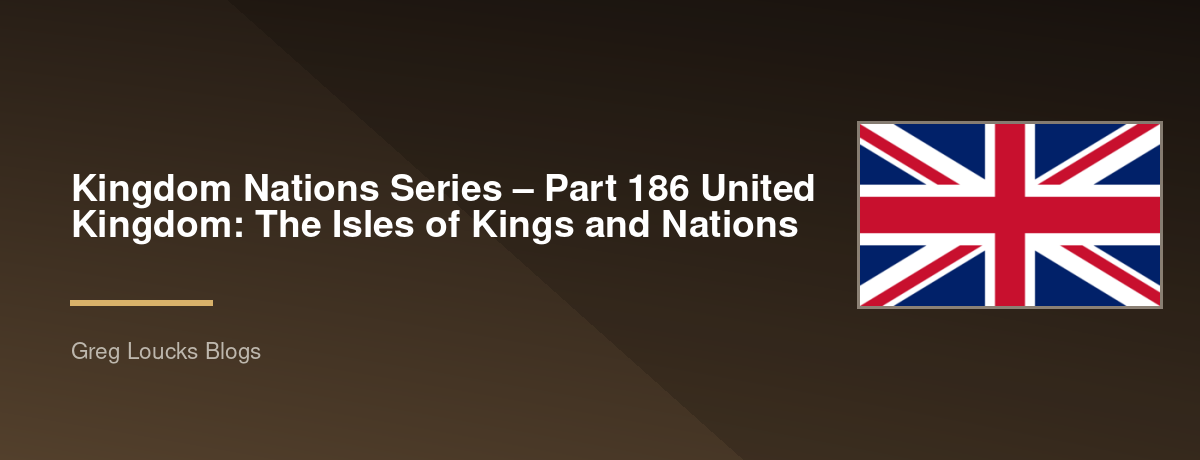
🌎 Kingdom Nations Series – Part 186 🇬🇧 United Kingdom: The Isles of Kings and Nations

🌎 Kingdom Nations Series – Part 186 🇬🇧 Chapter 1 – Part 1 United Kingdom: The Isles of Kings and Nations England, Scotland, Wales, Northern Ireland, Great Britain, the British Isles, London, Edinburgh, Cardiff, Belfast, the Thames, the Severn, the Scottish Highlands, the Welsh Mountains, Cornwall, the Lake District, Celtic Heritage, Anglo-Saxon England, Norman Conquest, Magna Carta, Parliament, the Reformation, the Industrial Revolution, the British Empire, the Commonwealth, Christianity, Literature, Science, Engineering, Maritime Power, the Royal Family, and the United Kingdom's Kingdom Calling "The earth is the LORD'S, and all its fullness, the world and those who dwell therein." — Psalm 24:1 Introduction The: United Kingdom is: A: Sovereign: State made: Up of: Four: Constituent: Countries. They: Are: England. Scotland. Wales. And: Northern Ireland. Great Britain Great Britain is: The: Island containing: England. Scotland. And: Wales. United Kingdom The: Full: Name is: United Kingdom of Great Britain and Northern Ireland. England England is: The: Largest: Country within: The: United: Kingdom. Scotland Scotland occupies: The: Northern: Part of: Great: Britain. Wales Wales lies: Along: The: Western: Part of: Great: Britain. Northern Ireland Northern: Ireland occupies: The: Northeastern: Part of: The: Island of: Ireland. London London is: The: Capital of: The: United: Kingdom. London London stands on: The: River Thames. Thames The: Thames has: Played: A: Central: Role in: London's: History. Edinburgh Edinburgh is: The: Capital of: Scotland. Cardiff Cardiff is: The: Capital of: Wales. Belfast Belfast is: The: Capital of: Northern: Ireland. Four Nations The: United: Kingdom contains: Distinct: National: Identities. English Identity England has: A: Long: History of: Monarchy. Parliament. Literature. Science. Industry. And: Global: Influence. Scottish Identity Scotland possesses: A: Distinctive: Cultural: Heritage including: Gaelic. Clans. Bagpipes. Highland: Traditions. And: A: Long: Political: History. Welsh Identity Wales possesses: A: Strong: Celtic: Identity. Its: Welsh: Language is: One of: Europe's: Oldest: Living: Languages. Northern Irish Identity Northern: Ireland contains: Complex: British. Irish. Gaelic. Ulster. And: Christian: Heritages. Celtic Heritage The: British: Isles contain: Deep: Celtic: Heritage. Celtic Peoples Celtic: Languages and: Cultural: Traditions survive especially in: Wales. Scotland. Ireland. And: Cornwall. Welsh Language Welsh belongs to: The: Brythonic: Branch of: The: Celtic: Language: Family. Scottish Gaelic Scottish Gaelic belongs to: The: Goidelic: Branch of: The: Celtic: Language: Family. Cornish Cornish is: Another: Brythonic: Celtic: Language. English English is: A: Germanic: Language that: Developed in: England. Anglo-Saxons The: Early: English: Kingdoms developed through: Interactions between: Brittonic. Germanic. And: Other: Peoples. Anglo-Saxon Kingdoms Several: Kingdoms developed in: Early: Medieval: England. Heptarchy The: Traditional: Term for: The: Seven: Major: Anglo-Saxon: Kingdoms is: The: Heptarchy. Wessex Wessex became: One of: The: Most: Powerful: Kingdoms. Alfred the Great Alfred the Great became: One of: England's: Most: Important: Medieval: Kings. Alfred Alfred defended: Wessex against: Viking: Armies. Learning Alfred also: Supported: Education. Translation. And: Literature. Vikings Scandinavian: Vikings raided and: Settled in: Parts of: Britain. Danelaw Large: Parts of: England came under: Danish: Influence in: The: Danelaw. Scotland Scotland developed its: Own: Kingdom and: Political: Traditions. Picts The: Picts were: An: Important: Ancient: People of: Northern: Britain. Gaelic Scotland Gaelic: Culture became: Deeply: Established in: Scotland. Kenneth MacAlpin Kenneth MacAlpin is: Traditionally: Associated with: The: Formation of: The: Kingdom of: Scotland. Wales Welsh: Kingdoms survived for: Centuries against: Anglo-Saxon and: Later: Norman: Expansion. Gwynedd Gwynedd became: One of: The: Most: Powerful: Welsh: Kingdoms. Llywelyn the Great Llywelyn the Great became: A: Major: Welsh: Prince. Llywelyn ap Gruffudd Llywelyn ap Gruffudd was: The: Last: Welsh: Prince to: Hold: The: Title of: Prince of: Wales before: Edwardian: Conquest. Norman Conquest In: 1066, William: Duke of: Normandy invaded: England. William the Conqueror William the Conqueror became: King of: England. Norman Rule The: Normans transformed: England's: Political. Legal. Architectural. And: Cultural: Landscape. Tower of London The: Tower of London was: Among: The: Most: Famous: Norman: Fortifications. Castles Norman: Rule produced: A: Major: Expansion of: Castle: Building. Domesday Book The: Domesday Book was: Commissioned by: William in: 1086. Medieval England England developed: A: Strong: Monarchy. Church. Nobility. And: Legal: System. Magna Carta In: 1215, Magna Carta was: Issued. Magna Carta It: Became: A: Symbol of: The: Principle that: Political: Power is: Subject to: Law. Parliament England gradually: Developed: Institutions of: Representative: Government. Parliament The: English: Parliament became: One of: The: World's: Most: Influential: Legislative: Institutions. Scotland and England The: Kingdoms of: Scotland and: England remained: Separate for: Centuries. Wars of Independence Scotland fought: For: Independence from: England during: The: Late: Thirteenth and: Fourteenth: Centuries. William Wallace William Wallace became: A: Symbol of: Scottish: Resistance. Robert the Bruce Robert the Bruce became: King of: Scots and: Led: Scottish: Forces during: The: Wars of: Independence. Bannockburn The: Battle of Bannockburn in: 1314 became: A: Major: Scottish: Victory. Scottish Crown Scotland retained: Its: Own: Monarchy until: The: Crowns were: United. Union of the Crowns In: 1603, King: James VI of: Scotland became: James I of: England. James VI and I This: Created: A: Union of the Crowns while: England and: Scotland remained: Separate: Kingdoms. King James Bible During: James's: Reign, The: King James Version of: The: Bible was: Published in: 1611. Bible Translation The: King: James: Bible became: One of: The: Most: Influential: English: Translations in: History. Wales and England Wales was: Gradually: Integrated into: The: English: Political: System. Laws in Wales The: Laws in Wales Acts of: The: Sixteenth: Century formally: Integrated: Wales with: England. Reformation The: Sixteenth: Century brought: Major: Religious: Changes to: Britain. Henry VIII Henry VIII broke: With: Papal: Authority and: Established: The: Church of England. Church of England The: Church became: England's: Established: Church. Anglican Tradition Anglicanism became: A: Major: Christian: Tradition around: The: World. Scotland The: Scottish: Reformation established: A: Predominantly: Reformed: Protestant: Tradition. John Knox John Knox became: A: Major: Leader of: The: Scottish: Reformation. Presbyterianism Scotland developed: A: Strong: Presbyterian: Tradition. Wales Wales also: Developed: Strong: Nonconformist: Christian: Communities. Northern Ireland Northern: Ireland contains: Deep: Christian: Heritage across: Catholic. Protestant. Presbyterian. And: Anglican: Traditions. Great Britain In: 1707, The: Kingdoms of: England and: Scotland entered: The: Kingdom of Great Britain. Union The: Union created: A: Single: Kingdom while: Retaining: Distinct: Scottish. English. And: Welsh: Identities. Act of Union The: Union created: A: New: Political: State with: A: Shared: Parliament. Ireland The: Kingdom of: Ireland was: Later: United with: Great: Britain. United Kingdom In: 1801, The: United Kingdom of Great Britain and Ireland was: Created. Irish Independence In: The: Twentieth: Century, Most of: Ireland became: Independent. Northern Ireland Northern: Ireland remained: Part of: The: United: Kingdom. Industrial Revolution Britain became: The: Birthplace of: The: Industrial Revolution. Coal Coal powered: Factories. Railways. Ships. And: Industry. Steam Engine The: Steam: Engine transformed: Transportation and: Manufacturing. James Watt James Watt played: A: Major: Role in: Improving: The: Steam: Engine. Textile Industry Britain developed: Large: Textile: Industries. Manchester Manchester became: A: Major: Industrial: City. Birmingham Birmingham became: A: Major: Center of: Manufacturing. Engineering. And: Metalworking. Liverpool Liverpool became: A: Major: Port of: The: Industrial: Age. Railways Britain developed: Modern: Railway: Technology. George Stephenson George Stephenson became: A: Pioneer of: Railway: Engineering. Steamships British: Engineers transformed: Ocean: Transportation. Maritime Power The: Royal: Navy became: One of: The: Most: Powerful: Navies in: The: World. Empire Britain built: A: Global: Empire. British Empire At: Its: Height, The: British: Empire controlled: Territories across: Every: Major: Region of: The: World. Colonial Legacy The: Empire left: A: Deep: And: Complicated: Legacy. Trade British: Ships connected: Ports across: The: World. India India became: The: Most: Important: Territory within: The: British: Empire. Africa Britain controlled: Large: Areas of: Africa. Canada Canada developed as: A: Major: British: Dominion. Australia Australia became: Another: Major: British: Dominion. New Zealand New: Zealand also: Developed within: The: British: Imperial: System. Caribbean British: Colonies developed throughout: The: Caribbean. Commonwealth After: Decolonization, Many: Former: British: Territories became: Members of: The: Commonwealth. English Language British: Expansion helped: Make: English a: Global: Language. Science Britain produced: Major: Scientific: Discoveries. Isaac Newton Isaac Newton transformed: Physics. Mathematics. And: Astronomy. Newton His: Work became: Foundational to: Modern: Science. Charles Darwin Charles Darwin developed: The: Theory of: Evolution by: Natural: Selection. Michael Faraday Michael Faraday made: Major: Contributions to: Electromagnetism. James Clerk Maxwell James Clerk Maxwell developed: Foundational: Theories of: Electromagnetism. Alan Turing Alan Turing became: One of: The: Founders of: Modern: Computer: Science. Computing Britain played: A: Major: Role in: The: Development of: Modern: Computing. Bletchley Park Bletchley Park became: A: Major: Center for: Codebreaking during: World: War: II. Enigma British: Codebreakers worked to: Break: German: Military: Codes. Alan Turing Turing's: Work contributed: Significantly to: Allied: Codebreaking. Literature Britain has: Produced: Some of: The: World's: Most: Influential: Writers. William Shakespeare William Shakespeare is: Perhaps: The: Most: Famous: English: Writer in: History. Shakespeare His: Plays continue: To: Influence: Theater. Literature. Film. And: Language. Geoffrey Chaucer Geoffrey Chaucer helped: Shape: Middle: English: Literature. Jane Austen Jane Austen became: One of: The: Most: Influential: English: Novelists. Charles Dickens Charles Dickens documented: The: Social: Conditions of: Industrial: Britain through: Literature. J.R.R. Tolkien J.R.R. Tolkien transformed: Modern: Fantasy: Literature. C.S. Lewis C.S. Lewis became: One of: The: Most: Influential: Christian: Writers of: The: Twentieth: Century. George Herbert Christian: Poetry also: Has: Deep: Roots in: British: Literature. Music Britain has: Produced: Global: Musical: Movements. The Beatles The Beatles transformed: Popular: Music in: The: Twentieth: Century. British Rock British: Rock became: A: Major: Global: Cultural: Export. Architecture Britain contains: Ancient. Medieval. Georgian. Victorian. And: Modern: Architecture. Stonehenge Stonehenge is: One of: Britain's: Most: Famous: Prehistoric: Monuments. Stonehenge Its: Purpose remains: Part of: An: Ongoing: Archaeological: Study. Roman Britain The: Romans conquered: Large: Parts of: Britain. Hadrian's Wall Hadrian's Wall marked: The: Northern: Frontier of: Roman: Britain. Bath Bath contains: Remarkable: Roman: Heritage. Roman Roads Roman: Roads helped: Connect: Settlements across: Britain. Medieval Cathedrals Britain contains: Some of: Europe's: Great: Medieval: Cathedrals. Canterbury Cathedral Canterbury Cathedral became: A: Major: Center of: English: Christianity. York Minster York Minster became: A: Major: Gothic: Cathedral in: Northern: England. Westminster Abbey Westminster Abbey became: One of: The: Most: Important: Royal. Religious. And: Historical: Sites in: Britain. Monarchy The: British: Monarchy is: One of: The: World's: Oldest: Continuing: Monarchical: Institutions. Crown The: Crown represents: Continuity. Tradition. And: National: Ceremony. Parliament The: United: Kingdom is: A: Constitutional: Monarchy with: A: Parliamentary: Government. Westminster The: Palace of Westminster houses: The: UK: Parliament. House of Commons The: House of Commons is: The: Elected: Lower: House. House of Lords The: House of Lords is: The: Upper: House. Democracy The: United: Kingdom has: Played: A: Major: Role in: The: Development of: Modern: Parliamentary: Democracy. Constitutional Tradition Britain does: Not: Have: A: Single: Codified: Constitution in: The: Same: Form as: Many: Other: Countries. Common Law British: Common Law became: One of: The: World's: Most: Influential: Legal: Traditions. Rule of Law The: Rule of: Law became: A: Central: Principle of: British: Political: Tradition. Habeas Corpus The: Principle of: Protection against: Unlawful: Detention became: Important in: British: Legal: History. Human Rights British: Political: And: Legal: Traditions contributed to: Modern: Discussions of: Rights and: Liberty. World Wars Britain played: A: Major: Role in: Both: World: Wars. World War I British: Forces fought across: Europe. The: Middle: East. Africa. And: The: Seas. World War II Britain became: A: Major: Base for: The: Allied: War: Effort. Winston Churchill Winston Churchill became: One of: The: Most: Famous: British: Leaders of: World: War: II. Churchill His: Speeches became: Symbols of: British: Resistance. Battle of Britain The: Battle of Britain became: A: Major: Air: Campaign of: World: War: II. Royal Air Force The: Royal Air Force played: A: Central: Role in: Defending: Britain. Commonwealth Britain maintained: Deep: Relationships with: Commonwealth: Nations. London London became: A: Global: Center of: Finance. Culture. Politics. Media. Education. And: Arts. Financial City The: City of London became: One of: The: World's: Major: Financial: Centers. Technology Modern: Britain possesses: Strong: Industries in: Technology. Finance. Pharmaceuticals. Aerospace. Media. And: Creative: Industries. BBC The: BBC became: One of: The: World's: Most: Influential: Public: Broadcasters. Film Britain has: A: Major: Film: Industry. Pinewood Pinewood Studios became: An: Important: Center for: British and: International: Film: Production. James Bond The: James Bond film: Franchise became: One of: Britain's: Most: Successful: Cultural: Exports. National Parks Britain contains: Beautiful: National: Landscapes. Lake District The: Lake District contains: Mountains. Lakes. Valleys. And: Historic: Communities. Scottish Highlands The: Scottish Highlands contain: Some of: Britain's: Most: Dramatic: Landscapes. Loch Ness Loch Ness is: One of: Scotland's: Most: Famous: Lakes. Ben Nevis Ben Nevis is: The: Highest: Mountain in: The: United: Kingdom. Wales Wales contains: Mountainous: Landscapes. Snowdonia Eryri National Park formerly: Known as: Snowdonia, contains: Some of: Wales's: Most: Dramatic: Mountain: Scenery. Cornwall Cornwall possesses: A: Distinctive: Coastal. Celtic. And: Mining: Heritage. Northern Ireland Northern: Ireland contains: Dramatic: Coastal: Landscapes. Giant's Causeway The: Giant's Causeway is: A: World: Famous: Basalt: Formation. Ulster Ulster contains: A: Complex: Cultural: And: Historical: Heritage. Agriculture Britain has: Long: Been: An: Agricultural: Country. Sheep Sheep: Farming is: Especially: Important in: Wales. Scotland. And: Northern: England. Highlands Scottish: Highland: Farming developed under: Challenging: Climatic: Conditions. Fisheries Fishing has: Long: Been: Important to: Coastal: Communities. Maritime Heritage Britain's: Island: Geography helped: Create: A: Powerful: Maritime: Tradition. Royal Navy The: Royal: Navy remains: A: Major: Institution of: The: United: Kingdom. Merchant Navy Merchant: Shipping helped: Build: Britain's: Global: Trade: Networks. Kingdom Assignment The: United: Kingdom's: Kingdom: Assignment can: Be: Summarized as: Island nation. Four-nations nation. English nation. Scottish nation. Welsh nation. Northern Irish nation. Celtic heritage nation. Anglo-Saxon heritage nation. Norman heritage nation. Christian heritage nation. Anglican nation. Presbyterian heritage nation. Parliamentary nation. Monarchical nation. Common-law nation. Maritime nation. Industrial nation. Scientific nation. Literary nation. Technological nation. Financial nation. Commonwealth nation. Global English-language nation. Royal Navy nation. Atlantic nation. North Sea nation. English Channel nation. Celtic Sea nation. Thames nation. Scottish Highlands nation. Welsh mountain nation. Northern Irish nation. Island bridge nation. Prayer for the United Kingdom Pray: For the United Kingdom. For England. For Scotland. For Wales. For Northern Ireland. For London. For Edinburgh. For Cardiff. For Belfast. For Manchester. For Birmingham. For Liverpool. For Glasgow. For every city. For every village. For every island. For every community. For the Royal Family. For the government. For Parliament. For the House of Commons. For the House of Lords. For local governments. For judges. For public servants. For teachers. For students. For scientists. For engineers. For doctors. For nurses. For farmers. For fishermen. For sailors. For soldiers. For veterans. For police. For firefighters. For entrepreneurs. For business owners. For artists. For writers. For musicians. For filmmakers. For journalists. For churches. For Anglican communities. For Presbyterian communities. For Catholic communities. For Orthodox Christians. For other Christian communities. For Muslims. For Jews. For people of every faith. For religious freedom. For the English language. For Welsh. For Scottish Gaelic. For Cornish. For Irish Gaelic heritage. For Celtic culture. For Anglo-Saxon heritage. For Norman heritage. For traditional music. For literature. For poetry. For theater. For film. For the BBC. For British arts. For British science. For British technology. For universities. For Oxford. For Cambridge. For research institutions. For innovation. For artificial intelligence. For cybersecurity. For aerospace. For medicine. For engineering. For the Thames. For the Severn. For the Clyde. For the Forth. For the Mersey. For the Scottish lochs. For Welsh rivers. For Northern Irish lakes. For the North Sea. For the Atlantic. For the English Channel. For the Celtic Sea. For the Scottish Highlands. For the Welsh mountains. For Cornwall. For the Lake District. For the Giant's Causeway. For Stonehenge. For Hadrian's Wall. For Westminster Abbey. For Canterbury. For York. For ancient churches. For historic cathedrals. For forests. For wetlands. For wildlife. For marine ecosystems. For sustainable agriculture. For fisheries. For renewable energy. For energy security. For environmental protection. For the United Kingdom to become: A leader in science. A leader in technology. A leader in medicine. A leader in literature. A leader in the arts. A leader in environmental stewardship. A leader in maritime security. A leader in peaceful diplomacy. A leader in humanitarian service. For the nations. Britain Before the Throne The: Islands have: Known: Ancient: Hunter-gatherers. Farmers. Celtic: Peoples. Roman: Rule. Anglo-Saxon: Kingdoms. Viking: Settlement. Norman: Conquest. Medieval: Kingdoms. Christian: Monasteries. The: Magna: Carta. Parliament. The: Reformation. The: Union of: The: Crowns. The: Kingdom of: Great: Britain. The: United: Kingdom. The: Industrial: Revolution. The: British: Empire. The: World: Wars. The: Commonwealth. And: The: Modern: United: Kingdom. From Stonehenge to Westminster Britain demonstrates: The: Extraordinary: Continuity of: Human: Settlement across: Thousands of: Years. From Roman Britain to Anglo-Saxon Kingdoms Britain demonstrates: How: Civilizations can: Transform while: Leaving: Layers of: Cultural: Memory. From Vikings to England Britain demonstrates: How: Migration and: Conflict can: Create: New: Cultures. From Alfred to Parliament Britain demonstrates: The: Development of: Political: Institutions over: Centuries. From William the Conqueror to Magna Carta Britain demonstrates: That: Monarchical: Power can: Become: Bound by: Law. From the Scottish Wars of Independence Britain demonstrates: The: Power of: National: Identity. From Wales to Celtic Preservation Britain demonstrates: The: Resilience of: Ancient: Languages and: Cultures. From James VI and I to Great Britain Britain demonstrates: The: Complex: Process of: Political: Union. From Great Britain to the United Kingdom Britain demonstrates: The: Evolution of: A: Multi-national: State. From Reformation to Christianity Britain demonstrates: The: Power of: Religious: Transformation. From Steam Engines to Industry Britain demonstrates: The: Transformative: Power of: Engineering. From Manchester to the World Britain demonstrates: How: Industrial: Innovation can: Change: Global: Economics. From Newton to Turing Britain demonstrates: The: Power of: Scientific: Discovery. From Shakespeare to Tolkien Britain demonstrates: The: Global: Power of: Literature. From Ships to Empire Britain demonstrates: The: Power and: Responsibility of: Maritime: Connection. From Empire to Commonwealth Britain demonstrates: The: Complex: Legacy of: Imperial: History. From Churchill to the Modern World Britain demonstrates: The: Importance of: Leadership during: National: Crisis. From Bletchley Park to Computing Britain demonstrates: How: Mathematics. Engineering. And: Intelligence can: Transform: History. From London to the Commonwealth Britain demonstrates: The: Continuing: Influence of: A: Global: Language and: Institutional: Networks. Kingdom Perspective The: United: Kingdom teaches: A nation can contain multiple historic peoples while maintaining a shared political framework. England. Scotland. Wales. Northern: Ireland. Each: Has: Its: Own: History. Yet: All: Participate in: A: Shared: State. Thames Teaches: Connection. Highlands Teach: Endurance. Welsh Mountains Teach: Perseverance. Stonehenge Teaches: Mystery. Cathedrals Teach: Worship. Parliament Teaches: Accountability. Magna Carta Teaches: Law. Shakespeare Teaches: Imagination. Newton Teaches: Discovery. Turing Teaches: Innovation. Kingdom Calling The: United: Kingdom's: Calling can: Be: Understood as: To serve as a steward of parliamentary and legal traditions, a center of scientific and cultural creativity, a guardian of historic Christian heritage, and a bridge connecting the peoples of the British Isles with nations across the wider world. The United Kingdom's Future The: United: Kingdom can: Continue: Leading in: Science. Technology. Medicine. Finance. Arts. Education. And: Diplomacy. England England can: Continue: Serving as: A: Major: Center of: Finance. Culture. Education. And: Innovation. Scotland Scotland can: Continue: Preserving: Its: Distinctive: Culture. Gaelic: Heritage. And: Highland: Traditions. Wales Wales can: Continue: Preserving: Its: Language. Music. Mountains. And: Celtic: Heritage. Northern Ireland Northern: Ireland can: Continue: Building: Peace. Economic: Opportunity. And: Cultural: Connection. British Science Britain can: Continue: Advancing: Medicine. Physics. Engineering. Artificial: Intelligence. And: Space: Science. British Culture Britain can: Continue: Producing: Literature. Music. Film. Television. Theater. And: Art. Environment Britain can: Expand: Renewable: Energy. Marine: Conservation. Reforestation. And: Sustainable: Agriculture. Maritime Future The: United: Kingdom can: Continue: Serving as: A: Major: Atlantic: And: North: Sea: Maritime: Power. Commonwealth The: United: Kingdom can: Continue: Building: Peaceful: Relationships with: Commonwealth: Nations. Final Commission May the United Kingdom become a nation of: Wisdom. Justice. Peace. Creativity. Faith. Science. Freedom. Stewardship. And: Service. May England flourish. May Scotland flourish. May Wales flourish. May Northern Ireland flourish. May London flourish. May Edinburgh flourish. May Cardiff flourish. May Belfast flourish. May Manchester flourish. May Birmingham flourish. May Liverpool flourish. May Glasgow flourish. May every city flourish. May every village flourish. May every island flourish. May every community flourish. May the Royal Family flourish. May Parliament flourish. May wise government flourish. May justice flourish. May the rule of law flourish. May democracy flourish. May public servants prosper. May teachers prosper. May students prosper. May scientists prosper. May engineers prosper. May doctors prosper. May nurses prosper. May farmers prosper. May fishermen prosper. May sailors prosper. May soldiers prosper. May veterans prosper. May entrepreneurs prosper. May artists prosper. May writers prosper. May musicians prosper. May filmmakers prosper. May journalists prosper. May churches flourish. May Anglican communities flourish. May Presbyterian communities flourish. May Catholic communities flourish. May Orthodox Christians flourish. May every Christian community flourish. May Muslims flourish. May Jews flourish. May every religious community flourish. May religious freedom flourish. May English flourish. May Welsh flourish. May Scottish Gaelic flourish. May Cornish flourish. May Celtic heritage flourish. May traditional music flourish. May literature flourish. May poetry flourish. May theater flourish. May film flourish. May the BBC flourish. May British science flourish. May British technology flourish. May universities flourish. May research flourish. May innovation flourish. May artificial intelligence be developed: Wisely. May cybersecurity strengthen. May aerospace flourish. May medicine flourish. May engineering flourish. May the Thames remain: Healthy. May the Severn remain: Healthy. May the Clyde remain: Healthy. May the Forth remain: Healthy. May the Mersey remain: Healthy. May Scotland's lochs remain: Protected. May Welsh rivers remain: Protected. May Northern Ireland's lakes remain: Protected. May the North Sea remain: Healthy. May the Atlantic remain: Healthy. May the English Channel remain: Healthy. May the Celtic Sea remain: Healthy. May the Scottish Highlands remain: Protected. May the Welsh mountains remain: Protected. May Cornwall flourish. May the Lake District flourish. May the Giant's Causeway remain: Protected. May Stonehenge remain: Protected. May Hadrian's Wall remain: Protected. May Westminster Abbey remain: Preserved. May Canterbury remain: A: Place of: Christian: Heritage. May historic cathedrals remain: Protected. May forests flourish. May wetlands flourish. May wildlife flourish. May marine ecosystems flourish. May sustainable agriculture flourish. May fisheries flourish. May renewable energy flourish. May energy security strengthen. May environmental stewardship flourish. May the United Kingdom become: A leader in science. May the United Kingdom become: A leader in technology. May the United Kingdom become: A leader in medicine. May the United Kingdom become: A leader in literature. May the United Kingdom become: A leader in the arts. May the United Kingdom become: A leader in environmental stewardship. May the United Kingdom become: A leader in maritime security. May the United Kingdom become: A leader in peaceful diplomacy. May the United Kingdom become: A leader in humanitarian service. May the United Kingdom contribute: To peace in Europe. May the United Kingdom contribute: To peace across the Atlantic. May the United Kingdom contribute: To the protection of the seas. May the United Kingdom contribute: To scientific discovery. May the United Kingdom contribute: To the preservation of Christian heritage. May the United Kingdom contribute: To the flourishing of the Commonwealth. May the United Kingdom contribute: To the flourishing of the nations. May its rivers provide: Life. May its mountains provide: Strength. May its fields provide: Provision. May its seas provide: Connection. May its universities provide: Knowledge. May its writers provide: Wisdom. May its scientists provide: Discovery. May its artists provide: Beauty. May its people provide: Hospitality. And may the peoples of the United Kingdom, together with every nation, tribe, people, and language, remember: "The earth is the LORD'S, and all its fullness, the world and those who dwell therein." (Psalm 24:1) Amen. 🇬🇧 Kingdom Nations Series – Part 186 United Kingdom From Stonehenge to Westminster. From ancient Britons to Celtic kingdoms. From Picts to Scotland. From Gwynedd to Wales. From Anglo-Saxon kingdoms to England. From Vikings to the Danelaw. From Alfred the Great to Wessex. From William the Conqueror to Norman England. From castles to the Tower of London. From Domesday to medieval government. From Magna Carta to the rule of law. From William Wallace to Scottish independence. From Robert the Bruce to Bannockburn. From James VI and I to the Union of the Crowns. From the King James Bible to the English-speaking world. From Henry VIII to the Church of England. From John Knox to Presbyterian Scotland. From Celtic Christianity to the Reformation. From England and Scotland to Great Britain. From Ireland to the United Kingdom. From the Industrial Revolution to the modern world. From coal to steam. From Manchester to industry. From Birmingham to engineering. From Liverpool to maritime trade. From railways to global transportation. From the Royal Navy to the seas. From the British Empire to the Commonwealth. From Newton to modern physics. From Faraday to electricity. From Maxwell to electromagnetism. From Darwin to modern biology. From Turing to computing. From Bletchley Park to codebreaking. From Shakespeare to world literature. From Austen to the novel. From Dickens to social commentary. From Tolkien to fantasy. From C.S. Lewis to Christian literature. From the bandstand to British rock. From the Beatles to global music. From Stonehenge to modern architecture. From Roman Britain to Hadrian's Wall. From Canterbury to Christian heritage. From Westminster Abbey to the Crown. From Parliament to representative government. From London to global finance. From Oxford to Cambridge. From science to technology. From medicine to innovation. From the Lake District to the Scottish Highlands. From Cornwall to the Giant's Causeway. From the Thames to the Atlantic. From England to Scotland. From Scotland to Wales. From Wales to Northern Ireland. From the four nations to one United Kingdom. From Britain to Europe. From Britain to the Commonwealth. From the British Isles to the nations. From the United Kingdom to the Kingdom. From the Isles of Kings and Nations to the throne. End of Kingdom Nations Series – Part 186: 🇬🇧 United Kingdom

Read more 🌎 Kingdom Nations Series – Part 186 🇬🇧 United Kingdom: The Isles of Kings and Nations

🌎 Kingdom Nations Series – Part 185 🇦🇪 United Arab Emirates: The Gateway of the Gulf

🌎 Kingdom Nations Series – Part 185 🇦🇪 Chapter 1 – Part 1 United Arab Emirates: The Gateway of the Gulf Abu Dhabi, Dubai, Sharjah, Ajman, Umm Al Quwain, Ras Al Khaimah, Fujairah, the Arabian Gulf, the Empty Quarter, Ancient Trade Routes, Bedouin Heritage, Pearl Diving, Islam, the Trucial States, Sheikh Zayed, Federation, Oil, Gas, Aviation, Ports, Finance, Technology, Masdar, Expo 2020, Burj Khalifa, Jebel Jais, Al Ain, Liwa, Hajar Mountains, Desert Conservation, and the UAE's Kingdom Calling "The earth is the LORD'S, and all its fullness, the world and those who dwell therein." — Psalm 24:1 Introduction The: United Arab Emirates is: A: Federation of: Seven: Emirates located on: The: Arabian: Peninsula. The: Seven: Emirates are: Abu Dhabi. Dubai. Sharjah. Ajman. Umm Al Quwain. Ras Al Khaimah. Fujairah. The Gulf The: United: Arab: Emirates faces: The: Arabian Gulf. The: Gulf has: Connected: Arabia with: Mesopotamia. Persia. India. East: Africa. And: The: Wider: Indian: Ocean: World. Abu Dhabi Abu Dhabi is: The: Capital of: The: United: Arab: Emirates. Abu Dhabi Emirate Abu Dhabi is: The: Largest of: The: Seven: Emirates by: Area. Dubai Dubai is: The: Most: Internationally: Recognized: City of: The: Federation. Dubai Dubai has: Become: A: Major: Center for: Trade. Finance. Tourism. Aviation. Real: Estate. Technology. And: International: Business. Sharjah Sharjah is: Known for: Its: Cultural. Educational. And: Artistic: Institutions. Ajman Ajman is: The: Smallest: Emirate by: Area. Umm Al Quwain Umm Al Quwain contains: Important: Coastal. Marine. And: Archaeological: Heritage. Ras Al Khaimah Ras Al Khaimah is: Known for: Mountains. Desert. Agriculture. And: Historical: Sites. Fujairah Fujairah is: The: Only: Emirate located entirely on: The: Gulf of: Oman coast. Gulf of Oman The: Gulf of: Oman connects the: Arabian: Gulf with: The: Arabian: Sea. Hajar Mountains The: Hajar Mountains stretch through: The: Eastern: United: Arab: Emirates. Jebel Jais Jebel Jais in: Ras Al Khaimah is: The: Highest: Mountain in: The: United: Arab: Emirates. Al Ain Al Ain is: An: Historic: Oasis in: The: Abu Dhabi: Emirate. Oasis Oases have: Long: Provided: Water. Food. Shade. And: Settlement in: The: Arabian: Desert. Liwa The: Liwa Oasis lies: Along: The: Northern: Edge of: The: Empty: Quarter. Empty Quarter The: Rub' al Khali or: Empty Quarter is: One of: The: Largest: Continuous: Sand: Deserts in: The: World. Desert The: Desert has: Shaped: Emirati: Culture for: Thousands of: Years. Bedouin Heritage Bedouin: Communities developed: Sophisticated: Knowledge of: Desert: Travel. Water. Animals. Weather. And: Navigation. Desert Navigation Desert: Travelers learned: To: Navigate using: Stars. Landmarks. Wells. Dunes. And: Traditional: Knowledge. Camels The: camel was: Essential to: Traditional: Arabian: Life. Camel Camels provided: Transportation. Milk. Meat. And: Trade: Capacity. Arabian Horses The: Arabian horse has: A: Long: History in: The: Arabian: Peninsula. Horses Arabian: Horses became: Known for: Endurance. Speed. And: Adaptability. Falconry Falconry is: One of: The: Most: Important: Traditional: Heritages of: The: Gulf. Falcons Falcons were: Used in: Hunting and: Became: Symbols of: Honor. Skill. And: Heritage. Pearling Before: Oil, the: Pearl: Industry was: Central to: The: Economy of: The: Gulf. Pearl Diving Pearl: Divers entered: The: Gulf to: Collect: Oysters. Pearls Pearls were: Exported to: Markets across: The: Indian: Ocean. Pearl Culture Pearling required: Courage. Skill. Endurance. And: Community: Organization. Fishing Fishing was: Another: Important: Traditional: Industry. Maritime Heritage Emirati: Communities maintained: Strong: Connections with: The: Sea. Dhow The: dhow became: A: Traditional: Arabian: Trading: Vessel. Indian Ocean Dhows connected: The: Gulf with: India. Pakistan. East: Africa. And: Other: Indian: Ocean: Ports. Trade Long-distance: Trade helped: Create: Connections between: Arabia and: The: Wider: World. Ancient Settlements Archaeological: Evidence shows: That: People have: Lived in: The: UAE for: Thousands of: Years. Umm Al Nar The: Umm Al Nar culture flourished during: The: Third: Millennium: BC. Umm Al Nar Its: People participated in: Regional: Trade networks. Magan Ancient: Texts associate: Parts of: The: Oman: Peninsula with: A: Land known as: Magan. Copper Copper was: One of: The: Important: Resources traded through: The: Ancient: Region. Mesopotamia Trade connected: The: Gulf with: Ancient: Mesopotamia. India Maritime: Routes connected: Arabia with: The: Indian: Subcontinent. East Africa Trade also: Connected: The: Arabian: Peninsula with: East: Africa. Islam Islam became: The: Foundational: Religion of: The: Region during: The: Seventh: Century. Prophet Muhammad The: Rise of: Islam transformed: The: Arabian: Peninsula and: Connected: Arab: Communities through: A: Common: Faith. Islam The: UAE is: A: Muslim-majority: Federation. Mosque Mosques remain: Central to: Community: Life. Sheikh Zayed Grand Mosque The: Sheikh Zayed Grand Mosque in: Abu Dhabi is: One of: The: Nation's: Most: Recognizable: Landmarks. Abu Dhabi Abu Dhabi became: The: Political: Center of: The: Federation. Dubai Dubai developed: A: Distinctive: Commercial: Identity. Sharjah Sharjah became: A: Major: Cultural: Center. Trucial States Before: Federation, The: Emirates were: Known as: The: Trucial States. British Relations Britain established: Treaty: Relationships with: The: Coastal: Sheikhdoms. Maritime Truce Treaties helped: Reduce: Maritime: Conflict and: Protect: Trade. British Influence British: Influence continued until: The: End of: The: Protectorate: Arrangement. Federation The: United: Arab: Emirates was: Established on: 2 December 1971. Seven Emirates Six: Emirates joined the: Federation at: Its: Founding. Ras Al Khaimah Ras Al Khaimah joined the: Federation in: 1972. Sheikh Zayed Sheikh Zayed bin Sultan Al Nahyan was: The: Founding: President of: The: UAE. Sheikh Zayed He: Played: A: Central: Role in: Building: The: Federation. Federation Building The: UAE demonstrated: That: Separate: Emirates could: Cooperate within: A: Unified: Federal: State. Abu Dhabi Oil: Wealth provided: The: Financial: Foundation for: Large-scale: Development. Oil The: UAE possesses: Major: Petroleum: Resources. Abu Dhabi Oil Abu Dhabi contains: The: Majority of: The: Federation's: Oil: Reserves. Natural Gas Natural: Gas is: Also: Important to: The: Energy: Sector. Energy The: Energy: Industry became: A: Foundation for: Infrastructure: Development. Infrastructure The: UAE invested: Heavily in: Roads. Ports. Airports. Schools. Hospitals. Utilities. And: Cities. Modernization The: Nation transformed: Rapidly during: The: Late: Twentieth: Century. Dubai Dubai became: One of: The: World's: Major: Business: Hubs. Burj Khalifa The: Burj Khalifa became: One of: The: Most: Recognizable: Buildings on: Earth. Dubai Skyline Dubai's: Skyline became: A: Symbol of: Rapid: Urban: Development. Palm Jumeirah The: Palm Jumeirah became: A: Major: Example of: Large-scale: Coastal: Development. Ports The: UAE possesses: Major: International: Ports. Jebel Ali Jebel Ali Port in: Dubai became: A: Major: Global: Shipping: Hub. Maritime Trade The: UAE became: A: Major: Gateway between: Asia. Europe. Africa. And: The: Middle: East. Aviation Aviation became: One of: The: UAE's: Most: Important: Industries. Dubai International Airport Dubai International Airport became: One of: The: World's: Major: International: Air: Hubs. Emirates Emirates became: A: Globally: Recognized: Airline based in: Dubai. Abu Dhabi Abu Dhabi also: Developed: Major: Aviation: Infrastructure. Etihad Airways Etihad Airways became: The: National: Airline of: The: UAE. Trade The: UAE became: A: Major: Re-export: Center. Free Zones Free: Zones helped: Attract: International: Businesses. Finance Dubai and: Abu Dhabi developed: Important: Financial: Centers. Abu Dhabi Global Market Abu Dhabi developed: An: International: Financial: Center known as: ADGM. Dubai International Financial Centre Dubai developed: The: DIFC as: A: Major: Financial: District. Technology The: UAE has: Invested in: Technology. Artificial: Intelligence. Robotics. Space. And: Digital: Government. Artificial Intelligence The: UAE has: Made: Artificial: Intelligence a: National: Strategic: Priority. Masdar Masdar in: Abu Dhabi became: A: Major: Center for: Clean: Energy and: Sustainable: Development. Masdar City Masdar City was: Developed as: A: Model for: Sustainable: Urban: Development. Solar Energy The: UAE has: Invested heavily in: Solar: Energy. Mohammed bin Rashid Solar Park The: Mohammed bin Rashid Al Maktoum Solar Park in: Dubai is: One of: The: World's: Large: Solar: Energy: Projects. Nuclear Energy The: UAE also: Developed: Civilian: Nuclear: Power. Barakah The: Barakah Nuclear Energy Plant in: Abu Dhabi became: The: Arab: World's: First: Commercial: Nuclear: Power: Plant. Space The: UAE has: Developed: A: National: Space: Program. Emirates Mars Mission The: Hope Probe reached: Mars in: 2021. Hope Probe The: Mission studied: The: Martian: Atmosphere. Space Ambition The: UAE has: Demonstrated: That: A: Young: Federation can: Participate in: Advanced: Scientific: Research. Education Education has: Been: A: Major: National: Priority. Universities The: UAE hosts: Universities. Research: Centers. And: International: Academic: Institutions. NYU Abu Dhabi NYU Abu Dhabi is: One of: The: International: Universities operating in: The: Country. Culture The: UAE has: Invested in: Museums. Libraries. Arts. Heritage. And: Cultural: Institutions. Louvre Abu Dhabi The: Louvre Abu Dhabi became: A: Major: International: Museum. Sharjah Sharjah has: Developed: A: Strong: Cultural: Identity. Museums Museums preserve: Archaeology. Islamic: Art. Maritime: Heritage. And: Emirati: Culture. Poetry Arabic: Poetry has: Long: Been: Important to: Arabian: Culture. Nabati Poetry Nabati poetry is: A: Traditional: Gulf: Poetic: Tradition. Oral Tradition Poetry was: Historically: Used to: Preserve: History. Wisdom. Genealogy. And: Social: Memory. Arabic Language Arabic is: The: Official: Language of: The: UAE. Gulf Arabic Emirati: Arabic belongs to: The: Gulf: Arabic: Linguistic: Environment. English English is: Widely: Used in: Business. Education. Tourism. And: International: Communication. Population The: UAE has: A: Large: Expatriate: Population. Global Community People from: Asia. Africa. Europe. The: Middle: East. And: Many: Other: Regions live and: Work in: The: UAE. Multicultural Society The: UAE has: Become: One of: The: World's: Most: International: Societies. Indian Ocean Connections Large: South: Asian: Communities reflect: The: Historic: Trade: Connections between: The: Gulf and: Indian: Ocean. Food Emirati: Cuisine reflects: Arabian. Persian. Indian. African. And: Other: Regional: Influences. Dates Dates have: Long: Been: An: Important: Food in: Arabian: Culture. Rice Rice became: An: Important: Part of: Modern: Gulf: Cuisine. Fish Fish remains: An: Important: Traditional: Food. Al Harees Al harees is: A: Traditional: Emirati: Dish made with: Wheat and: Meat. Machboos Machboos is: A: Popular: Rice: Dish prepared with: Meat or: Fish. Desert Life The: Desert remains: A: Central: Part of: National: Identity. Desert Conservation The: UAE has: Created: Protected: Areas for: Desert: Wildlife. Arabian Oryx The: Arabian oryx became: A: Symbol of: Successful: Conservation. Reintroduction Conservation: Programs helped: Reintroduce: The: Oryx into: Protected: Habitats. Gazelles Gazelles remain: Important: Desert: Wildlife. Sea Turtles Coastal: Areas provide: Habitat for: Sea: Turtles. Mangroves Mangroves help: Protect: Coastal: Ecosystems. Abu Dhabi Mangroves Abu Dhabi contains: Extensive: Mangrove: Habitats. Marine Conservation The: UAE has: Developed: Marine: Protected: Areas. Houbara The: houbara bustard has: Long: Been: Associated with: Traditional: Falconry. Falconry Conservation Falconry has: Also: Become: Connected with: Conservation: Programs. Traditional Sports Camel: Racing. Falconry. Horse: Riding. And: Traditional: Boating remain: Important to: Emirati: Heritage. Camel Racing Camel: Racing is: A: Popular: Traditional: Sport. Heritage Traditional: Sports help: Connect: Modern: Emiratis with: Desert: Heritage. National Day 2 December is: UAE: National: Day. Federation The: Union is: A: Central: Part of: National: Identity. Seven Emirates The: Seven: Emirates retain: Their: Own: Local: Governments. Federal System The: Federal: Government handles: National: Responsibilities. Sheikh The: Rulers of: The: Emirates are: Known as: Sheikhs. Abu Dhabi Ruling Family The: Al Nahyan family rules: Abu Dhabi. Dubai Ruling Family The: Al Maktoum family rules: Dubai. Leadership The: UAE has: Developed: A: Political: System combining: Federal: Institutions with: Traditional: Ruling: Families. Diplomacy The: UAE has: Become: An: Important: Diplomatic: And: Economic: Actor in: The: Middle: East. Regional Connections The: UAE is: Connected with: Gulf: Cooperation: Council: States. GCC The: Gulf Cooperation Council includes: Six: Arabian: Gulf: Monarchies. Global Trade The: UAE has: Built: Strong: Economic: Relationships with: Asia. Europe. Africa. And: The: Americas. Dubai Expo Expo 2020 Dubai brought: Countries from: Around: The: World together in: The: UAE. Global Gateway The: UAE has: Positioned: Itself as: A: Gateway between: Continents. Ports Its: Ports connect: The: Indian: Ocean. The: Gulf. And: Global: Shipping: Networks. Aviation Its: Airports connect: The: World. Finance Its: Financial: Centers connect: Capital. Technology Its: Technology: Investments connect: Innovation. Tourism Its: Hotels. Resorts. Museums. Deserts. And: Skylines attract: Visitors from: Around: The: World. Burj Khalifa The: Burj: Khalifa stands as: A: Symbol of: Modern: Engineering. Desert Yet: Beyond: The: Skyscrapers lies: A: Much: Older: Civilization of: Desert. Sea. Oasis. And: Trade. Kingdom Heritage The: UAE shows: How: Ancient: Arabian: Heritage can: Exist alongside: Modern: Technology. Desert and City The: UAE contains: A: Remarkable: Contrast between: Traditional: Desert: Life and: Modern: Metropolitan: Life. Kingdom Assignment The: UAE's: Kingdom: Assignment can: Be: Summarized as: Arabian nation. Gulf nation. Federation nation. Abu Dhabi nation. Dubai nation. Sharjah nation. Ajman nation. Umm Al Quwain nation. Ras Al Khaimah nation. Fujairah nation. Bedouin heritage nation. Pearl-diving nation. Maritime nation. Dhow nation. Desert nation. Oasis nation. Camel nation. Falconry nation. Arabian horse nation. Islamic nation. Arabic-language nation. Gulf trade nation. Oil nation. Natural gas nation. Port nation. Aviation nation. Finance nation. Technology nation. Space nation. Solar-energy nation. Nuclear-energy nation. Conservation nation. Cultural nation. Museum nation. Global gateway nation. Prayer for the United Arab Emirates Pray: For the United Arab Emirates. For Abu Dhabi. For Dubai. For Sharjah. For Ajman. For Umm Al Quwain. For Ras Al Khaimah. For Fujairah. For Al Ain. For Liwa. For every city. For every village. For every Emirati family. For children. For youth. For women. For men. For elders. For citizens. For expatriates. For workers. For entrepreneurs. For business owners. For teachers. For students. For doctors. For nurses. For scientists. For engineers. For pilots. For sailors. For fishermen. For farmers. For artists. For writers. For poets. For musicians. For conservationists. For religious communities. For Muslims. For Christians. For people of every faith. For religious tolerance. For Arabic. For Emirati culture. For Bedouin heritage. For pearl-diving heritage. For dhow builders. For traditional navigation. For falconry. For camel racing. For Arabian horses. For traditional poetry. For Nabati poetry. For traditional foods. For dates. For fishing. For the Arabian Gulf. For the Gulf of Oman. For the Hajar Mountains. For Jebel Jais. For the Empty Quarter. For Liwa Oasis. For Al Ain's oases. For mangroves. For coral reefs. For sea turtles. For Arabian oryx. For gazelles. For houbara. For marine life. For desert wildlife. For conservation. For clean energy. For solar power. For nuclear safety. For Masdar. For technology. For artificial intelligence. For robotics. For space exploration. For the Hope Probe. For education. For universities. For scientific research. For aviation. For ports. For shipping. For finance. For tourism. For international trade. For Expo heritage. For museums. For the Louvre Abu Dhabi. For Sharjah's cultural institutions. For the federal government. For the rulers of the Emirates. For the people of the Emirates. For wisdom in leadership. For justice. For peace. For prosperity. For responsible resource management. For the UAE to become: A leader in clean energy. A leader in desert conservation. A leader in marine conservation. A leader in technology. A leader in space science. A leader in international commerce. A leader in cultural preservation. A leader in humanitarian service. For the nations. The UAE Before the Throne The: Land of: The: Modern: UAE has: Known: Ancient: Settlements. Umm: Al: Nar. Magan. Copper: Trade. Mesopotamian: Connections. Indian: Ocean: Trade. Pearling. Fishing. Bedouin: Life. Oases. Camels. Falcons. Dhows. Islam. Arabian: Tribal: Society. European: Maritime: Contact. The: Trucial: States. British: Treaties. The: End of: The: Protectorate. Federation. Sheikh: Zayed. Oil. Modernization. Dubai: Trade. Abu: Dhabi: Energy. Sharjah: Culture. And: The: Transformation of: A: Desert: Federation into: A: Global: Gateway. From Desert to Federation The: UAE demonstrates: That: Cooperation between: Separate: Political: Communities can: Create: A: Unified: Nation. From Pearls to Petroleum The: UAE demonstrates: The: Extraordinary: Economic: Transformation of: The: Gulf. From Dhows to Container Ships The: UAE demonstrates: The: Continuity of: Maritime: Commerce. From Camels to Aviation The: UAE demonstrates: How: Transportation can: Transform: A: Nation's: Connection with: The: World. From Oases to Skyscrapers The: UAE demonstrates: The: Contrast between: Ancient: Water: Management and: Modern: Urban: Engineering. From Falconry to Space The: UAE demonstrates: The: Ability to: Preserve: Ancient: Heritage while: Pursuing: Future: Technology. From Oil to Solar The: UAE demonstrates: The: Importance of: Preparing for: An: Energy: Transition. From Desert to Conservation The: UAE demonstrates: That: Desert: Ecosystems can: Be: Protected. From Gulf Trade to Global Trade The: UAE demonstrates: The: Strategic: Power of: Geography. From Abu Dhabi to the World The: UAE demonstrates: That: A: Nation located at: The: Crossroads of: Continents can: Become: A: Global: Connector. Kingdom Perspective The: UAE teaches: Geography can become an assignment. The: Arabian: Peninsula lies between: Continents. The: Gulf connects: Oceans. The: Desert connects: Communities. And: Trade connects: Nations. Desert Teaches: Endurance. Oasis Teaches: Provision. Pearl Teaches: Hidden: Treasure. Dhow Teaches: Navigation. Falcon Teaches: Vision. Camel Teaches: Perseverance. Mountain Teaches: Strength. Gulf Teaches: Connection. Federation Teaches: Unity. Kingdom Calling The: UAE's: Calling can: Be: Understood as: To serve as a bridge between Arabia and the wider world, preserving the wisdom of desert and maritime civilization while stewarding resources, developing technology, protecting creation, encouraging peaceful commerce, and building connections between peoples and continents. The UAE's Future The: UAE can: Continue: Diversifying: Beyond: Oil. Energy The: Nation can: Expand: Solar. Nuclear. Hydrogen. And: Other: Low-carbon: Energy. Technology The: UAE can: Continue: Investing in: Artificial: Intelligence. Robotics. Biotechnology. Space. And: Advanced: Manufacturing. Space The: UAE can: Expand: Its: Role in: Space: Science. Education The: Nation can: Continue: Developing: World-class: Universities. Research: Centers. And: Scientific: Institutions. Conservation The: UAE can: Continue: Protecting: Desert. Marine. Mountain. And: Oasis: Ecosystems. Water Water: Security will: Remain: Critical in: An: Extremely: Arid: Environment. Desalination Desalination will: Continue: Playing: A: Major: Role in: Water: Security. Agriculture The: UAE can: Continue: Developing: Water-efficient: Agriculture. Food Security The: Nation can: Strengthen: Food: Security through: Technology. Trade. Controlled: Environment: Agriculture. And: International: Partnerships. Culture The: UAE can: Continue: Preserving: Emirati: Heritage while: Welcoming: Global: Cultures. Global Gateway The: UAE can: Remain: A: Gateway between: Asia. Africa. Europe. And: The: Arab: World. Final Commission May the United Arab Emirates become a nation of: Wisdom. Peace. Justice. Unity. Hospitality. Innovation. Stewardship. Prosperity. And: Vision. May Abu Dhabi flourish. May Dubai flourish. May Sharjah flourish. May Ajman flourish. May Umm Al Quwain flourish. May Ras Al Khaimah flourish. May Fujairah flourish. May Al Ain flourish. May Liwa flourish. May every city flourish. May every village flourish. May every Emirati family flourish. May children flourish. May youth flourish. May women flourish. May men flourish. May elders receive: Honor. May citizens prosper. May expatriates prosper. May workers prosper. May entrepreneurs prosper. May business owners prosper. May teachers prosper. May students prosper. May doctors prosper. May nurses prosper. May scientists prosper. May engineers prosper. May pilots prosper. May sailors prosper. May fishermen prosper. May farmers prosper. May artists prosper. May writers prosper. May poets prosper. May musicians prosper. May conservationists prosper. May communities flourish. May Muslims flourish. May Christians flourish. May people of every faith flourish. May religious tolerance flourish. May Arabic flourish. May Emirati culture flourish. May Bedouin heritage flourish. May pearl-diving heritage remain: Preserved. May dhow-building traditions remain: Preserved. May traditional navigation remain: Remembered. May falconry flourish. May camel racing flourish. May Arabian horses flourish. May Nabati poetry flourish. May traditional foods flourish. May dates flourish. May fishing communities prosper. May the Arabian Gulf remain: Healthy. May the Gulf of Oman remain: Healthy. May the Hajar Mountains remain: Protected. May Jebel Jais remain: Protected. May the Empty Quarter remain: Protected. May Liwa Oasis flourish. May Al Ain's oases flourish. May mangroves flourish. May coral reefs flourish. May sea turtles flourish. May Arabian oryx flourish. May gazelles flourish. May houbara flourish. May marine life flourish. May desert wildlife flourish. May conservation flourish. May clean energy flourish. May solar power flourish. May nuclear safety remain: A: Priority. May Masdar flourish. May artificial intelligence flourish. May robotics flourish. May space science flourish. May the Hope Probe inspire: Future: Generations. May education flourish. May universities flourish. May scientific research flourish. May aviation flourish. May ports flourish. May shipping flourish. May finance flourish. May tourism flourish. May international trade flourish. May museums flourish. May cultural institutions flourish. May the Louvre Abu Dhabi flourish. May Sharjah's cultural institutions flourish. May federal institutions flourish. May wise leadership flourish. May justice flourish. May peace flourish. May prosperity flourish. May responsible resource management flourish. May the UAE become: A leader in clean energy. May the UAE become: A leader in desert conservation. May the UAE become: A leader in marine conservation. May the UAE become: A leader in technology. May the UAE become: A leader in space science. May the UAE become: A leader in international commerce. May the UAE become: A leader in cultural preservation. May the UAE become: A leader in humanitarian service. May the UAE contribute: To peace in the Gulf. May the UAE contribute: To peace in the Middle East. May the UAE contribute: To international commerce. May the UAE contribute: To scientific discovery. May the UAE contribute: To environmental stewardship. May the UAE contribute: To the flourishing of the nations. May its deserts provide: Wisdom. May its oases provide: Life. May its seas provide: Provision. May its ports provide: Connection. May its mountains provide: Strength. May its falcons provide: Vision. May its camels provide: Memory. May its cities provide: Innovation. May its people provide: Hospitality. And may the people of the United Arab Emirates, together with every nation, tribe, people, and language, remember: "The earth is the LORD'S, and all its fullness, the world and those who dwell therein." (Psalm 24:1) Amen. 🇦🇪 Kingdom Nations Series – Part 185 United Arab Emirates From ancient settlements to the federation. From Magan to maritime trade. From Mesopotamia to the Gulf. From copper to commerce. From fishing to pearling. From pearls to petroleum. From Bedouin camps to modern cities. From camels to aviation. From dhows to container ships. From desert paths to global highways. From oases to skyscrapers. From Abu Dhabi to Dubai. From Sharjah to Ajman. From Umm Al Quwain to Ras Al Khaimah. From Fujairah to the Gulf of Oman. From the Hajar Mountains to the Empty Quarter. From Jebel Jais to Liwa. From Al Ain to the desert oasis. From falconry to conservation. From pearl diving to maritime heritage. From Arabian horses to national identity. From Nabati poetry to cultural memory. From Islam to the modern federation. From the Trucial States to independence. From treaties to federation. From 2 December 1971 to the United Arab Emirates. From Sheikh Zayed to national development. From oil to infrastructure. From natural gas to energy security. From ports to global commerce. From Jebel Ali to international shipping. From Dubai International Airport to global aviation. From Emirates to the world. From Etihad to international connection. From finance to investment. From DIFC to global capital. From ADGM to international finance. From Masdar to clean energy. From solar power to a new energy future. From Barakah to civilian nuclear power. From the Hope Probe to Mars. From artificial intelligence to the digital future. From Expo 2020 to global connection. From the Louvre Abu Dhabi to world culture. From desert conservation to the Arabian oryx. From mangroves to marine protection. From traditional heritage to modern innovation. From the Gulf to the Indian Ocean. From Arabia to Asia. From Arabia to Africa. From Arabia to Europe. From the Gulf to the nations. From the United Arab Emirates to the Kingdom. From the Gateway of the Gulf to the throne. End of Kingdom Nations Series – Part 185: 🇦🇪 United Arab Emirates    

Read more 🌎 Kingdom Nations Series – Part 185 🇦🇪 United Arab Emirates: The Gateway of the Gulf

🌎 Kingdom Nations Series – Part 184: 🇺🇦 Ukraine — From Trypillia and Scythians, Sarmatians and Greek colonies, Kyivan Rus', Volodymyr the Great, Christianization, the Cossacks, the Crimean Khanate, the Polish-Lithuanian Commonwealth, the Hetmanate

🌎 Kingdom Nations Series – Part 184 🇺🇦 Chapter 1 – Part 1 Ukraine: The Land of the Dnipro and the Golden Fields Trypillia, Scythians, Sarmatians, Greek Colonies, Kyivan Rus', Volodymyr the Great, Christianization, the Cossacks, the Crimean Khanate, the Polish-Lithuanian Commonwealth, the Hetmanate, Russian and Habsburg Rule, Ukrainian National Revival, Independence, Kyiv, Lviv, Odesa, Kharkiv, the Dnipro, the Carpathians, the Black Sea, Ukrainian Language, Orthodox and Catholic Heritage, Wheat, Sunflowers, Industry, Technology, Arts, Music, and Ukraine's Kingdom Calling "The earth is the LORD'S, and all its fullness, the world and those who dwell therein." — Psalm 24:1 Introduction Ukraine is: A great Eastern European nation whose history has been shaped by rivers, fertile plains, steppe peoples, ancient kingdoms, Christianity, trade, empires, Cossack freedom, cultural revival, and the struggle for national sovereignty. It lies: In: Eastern Europe. It borders: Belarus to: The north. Russia to: The northeast and east. Moldova to: The southwest. Romania and: Hungary to: The west. Slovakia and: Poland to: The west. Its southern shores reach: The: Black Sea and: Sea of Azov. Its capital is: Kyiv. The Land Ukraine possesses: Vast: Agricultural: Plains. Forests. Rivers. Wetlands. Mountains. Steppes. And: Black Sea: Coastline. The Dnipro The: Dnipro River is: One of: Ukraine's: Great: Geographic: And: Historical: Features. Dnipro The: River flows from: Northern: Eastern: Europe through: Belarus and: Ukraine toward: The: Black: Sea. Dnipro Civilization The: Dnipro provided: Transportation. Water. Fishing. Agriculture. And: Trade. Kyiv Kyiv stands on: The: Dnipro. Kyiv The: City became: The: Political. Religious. And: Cultural: Center of: Kyivan: Rus'. Black Sea The: Black: Sea has: Connected: Ukraine with: The: Mediterranean. Balkans. Caucasus. Anatolia. And: The: wider: World. Sea of Azov The: Sea of Azov lies: Between: Ukraine and: Russia. Ukrainian Steppe Southern: Ukraine forms: Part of: The: Great: Eurasian: Steppe. Carpathians Western: Ukraine contains: The: Ukrainian Carpathian Mountains. Hoverla Mount Hoverla is: The: Highest: Mountain in: Ukraine. Polissia Northern: Ukraine contains: The: Polissia region. Forest-Steppe Central: Ukraine contains: A: Transition: Zone between: Forest and: Steppe. Chernozem Ukraine is: Famous for: Its: Extremely: Fertile: Chernozem or: Black: Earth. Black Earth This: Rich: Soil has: Helped: Make: Ukraine one of: Europe's: Great: Agricultural: Regions. Ancient Peoples Ukraine has: Been: Inhabited for: Thousands of: Years. Trypillia Culture The: Trypillia culture flourished in: Parts of: Modern: Ukraine and: Neighboring: Regions during: The: Neolithic and: Copper: Age. Trypillia Trypillian: Settlements could: Become: Very: Large for: Their: Time. Agriculture Trypillia: Communities cultivated: Crops. Raised: Animals. And: Produced: Pottery. Pottery Trypillian: Pottery is: Known for: Its: Distinctive: Decorations. Ancient Europe Trypillia forms: An: Important: Part of: The: Archaeological: History of: Eastern: Europe. Scythians Later: The: Ukrainian: Steppe became: Home to: The: Scythians. Scythian Culture The: Scythians were: Iranian-speaking: Steppe: Peoples known for: Horse: Culture. Warfare. Trade. And: Animal: Art. Golden Scythian Art Scythian: Gold: Objects are: Among: The: Most: Famous: Archaeological: Treasures of: The: Ukrainian: Steppe. Sarmatians The: Sarmatians later: Became: Major: Powers across: The: Steppe. Greek Colonies Greek: Settlers established: Colonies along: The: Black: Sea: Coast. Chersonesus Chersonesus near: Modern: Sevastopol became: An: Important: Greek: City. Olbia Olbia was: Another: Important: Greek: Colony on: The: Northern: Black: Sea. Trade Greek: Cities traded with: Steppe: Peoples. Roman Influence The: Northern: Black: Sea also: Experienced: Roman: Influence during: Antiquity. Goths Gothic: Groups also: Moved through: Parts of: The: Region. Huns The: Huns later: Transformed: The: Political: Landscape of: Eastern: Europe. Slavic Peoples Slavic: Communities expanded across: Eastern: Europe during: The: Early: Medieval: Period. The Rus' The: Medieval: Political: World that: Developed around: Kyiv became: Known as: Rus'. Kyivan Rus' Kyivan Rus' emerged as: A: Major: Medieval: East: European: State. Kyiv Kyiv became: Its: Great: Political: Center. Dnipro Trade Route The: Dnipro connected: The: Baltic: World with: The: Black: Sea. Route from the Varangians to the Greeks The: Famous: Trade: Network was: Known as: The: route from the Varangians to the Greeks. Vikings Norse: Traders and: Warriors known as: Varangians participated in: The: Trade: Networks of: Eastern: Europe. Slavic and Norse Worlds The: Rus': World developed through: Interactions between: Slavic. Norse. Finnic. Baltic. Steppe. And: Byzantine: Peoples. Prince Oleh Oleh of Kyiv is: Traditionally: Associated with: The: Early: Consolidation of: Kyivan: Rus'. Prince Ihor Ihor continued: The: Dynastic: Tradition of: The: Rus': Princes. Princess Olha Princess Olha of Kyiv became: One of: The: Most: Important: Women in: Early: Rus': History. Olha She: Is: Traditionally: Remembered for: Her: Political: Intelligence. Volodymyr the Great Volodymyr the Great became: One of: The: Most: Important: Rulers of: Kyivan: Rus'. Christianization In: 988, Volodymyr adopted: Christianity and: Supported: The: Christianization of: Rus'. Byzantine Christianity The: Christian: Tradition came: Strongly from: The: Byzantine Empire. Kyiv Christianity Kyiv became: A: Major: Center of: Eastern: Christianity. St. Sophia Saint Sophia Cathedral in: Kyiv became: One of: The: Great: Monuments of: Rus': Civilization. Monasticism Monasteries became: Centers of: Prayer. Learning. Writing. And: Art. Kyiv Pechersk Lavra The: Kyiv Pechersk Lavra became: One of: The: Most: Important: Monastic: Centers of: Eastern: Europe. Written Culture Christianity helped: Expand: Literacy. Book: Production. Chronicles. And: Religious: Literature. Yaroslav the Wise Yaroslav the Wise became: One of: The: Most: Important: Rulers of: Kyivan: Rus'. Golden Age Under: Yaroslav, Kyiv became: A: Major: European: Capital. Law The: Rus' Justice or: Russkaya Pravda became: An: Important: Medieval: Legal: Tradition. Dynastic Europe The: Kyivan: Dynasty formed: Marriage: Connections with: European: Royal: Families. Anna of Kyiv Anna of Kyiv became: Queen of: France after: Her: Marriage to: King: Henry I. European Connections Kyivan: Rus' was: Deeply: Connected to: The: European: World. Mongol Invasion In: The: Thirteenth: Century: Mongol: Armies invaded: Rus'. Destruction of Kyiv Kyiv was: Severely: Devastated in: 1240. Golden Horde Much of: The: Region came under: The: Influence of: The: Golden Horde. Galicia-Volhynia Western: Rus': Territories developed under: The: Kingdom of Galicia-Volhynia. Daniel of Galicia Daniel of Galicia became: A: Major: Ruler of: The: Kingdom. Crown Daniel was: Crowned as: A: King in: The: Thirteenth: Century. Lithuania Over: Time: Large: Parts of: Ukrainian: Territory came: Under: The: Grand Duchy of Lithuania. Polish-Lithuanian Commonwealth Later: Many: Ukrainian: Lands became: Part of: The: Polish-Lithuanian Commonwealth. Ruthenian Identity The: Population possessed: Distinctive: Ruthenian: Cultural. Religious. And: Linguistic: Traditions. Orthodox Christianity Eastern: Orthodox: Christianity remained: Deeply: Rooted among: Many: Ukrainian: Communities. Union of Brest In: 1596, The: Union of Brest created: A: Church: Union with: Rome while: Retaining: Eastern: Christian: Liturgical: Tradition. Ukrainian Greek Catholic Church The: Tradition later: Developed into: The: Ukrainian Greek Catholic Church. Cossacks The: Cossacks became: One of: The: Most: Important: Forces in: Ukrainian: History. Zaporizhian Cossacks The: Zaporizhian Cossacks developed around: The: Lower: Dnipro. Sich The: Zaporizhian Sich became: A: Center of: Cossack: Military: And: Political: Life. Cossack Freedom Cossack: Culture became: Associated with: Military: Independence. Self-government. And: Frontier: Freedom. Bohdan Khmelnytsky Bohdan Khmelnytsky became: The: Most: Famous: Cossack: Hetman of: The: Seventeenth: Century. Khmelnytsky Uprising In: 1648, Khmelnytsky led: A: Major: Uprising against: The: Polish-Lithuanian: Commonwealth. Hetmanate The: Cossack Hetmanate emerged as: A: Major: Ukrainian: Political: Entity. Pereiaslav In: 1654, Khmelnytsky entered: An: Alliance with: The: Tsardom of: Russia. Complex History The: Relationship between: Cossack: Ukraine and: Russia would: Change dramatically over: The: Following: Centuries. Ivan Mazepa Ivan Mazepa became: One of: The: Most: Important: Hetmans in: Ukrainian: History. Mazepa Mazepa sought: Greater: Political: Independence for: The: Hetmanate. Poltava In: 1709, The: Battle of: Poltava became: A: Major: Turning: Point in: The: Region. Russian Empire The: Russian: Empire gradually: Reduced: Cossack: Political: Autonomy. Destruction of the Sich The: Russian: Empire destroyed: The: Zaporizhian: Sich in: 1775. Partitioned Lands Ukrainian: Territories were: Divided among: Different: Empires. Russian Empire Much of: Central and: Eastern: Ukraine came: Under: Russian: Rule. Habsburg Empire Western: Ukrainian: Territories came: Under: The: **Habsburg: Monarchy.** Galicia Galicia became: An: Important: Center of: Ukrainian: Cultural: Development. Lviv Lviv became: One of: The: Major: Centers of: Ukrainian: National: Life. Ukrainian National Revival During: The: Nineteenth: Century, Ukrainian: Intellectuals developed: A: Modern: National: Movement. Taras Shevchenko Taras Shevchenko became: Ukraine's: Most: Famous: Poet. Shevchenko His: Poetry helped: Strengthen: Ukrainian: Language. Culture. And: National: Identity. Ukrainian Language Ukrainian belongs to: The: East Slavic branch of: The: Indo-European: Language: Family. Language Ukrainian developed through: Centuries of: Interaction with: Polish. Belarusian. Russian. Church: Slavonic. Yiddish. Crimean: Tatar. And: Other: Languages. Ukrainian Literature Ukrainian: Literature expanded during: The: Nineteenth: Century. Ivan Franko Ivan Franko became: An: Important: Writer. Poet. Scholar. And: Political: Thinker. Lesya Ukrainka Lesya Ukrainka became: One of: Ukraine's: Most: Important: Poets and: Writers. Ukrainian Music Ukraine possesses: A: Rich: Musical: Heritage. Bandura The: bandura is: One of: Ukraine's: Most: Recognizable: Traditional: Instruments. Kobzars Traditional: kobzars performed: Songs. Epic: Poetry. And: Historical: Ballads. Hutsul Culture The: Hutsul people of: The: Carpathians possess: Distinctive: Music. Dress. Crafts. And: Traditions. Carpathian Culture Western: Ukraine contains: A: Rich: Mountain: Culture. Embroidery Ukrainian: Embroidery is: An: Important: Cultural: Tradition. Vyshyvanka The: vyshyvanka is: A: Traditional: Embroidered: Ukrainian: Shirt. Pysanky Pysanky are: Decorated: Ukrainian: Easter: Eggs with: Ancient: Symbolic: Designs. Ukrainian Cuisine Ukraine is: Known for: Traditional: Foods such as: Borscht. Varenyky. Holubtsi. Deruny. And: Various: Bread: Traditions. Wheat Wheat has: Long: Been: Central to: Ukrainian: Agriculture. Bread Bread possesses: Deep: Cultural: Significance in: Ukrainian: Life. Sunflowers The: sunflower has: Become: One of: Ukraine's: Most: Recognizable: Symbols. Agriculture Ukraine has: Historically: Been: One of: Europe's: Great: Grain: Producing: Regions. Black Sea Ports Ports such as: Odesa connect: Ukraine with: Global: Markets. Odesa Odesa is: A: Major: Black: Sea: Port. Kharkiv Kharkiv developed as: A: Major: Industrial. Educational. And: Scientific: Center. Dnipro Dnipro is: A: Major: Industrial: City on: The: River that: Shares: Its: Name. Donbas The: Donbas became: One of: The: Most: Important: Industrial: Regions of: Ukraine. Coal Coal supported: The: Industrial: Development of: Eastern: Ukraine. Steel Steel: Production became: Central to: The: Industrial: Economy. Railways Ukraine developed: A: Major: Railway: Network. Ukrainian Aviation Ukraine developed: Important: Aerospace: And: Aircraft: Industries. Antonov The: Antonov design: tradition became: Famous for: Large: Aircraft. Technology Ukraine developed: Strong: Capabilities in: Engineering. Software. Cybersecurity. Aerospace. And: Information: Technology. Chernobyl In: 1986, The: Chernobyl nuclear disaster became: One of: The: Worst: Nuclear: Accidents in: History. Chernobyl The: Disaster caused: Long-lasting: Environmental. Health. Economic. And: Social: Consequences. Soviet Ukraine Ukraine was: One of: The: Largest: Republics of: The: Soviet Union. Ukrainian SSR The: Ukrainian Soviet Socialist Republic experienced: Industrialization. Collectivization. Urbanization. And: Political: Repression. Holodomor In: 1932–1933, Ukraine experienced: A: Catastrophic: Famine known as: The: Holodomor. Famine Millions of: People died during: The: Famine. Memory The: Holodomor remains: A: Central: Part of: Modern: Ukrainian: Historical: Memory. World War II Ukraine became: One of: The: Major: Battlefields of: The: Second: World: War. Nazi Occupation Nazi: Germany occupied: Large: Parts of: Ukraine. Destruction Cities. Villages. Infrastructure. And: Communities were: Devastated. Jewish Heritage Ukraine historically: Contained: Large: Jewish: Communities. Babyn Yar Babyn Yar near: Kyiv became: The: Site of: Mass: Murder during: The: Holocaust. Independence Ukraine declared: Independence on: 24 August 1991. Independence Referendum On: 1 December 1991, Ukrainian: Voters overwhelmingly: Confirmed: Independence. Modern Ukraine Ukraine became: A: Sovereign: European: State. Kyiv Kyiv remains: The: Political. Cultural. And: Spiritual: Center of: Ukraine. Ukrainian Identity Modern: Ukrainian: Identity contains: Many: Layers. Rus' Heritage Kyivan: Rus' is: A: Major: Part of: Ukraine's: Historical: Heritage. Cossack Heritage Cossack: Traditions remain: Central to: National: Memory. Christian Heritage Orthodox. Greek: Catholic. Roman: Catholic. And: Protestant: Communities all: Contribute to: Ukraine's: Religious: Landscape. Orthodox Christianity Eastern: Orthodoxy has: Deep: Historical: Roots in: Ukraine. Ukrainian Greek Catholicism The: Ukrainian: Greek: Catholic: Church has: Deep: Roots especially in: Western: Ukraine. Religious Freedom Modern: Ukraine contains: Multiple: Religious: Communities. Black Sea Ukraine's: Black: Sea: Coast provides: A: Historic: Gateway to: International: Trade. Odesa Odesa became: One of: The: Black: Sea's: Great: Ports. Crimea Crimea has: A: Long: And: Complex: History. Crimean Tatars The: Crimean Tatars are: The: Indigenous: Turkic: People of: Crimea. Crimean Khanate The: Crimean Khanate was: A: Major: State centered in: Crimea. Bakhchysarai Bakhchysarai was: The: Capital of: The: Crimean: Khanate. Crimean Culture Crimean: Tatar: Language. Cuisine. Music. Architecture. And: Islamic: Heritage remain: Important to: Crimean: Identity. Deportation In: 1944, Soviet: Authorities deported: The: Crimean: Tatars from: Crimea. Return Many: Crimean: Tatars later: Returned to: Their: Homeland. Ukraine and Europe Ukraine has: Long: Maintained: Connections with: Central. Eastern. And: Western: Europe. European Identity Ukraine's: Modern: Identity includes: A: Strong: European: Orientation. Revolution of Dignity In: 2013–2014, Large: Protests known as: The: Revolution of Dignity took: Place. Maidan The: Maidan became: A: Symbol of: Popular: Political: Mobilization. War In: 2014, Russia annexed: Crimea and: Conflict began in: Eastern: Ukraine. Full-Scale Invasion On: 24 February 2022, Russia launched: A: Full-scale: Invasion of: Ukraine. National Resistance Ukraine mounted: A: Large: National: Defense. Ukrainian Resilience The: War has: Produced: Enormous: Human. Economic. And: Environmental: Costs. Cities Ukrainian: Cities have: Experienced: Destruction. Displacement. And: Reconstruction: Challenges. Humanitarian Crisis Millions of: Ukrainians have: Been: Displaced by: The: War. Global Impact The: War has: Affected: Food: Security. Energy: Markets. Migration. And: International: Security. Grain Ukraine has: Long: Been: A: Major: Exporter of: Wheat. Corn. And: Sunflower: Products. Breadbasket Ukraine has: Often: Been: Called: A: breadbasket because of: Its: Fertile: Soils. Sunflower Oil Ukraine has: Been: A: Major: Producer and: Exporter of: Sunflower: Oil. Agricultural Future Ukraine possesses: Huge: Potential for: Modern: Sustainable: Agriculture. Technology Ukraine has: A: Strong: Technology: Sector. Software Ukrainian: Developers work in: Software. Cybersecurity. Artificial: Intelligence. Engineering. And: Digital: Services. Arts Ukraine possesses: Rich: Traditions of: Literature. Music. Dance. Theater. Film. Painting. And: Architecture. Music Ukrainian: Folk: Music includes: Distinctive: Vocal: Traditions. Choirs Choral: Music has: A: Long: History in: Ukrainian: Culture. Bandura The: Bandura remains: A: Powerful: Symbol of: Ukrainian: Musical: Identity. Architecture Kyiv. Lviv. Odesa. Chernihiv. And: Other: Cities contain: Historic: Architectural: Treasures. Lviv Lviv possesses: A: Remarkable: Historic: Center reflecting: Ukrainian. Polish. Jewish. Armenian. Austrian. And: Other: European: Influences. Kyiv Architecture Kyiv contains: Ancient: Churches. Monasteries. Modern: Buildings. And: Monuments. Ukrainian Flag The: Ukrainian: Flag is: Blue and: Yellow. Blue Blue is: Often: Associated with: The: Sky. Yellow Yellow is: Often: Associated with: The: Golden: Wheat: Fields. National Symbolism The: Blue: And: Yellow together have: Become: A: Powerful: Symbol of: Ukraine. Kingdom Assignment Ukraine's: Kingdom: Assignment can: Be: Summarized as: Eastern European nation. Dnipro nation. Black Sea nation. Carpathian nation. Steppe nation. Chernozem nation. Kyivan Rus' nation. Christianization nation. Kyiv nation. Cossack nation. Zaporizhian nation. Hetmanate nation. Crimean Tatar heritage nation. European nation. Orthodox heritage nation. Greek Catholic heritage nation. Ukrainian language nation. Shevchenko nation. Bandura nation. Vyshyvanka nation. Pysanky nation. Wheat nation. Sunflower nation. Black Earth nation. Agricultural nation. Industrial nation. Technology nation. Aerospace nation. Black Sea port nation. Carpathian nation. Great River nation. European cultural bridge nation. Resilience nation. Sovereign nation. Prayer for Ukraine Pray: For Ukraine. For Kyiv. For Lviv. For Odesa. For Kharkiv. For Dnipro. For Chernihiv. For Poltava. For Zaporizhzhia. For every city. For every village. For every region. For Crimea. For Crimean Tatars. For Donbas. For the Carpathians. For the Black Sea coast. For the Dnipro. For the Dniester. For the Desna. For every river. For every lake. For Ukrainian families. For children. For youth. For women. For men. For elders. For farmers. For soldiers. For veterans. For displaced people. For refugees. For teachers. For students. For doctors. For nurses. For engineers. For scientists. For programmers. For entrepreneurs. For artists. For musicians. For writers. For pastors. For priests. For Orthodox Christians. For Greek Catholics. For Roman Catholics. For Protestants. For Muslims. For Crimean Tatar communities. For every religious community. For religious freedom. For Ukrainian language. For every language community. For Ukrainian literature. For Ukrainian music. For the bandura. For kobzars. For Ukrainian embroidery. For vyshyvanka. For pysanky. For traditional crafts. For Ukrainian agriculture. For wheat. For sunflower. For corn. For barley. For coffee? For fruit. For vineyards. For livestock. For fisheries. For the Black Sea. For the Sea of Azov. For forests. For wetlands. For the Carpathians. For wildlife. For national parks. For environmental protection. For responsible reconstruction. For infrastructure. For energy security. For renewable energy. For nuclear safety. For technology. For aerospace. For cybersecurity. For universities. For scientific research. For honest government. For justice. For peace. For sovereignty. For territorial integrity. For reconciliation. For healing. For reconstruction. For national unity. For Ukraine to become: A leader in sustainable agriculture. A leader in technology. A leader in aerospace. A leader in renewable energy. A leader in cultural preservation. A leader in Black Sea commerce. A leader in European agricultural production. A leader in rebuilding after war. For the nations. Ukraine Before the Throne Ukraine has experienced: Trypillia. Scythians. Sarmatians. Greek colonies. Roman influence. Goths. Huns. Slavic settlement. Kyivan Rus'. Kyiv. Varangian trade. Volodymyr the Great. Christianization. Yaroslav the Wise. The: Golden: Age of: Kyiv. Mongol invasion. The: Golden Horde. Galicia-Volhynia. Lithuanian rule. The: Polish-Lithuanian: Commonwealth. Orthodox Christianity. The: Union of Brest. Cossacks. The: Zaporizhian Sich. Bohdan Khmelnytsky. The: Hetmanate. Ivan Mazepa. Russian imperial expansion. Habsburg Galicia. The: Ukrainian national revival. Taras Shevchenko. Ivan Franko. Lesya Ukrainka. Ukrainian literature. Ukrainian music. The: Ukrainian: SSR. The: Holodomor. World War II. The: Holocaust. Chernobyl. Soviet rule. Independence. The: Revolution of Dignity. War. Resistance. And: A: New: Future. From Trypillia to Ukraine Ukraine demonstrates: The: Extraordinary: Depth of: Human: History in: Eastern: Europe. From Scythians to Cossacks Ukraine demonstrates: The: Enduring: Importance of: The: Steppe to: Its: History. From Kyiv to Europe Ukraine demonstrates: That: The: Dnipro was: A: Bridge between: Civilizations. From Volodymyr to Christianity Ukraine demonstrates: The: Long: Influence of: Christianity on: Eastern: European: Civilization. From Yaroslav to European Dynasties Ukraine demonstrates: That: Kyiv was: Once: Deeply: Connected to: The: European: Royal: World. From Cossacks to the Hetmanate Ukraine demonstrates: The: Power of: Self-government. Military: Organization. And: Frontier: Culture. From Mazepa to Sovereignty Ukraine demonstrates: The: Longing for: Political: Autonomy. From Shevchenko to National Identity Ukraine demonstrates: The: Power of: Language. Poetry. And: Art to: Preserve: A: People. From the Carpathians to the Steppe Ukraine demonstrates: The: Geographic: Diversity of: Europe. From Chernozem to Wheat Ukraine demonstrates: The: Relationship between: Land. Agriculture. And: Civilization. From Sunflowers to National Symbol Ukraine demonstrates: How: A: Plant can: Become: A: Symbol of: Hope. From Chernobyl to Responsibility Ukraine demonstrates: The: Consequences of: Technological: Failure and: The: Importance of: Environmental: Stewardship. From Independence to Sovereignty Ukraine demonstrates: The: Importance of: National: Self-determination. From War to Resilience Ukraine demonstrates: The: Strength of: A: People determined to: Defend: Their: Home. Kingdom Perspective Ukraine teaches: A people can preserve its identity through language, faith, memory, art, land, and courage even when empires rise and fall around it. Dnipro Teaches: Flow. Chernozem Teaches: Fruitfulness. Carpathians Teach: Endurance. Kyiv Teaches: Heritage. Cossacks Teach: Courage. Shevchenko Teaches: Voice. Sunflower Teaches: Hope. Bread Teaches: Provision. Kingdom Calling Ukraine's: Calling can: Be: Understood as: To serve as a bridge between Eastern and Western Europe, a guardian of the Dnipro and Black Sea, a cultivator of the fertile earth, a preserver of Christian and cultural heritage, and a witness to the power of national identity, resilience, freedom, and renewal. Ukraine's Future Ukraine: Can: Continue: Rebuilding. Modernizing: Agriculture. Expanding: Technology. Developing: Renewable: Energy. Protecting: Its: Environment. Strengthening: Its: Institutions. And: Preserving: Its: Cultural: Heritage. Kyiv Kyiv: Can: Remain: A: Major: European: Capital. Lviv Lviv: Can: Remain: A: Major: Center of: Culture. Education. And: Tourism. Odesa Odesa: Can: Remain: A: Major: Black: Sea: Port. Kharkiv Kharkiv: Can: Remain: A: Major: Scientific. Industrial. And: Technological: Center. Dnipro Dnipro: Can: Continue: Serving as: A: Major: Industrial and: Engineering: Center. Carpathians The: Carpathians can: Remain: Protected for: Future: Generations. Agriculture Ukraine can: Continue: Feeding: Its: People and: Contributing to: Global: Food: Security. Wheat Wheat can: Remain: A: Symbol of: The: Fertile: Ukrainian: Land. Sunflower Sunflowers can: Remain: A: Symbol of: Hope. Black Sea The: Black: Sea can: Continue: Connecting: Ukraine with: Global: Commerce. Technology Ukraine can: Become: An: Even: Greater: Center for: Technology. Cybersecurity. Artificial: Intelligence. Engineering. And: Aerospace. Reconstruction Reconstruction can: Become: An: Opportunity to: Build: Safer. Cleaner. More: Modern: Cities. Peace Ukraine needs: Peace. Security. Justice. And: The: Opportunity to: Rebuild. Final Commission May Ukraine become a nation of: Peace. Freedom. Wisdom. Courage. Justice. Fruitfulness. Creativity. Faith. And: Hope. May Kyiv flourish. May Lviv flourish. May Odesa flourish. May Kharkiv flourish. May Dnipro flourish. May Chernihiv flourish. May Poltava flourish. May Zaporizhzhia flourish. May every city flourish. May every village flourish. May every region flourish. May Crimea flourish. May Crimean Tatars flourish. May Donbas communities flourish. May Carpathian communities flourish. May every Ukrainian community flourish. May children flourish. May youth flourish. May women flourish. May men flourish. May elders receive: Honor. May farmers prosper. May soldiers return: Home. May veterans receive: Honor. May displaced people find: Home. May refugees find: Safety. May teachers prosper. May students prosper. May doctors prosper. May nurses prosper. May engineers prosper. May scientists prosper. May programmers prosper. May entrepreneurs prosper. May artists prosper. May musicians prosper. May writers prosper. May pastors prosper. May priests prosper. May Orthodox Christians flourish. May Greek Catholics flourish. May Roman Catholics flourish. May Protestants flourish. May Muslims flourish. May Crimean Tatar communities flourish. May every religious community flourish. May religious freedom flourish. May the Ukrainian language flourish. May Ukrainian literature flourish. May Ukrainian music flourish. May the bandura flourish. May the kobzar tradition be: Preserved. May Ukrainian embroidery flourish. May the vyshyvanka remain: A: Symbol of: Identity. May pysanky remain: Preserved. May traditional crafts flourish. May Ukrainian agriculture flourish. May wheat flourish. May sunflowers flourish. May corn flourish. May barley flourish. May fruits flourish. May vineyards flourish. May livestock flourish. May fisheries flourish. May the Black Sea remain: Healthy. May the Sea of Azov remain: Protected. May the Dnipro remain: Healthy. May the Dniester remain: Healthy. May the Desna remain: Healthy. May every river remain: Protected. May the Carpathians remain: Protected. May forests flourish. May wetlands flourish. May wildlife flourish. May national parks flourish. May environmental protection flourish. May reconstruction be: Wise. May infrastructure be: Rebuilt. May energy security strengthen. May renewable energy flourish. May nuclear safety remain: A: Priority. May technology flourish. May aerospace flourish. May cybersecurity flourish. May universities flourish. May scientific research flourish. May honest government flourish. May justice flourish. May sovereignty be: Protected. May territorial integrity be: Restored. May peace come. May healing come. May reconciliation come. May national unity strengthen. May Ukraine become: A leader in sustainable agriculture. May Ukraine become: A leader in technology. May Ukraine become: A leader in aerospace. May Ukraine become: A leader in renewable energy. May Ukraine become: A leader in cultural preservation. May Ukraine become: A leader in Black Sea commerce. May Ukraine become: A leader in European agricultural production. May Ukraine become: A leader in rebuilding after war. May Ukraine contribute: To peace in Europe. May Ukraine contribute: To the protection of the Black Sea. May Ukraine contribute: To European food security. May Ukraine contribute: To technology and innovation. May Ukraine contribute: To the preservation of Christian heritage. May Ukraine contribute: To the flourishing of the nations. May its rivers provide: Life. May its black earth provide: Abundance. May its mountains provide: Strength. May its forests provide: Shelter. May its fields provide: Food. May its sunflowers provide: Hope. May its churches provide: Memory. May its music provide: Voice. May its people provide: Courage. And may the people of Ukraine, together with every nation, tribe, people, and language, remember: "The earth is the LORD'S, and all its fullness, the world and those who dwell therein." (Psalm 24:1) Amen. 🇺🇦 Kingdom Nations Series – Part 184 Ukraine From Trypillia to the Ukrainian nation. From ancient farmers to the golden fields. From Scythians to the steppe. From Sarmatians to the Black Sea. From Greek colonies to international trade. From the Varangians to Kyiv. From the Dnipro to the Black Sea. From Kyivan Rus' to European civilization. From Kyiv to Volodymyr the Great. From 988 to Christianization. From Yaroslav the Wise to the golden age of Kyiv. From Saint Sophia to Christian architecture. From Kyiv Pechersk Lavra to monastic scholarship. From Galicia-Volhynia to western Rus'. From Lithuania to the Polish-Lithuanian Commonwealth. From Orthodox Christianity to the Union of Brest. From the Cossacks to the Zaporizhian Sich. From Bohdan Khmelnytsky to the Hetmanate. From Ivan Mazepa to the struggle for autonomy. From Poltava to imperial transformation. From the Russian Empire to Habsburg Galicia. From Lviv to the Ukrainian national revival. From Taras Shevchenko to Ukrainian identity. From Ivan Franko to literature. From Lesya Ukrainka to poetry. From kobzars to the bandura. From Hutsul culture to the Carpathians. From vyshyvanka to national heritage. From pysanky to ancient symbolism. From wheat to the breadbasket. From sunflowers to national hope. From Odesa to the Black Sea. From Kharkiv to science and industry. From Dnipro to engineering. From Donbas to industrialization. From Antonov to aerospace. From Chernobyl to environmental responsibility. From the Holodomor to historical memory. From World War II to national survival. From Babyn Yar to remembrance. From Soviet Ukraine to independence. From 24 August 1991 to sovereignty. From the referendum to national confirmation. From the Revolution of Dignity to political transformation. From 2014 to resistance. From 2022 to national defense. From war to resilience. From displacement to return. From reconstruction to renewal. From the Dnipro to Europe. From the Carpathians to the Black Sea. From Ukraine to Eastern Europe. From Ukraine to Europe. From Ukraine to the nations. From Ukraine to the Kingdom. From the Land of the Dnipro and the Golden Fields to the throne. End of Kingdom Nations Series – Part 184: 🇺🇦 Ukraine    

Read more 🌎 Kingdom Nations Series – Part 184: 🇺🇦 Ukraine — From Trypillia and Scythians, Sarmatians and Greek colonies, Kyivan Rus', Volodymyr the Great, Christianization, the Cossacks, the Crimean Khanate, the Polish-Lithuanian Commonwealth, the Hetmanate

🌎 Kingdom Nations Series – Part 183: 🇺🇬 Uganda — From the Great Lakes of Africa, ancient kingdoms, Buganda, Bunyoro, Tooro, Ankole, Nilotic and Bantu peoples, Lake Victoria, the Nile, the Rwenzori Mountains, the source of the White Nile, Christianity

🌎 Kingdom Nations Series – Part 183 🇺🇬 Chapter 1 – Part 1 Uganda: The Pearl of Africa Great Lakes of Africa, Ancient Kingdoms, Buganda, Bunyoro, Tooro, Ankole, Nilotic and Bantu Peoples, Lake Victoria, the Nile, the Rwenzori Mountains, Murchison Falls, Bwindi, Mountain Gorillas, Chimpanzees, Christianity, Islam, British Colonial Rule, Independence, Kampala, Entebbe, Jinja, Coffee, Bananas, Tea, Agriculture, Wildlife, National Parks, and Uganda's Kingdom Calling "The earth is the LORD'S, and all its fullness, the world and those who dwell therein." — Psalm 24:1 Introduction Uganda is: A Great Lakes nation at the heart of East Africa. It lies: In: East Africa. It borders: South Sudan to: The north. Kenya to: The east. Tanzania to: The south. Rwanda to: The southwest. And: Democratic Republic of the Congo to: The west. Uganda is: A: Landlocked: Country. Yet: It contains: A: Vast: Network of: Lakes. Rivers. Wetlands. Forests. Savannas. Mountains. And: Agricultural: Land. The Great Lakes Uganda is: Part of: The: African Great Lakes region. Lake Victoria Lake Victoria is: Africa's: Largest: Lake by: Surface: Area. Lake Victoria The: Lake is: Shared by: Uganda. Kenya. And: Tanzania. Lake Kyoga Lake Kyoga lies: Within: Central: Uganda. Lake Albert Lake Albert lies: Along: Uganda's: Western: Border with: The: Democratic: Republic of: The: Congo. Lake Edward Lake Edward lies: In: Western: Uganda along: The: Congo: Border. Lake George Lake George lies: Near: Queen: Elizabeth: National: Park. The Nile Uganda is: Closely: Connected with: The: Nile River system. Victoria Nile The: Victoria Nile flows: From: Lake: Victoria toward: Lake: Kyoga and: Lake: Albert. Albert Nile The: River continues northward as: The: Albert Nile. White Nile The: Nile eventually: Continues toward: South: Sudan and: Egypt. Jinja Jinja is: Located near: The: Outlet of: The: Nile from: Lake: Victoria. Source of the Nile Jinja became: Famous as: A: Major: Tourist: Center associated with: The: Nile. Geography Uganda contains: A: Remarkably: Diverse: Landscape. Mountains The: Country contains: Several: Important: Mountain: Systems. Rwenzori Mountains The: Rwenzori Mountains rise: Along: Uganda's: Western: Border. Mountains of the Moon The: Rwenzori have: Long: Been: Associated with: The: Ancient: Description of: The: Mountains of the Moon. Margherita Peak Margherita Peak is: The: Highest: Point of: Uganda. Mount Elgon Mount Elgon stands: Along: The: Uganda-Kenya: Border. Mount Elgon It: Is: An: Ancient: Volcanic: Mountain with: A: Large: Caldera. Savanna Much of: Uganda contains: Grasslands. Wetlands Wetlands are: Important for: Water. Wildlife. Agriculture. And: Flood: Control. Forests Uganda contains: Tropical: Forests with: Remarkable: Biodiversity. Ancient Peoples Uganda has: A: Long: History of: Human: Settlement. Bantu Peoples Large: Parts of: Southern: And: Western: Uganda are: Home to: Bantu-speaking: Peoples. Nilotic Peoples Northern: And: Northeastern: Uganda include: Many: Nilotic: Communities. Central Sudanic Peoples Uganda also: Contains: Communities belonging to: Central: Sudanic: Language: Groups. Cultural Diversity Uganda is: One of: Africa's: Most: Linguistically: And: Culturally: Diverse: Countries. Buganda The: Kingdom of Buganda became: One of: The: Most: Powerful: Kingdoms in: The: Great: Lakes: Region. Ganda People The: Baganda are: The: People of: Buganda. Kabaka The: King of: Buganda is: Known as: The: Kabaka. Buganda Buganda developed: A: Centralized: Political: System. Kampala Modern: Kampala developed within: The: Historical: Territory of: Buganda. Mengo Mengo became: An: Important: Center of: Buganda's: Political: Life. Kasubi Tombs The: Kasubi Tombs are: One of: Uganda's: Most: Important: Cultural: Sites. Kabakas The: Tombs serve as: A: Burial: Place for: Several: Buganda: Kings. Bunyoro The: Kingdom of Bunyoro-Kitara was: Another: Major: Great: Lakes: Kingdom. Bunyoro Bunyoro was: Especially: Powerful in: Western: Uganda. Omukama The: Traditional: King of: Bunyoro is: Known as: The: Omukama. Tooro The: Kingdom of Tooro developed in: Western: Uganda. Omukama of Tooro The: King of: Tooro is: Also: Known as: The: Omukama. Ankole The: Historical: Kingdom of Ankole was: Centered in: Southwestern: Uganda. Banyankole The: Banyankole are: The: Major: People associated with: Ankole. Bahima The: Bahima have: Historically: Been: Associated with: Cattle: Keeping in: Ankole. Rwenzururu The: Rwenzururu region has: Its: Own: Distinctive: Cultural: And: Political: History. Luo Peoples Northern: Uganda also: Contains: Luo-speaking: Communities. Acholi The: Acholi are: One of: Uganda's: Major: Northern: Peoples. Lango The: Lango are: Another: Important: Community in: Northern: Uganda. Karamojong Northeastern: Uganda is: Home to: The: Karamojong and: Related: Pastoral: Communities. Pastoralism Cattle: Remain: Important to: Many: Ugandan: Communities. Agriculture Agriculture is: Central to: Uganda's: Economy. Coffee Coffee is: One of: Uganda's: Most: Important: Export: Products. Robusta Coffee Uganda is: A: Major: Producer of: Robusta coffee. Arabica Coffee Arabica: Coffee is: Also: Grown in: Highland: Areas. Bananas Matoke or: Cooking: Bananas are: A: Staple: Food in: Many: Parts of: Uganda. Matoke Matoke is: Especially: Important in: Central and: Western: Uganda. Tea Tea is: Grown in: Several: Highland: Regions. Cotton Cotton has: Historically: Been: An: Important: Agricultural: Crop. Cocoa Cocoa production has: Also: Expanded in: Uganda. Fishing Fishing supports: Communities around: Uganda's: Many: Lakes. Livestock Cattle. Goats. Sheep. And: Poultry are: Important to: Rural: Economies. Christianity Christianity is: The: Dominant: Religion in: Uganda. Catholicism Catholic: Communities are: Large and: Historically: Important. Anglicanism Anglican: Christianity also: Has: A: Major: Presence. Uganda Martyrs The: Uganda Martyrs are: Among: The: Most: Important: Christian: Figures in: Ugandan: History. Uganda Martyrs In: The: Late: Nineteenth: Century, Christian: Converts were: Killed under: The: Court of: Kabaka: Mwanga II. Namugongo Namugongo became: A: Major: Christian: Pilgrimage: Site. Martyrs Shrine The: Uganda Martyrs Shrine is: Visited by: Pilgrims from: Uganda and: Around: The: World. Islam Islam also: Has: A: Long: History in: Uganda. Muslim Communities Muslim: Communities are: Especially: Important in: Urban: Centers and: Many: Other: Parts of: The: Country. Kampala Mosque The: Uganda National Mosque is: One of: Kampala's: Major: Landmarks. Swahili Swahili has: Long: Served as: A: Regional: Language of: Trade in: East: Africa. Luganda Luganda is: One of: Uganda's: Most: Widely: Used: Local: Languages. English English is: The: Official: Language of: Uganda. Language Diversity Uganda contains: Dozens of: Languages representing: Several: Language: Families. European Contact European: Exploration in: The: Great: Lakes: Region increased during: The: Nineteenth: Century. John Hanning Speke John Hanning Speke became: Associated with: European: Exploration of: The: Nile. Richard Francis Burton Richard Francis Burton also: Explored the: Great: Lakes: Region. David Livingstone David Livingstone became: One of: The: Most: Famous: European: Missionary: Explorers in: Africa. Henry Morton Stanley Henry Morton Stanley traveled through: The: Great: Lakes: Region and: Established: Connections with: Kingdoms in: The: Area. Christian Missions Christian: Missionaries established: Schools. Churches. And: Medical: Institutions. British Rule Britain established: Colonial: Control over: Uganda during: The: Late: Nineteenth and: Early: Twentieth: Centuries. Uganda Protectorate The: Uganda Protectorate was: Established in: 1894. Buganda Agreement The: 1900 Buganda Agreement became: A: Major: Turning: Point in: Colonial: Administration. Colonial Economy British: Rule expanded: Cash: Crop: Agriculture. Cotton Cotton became: A: Major: Colonial: Export: Crop. Coffee Coffee later: Became: Increasingly: Important. Railways Railway: Infrastructure connected: Uganda with: The: East: African: Coast. Kampala Kampala grew as: A: Major: Colonial: Urban: Center. Entebbe Entebbe became: An: Important: Administrative: Center. Lake Victoria Lake: Victoria became: A: Major: Transportation: And: Commercial: Route. Independence Uganda gained: Independence from: Britain on: 9 October 1962. Milton Obote Milton Obote became: Uganda's: First: Prime: Minister. Republic Uganda became: A: Republic in: 1963. Political Crisis The: Country experienced: Increasing: Political: Conflict during: The: 1960s. Idi Amin In: 1971, Idi Amin seized: Power. Amin Regime His: Government became: Known for: Severe: Repression. Expulsion of Asians In: 1972, Amin ordered: The: Expulsion of: Many: Ugandan: Asians. Economic Damage The: Expulsions caused: Major: Economic: Disruption. Uganda-Tanzania War Amin's: Regime was: Overthrown in: 1979 after: War with: Tanzania and: Ugandan: Allies. Political Instability Uganda experienced: Further: Political: Instability during: The: Early: 1980s. Yoweri Museveni Yoweri Museveni came to: Power in: 1986. National Resistance Movement The: National Resistance Movement became: The: Dominant: Political: Force. Modern Uganda Uganda has: Experienced: Economic: Growth while: Still: Facing: Political. Economic. And: Social: Challenges. Kampala Kampala is: Uganda's: Capital and: Largest: City. Entebbe Entebbe is: An: Important: Airport: And: Lakeside: City. Jinja Jinja is: Famous for: Its: Connection with: The: Nile. Mbarara Mbarara is: A: Major: City in: Western: Uganda. Gulu Gulu is: A: Major: City in: Northern: Uganda. Fort Portal Fort Portal is: A: Major: Center near: The: Rwenzori: Mountains. Wildlife Uganda possesses: Extraordinary: Wildlife: Diversity. Mountain Gorillas The: mountain gorilla is: One of: Uganda's: Most: Important: Wildlife: Treasures. Bwindi Bwindi Impenetrable National Park is: One of: The: World's: Most: Important: Habitats for: Mountain: Gorillas. Gorilla Conservation Conservation: Programs have: Helped: Protect: Gorilla: Populations. Mgahinga Mgahinga Gorilla National Park also: Protects: Mountain: Gorilla: Habitat. Chimpanzees Uganda is: Also: Famous for: Its: Chimpanzee: Populations. Kibale Kibale National Park is: Known for: Its: Large: Chimpanzee: Population. Queen Elizabeth National Park Queen Elizabeth National Park contains: Savanna. Forests. Wetlands. Lakes. And: Wildlife. Murchison Falls Murchison Falls National Park contains: The: Famous: Murchison Falls. Murchison Falls The: Nile is: Forced through: A: Narrow: Rock: Gorge. Water Power The: River then: Expands into: A: Broad: Waterway. Wildlife The: Park contains: Elephants. Lions. Hippos. Giraffes. Buffalo. And: Many: Bird: Species. Kidepo Kidepo Valley National Park lies: In: Northeastern: Uganda. Kidepo It: Contains: Dramatic: Savanna: Landscapes. Wildlife Tourism Tourism is: Growing around: Uganda's: Wildlife: Heritage. Birds Uganda is: One of: Africa's: Important: Birdwatching: Destinations. Shoebill The: shoebill is: One of: Uganda's: Most: Famous: Birds. Biodiversity Uganda's: Combination of: Forest. Savanna. Wetland. Lake. And: Mountain: Habitats creates: Exceptional: Biodiversity. Kingdom Heritage Uganda is: Unusual among: African: States because: Several: Traditional: Kingdoms continue: To: Exist within: The: Modern: Republic. Traditional Kings Traditional: Kings remain: Important as: Cultural: Leaders. Buganda Buganda's: Kabaka remains: A: Major: Symbol of: Ganda: Identity. Bunyoro The: Omukama remains: A: Symbol of: Bunyoro: Heritage. Tooro The: Omukama remains: A: Symbol of: Tooro: Heritage. Cultural Kingdoms These: Institutions demonstrate: How: Traditional: Political: Structures can: Survive within: A: Modern: Republic. Education Uganda has: Expanded: Access to: Education. Universities The: Country contains: Universities. Colleges. And: Research: Institutions. Makerere Makerere University in: Kampala is: One of: Africa's: Most: Recognized: Universities. Healthcare Uganda has: Expanded: Healthcare: Services while: Continuing to: Face: Significant: Challenges. Public Health Public: Health remains: Important to: National: Development. Economy Uganda's: Economy is: Based on: Agriculture. Services. Manufacturing. Mining. Tourism. And: Emerging: Energy: Industries. Oil Uganda has: Developed: Significant: Petroleum: Resources in: The: Lake: Albert: Region. Oil Development The: Oil: Sector could: Transform: Uganda's: Economy if: Managed: Responsibly. Environmental Stewardship Oil: Development must: Balance: Economic: Growth with: Protection of: Lakes. Wetlands. Wildlife. And: Communities. Renewable Energy Uganda also: Possesses: Strong: Potential for: Hydroelectric. Solar. And: Other: Renewable: Energy. Hydroelectricity The: Nile provides: Significant: Hydropower: Potential. Agriculture Uganda is: Often: Called: A: Highly: Fertile: African: Country. Green Landscape Its: Climate and: Rainfall support: A: Wide: Range of: Crops. Coffee Coffee remains: A: Major: Export. Bananas Bananas remain: A: Major: Food: Crop. Tea Tea is: An: Important: Export. Cocoa Cocoa provides: Growing: Export: Potential. Flowers Uganda also: Produces: Flowers for: International: Markets. Livestock Cattle: Production is: Important in: Many: Regions. Fishing Lake: Fisheries support: Many: Communities. Tourism Uganda's: Tourism: Industry is: Based on: Wildlife. Mountains. Lakes. Rivers. Forests. And: Cultural: Heritage. Gorilla Tourism Mountain: Gorilla: Tracking has: Become: One of: Uganda's: Most: Important: Tourism: Activities. Chimpanzee Tourism Chimpanzee: Tracking is: Also: Important. Nile Tourism The: Nile supports: Rafting. Fishing. Boat: Tours. And: Adventure: Tourism. Cultural Tourism Traditional: Kingdoms provide: Opportunities for: Cultural: Tourism. Religious Tourism Namugongo attracts: Large: Christian: Pilgrimages. Kingdom Assignment Uganda's: Kingdom: Assignment can: Be: Summarized as: Great Lakes nation. Nile nation. East African nation. Buganda nation. Bunyoro nation. Tooro nation. Ankole heritage nation. Nilotic nation. Bantu nation. Luo heritage nation. Pastoralist nation. Lake Victoria nation. Rwenzori nation. Mount Elgon nation. Mountain gorilla nation. Chimpanzee nation. Wildlife nation. Coffee nation. Banana nation. Tea nation. Agricultural nation. Christian nation. Muslim heritage nation. Traditional kingdom nation. Nile hydropower nation. Great Lakes nation. African biodiversity nation. Pearl of Africa nation. Prayer for Uganda Pray: For Uganda. For Kampala. For Entebbe. For Jinja. For Mbarara. For Gulu. For Fort Portal. For every district. For every city. For every village. For Buganda. For Bunyoro. For Tooro. For Ankole heritage. For Rwenzururu. For Acholi communities. For Lango communities. For Karamojong communities. For every ethnic community. For Bantu peoples. For Nilotic peoples. For Central Sudanic peoples. For children. For youth. For women. For men. For elders. For farmers. For fishermen. For cattle keepers. For coffee growers. For tea growers. For banana farmers. For cocoa farmers. For entrepreneurs. For workers. For teachers. For students. For doctors. For nurses. For scientists. For engineers. For conservationists. For park rangers. For guides. For artists. For musicians. For pastors. For priests. For Muslim communities. For Christian communities. For every religious community. For religious freedom. For Luganda. For English. For Swahili. For every Ugandan language. For Lake Victoria. For Lake Kyoga. For Lake Albert. For Lake Edward. For Lake George. For the Nile. For the Victoria Nile. For the Albert Nile. For the Rwenzori Mountains. For Mount Elgon. For wetlands. For forests. For savannas. For wildlife. For mountain gorillas. For chimpanzees. For elephants. For lions. For giraffes. For hippos. For shoebills. For every species. For Bwindi. For Mgahinga. For Kibale. For Queen Elizabeth National Park. For Murchison Falls. For Kidepo. For every national park. For wildlife conservation. For forest conservation. For wetland conservation. For fisheries. For sustainable development. For coffee. For bananas. For tea. For cocoa. For livestock. For responsible oil development. For Lake Albert. For renewable energy. For hydropower. For solar power. For education. For healthcare. For infrastructure. For economic development. For honest government. For justice. For peace. For national unity. For traditional kingdoms. For the Kabaka. For the Omukama of Bunyoro. For the Omukama of Tooro. For cultural preservation. For Uganda to become: A leader in wildlife conservation. A leader in sustainable agriculture. A leader in Great Lakes environmental stewardship. A leader in coffee production. A leader in ecotourism. A leader in gorilla conservation. A leader in renewable energy. A leader in responsible resource development. For the nations. Uganda Before the Throne Uganda has experienced: Ancient: African: Settlement. Bantu: Migration. Nilotic: Migration. Great: Lakes: Civilization. Buganda. Bunyoro. Tooro. Ankole. Rwenzururu. Pastoral: Societies. Lake: Victoria. The: Nile. European: Exploration. Christian: Missionaries. Islamic: Influence. British: Colonial: Rule. The: Uganda: Protectorate. The: 1900 Buganda Agreement. Cotton. Coffee. Railways. Independence. Milton: Obote. Idi: Amin. The: Uganda-Tanzania: War. Yoweri: Museveni. Modern: Uganda. Wildlife: Conservation. Gorilla: Protection. Coffee: Exports. Oil: Development. And: A: New: Future. From the Great Lakes to Kingdoms Uganda demonstrates: The: Political: Complexity of: Great: Lakes: Africa. From Buganda to Kampala Uganda demonstrates: How: Ancient: Kingdoms continue: Influencing: Modern: National: Identity. From Bunyoro to Tooro Uganda demonstrates: The: Enduring: Importance of: Cultural: Institutions. From Lake Victoria to the Nile Uganda demonstrates: The: Power of: Water to: Connect: Nations. From the Rwenzori to the Great Lakes Uganda demonstrates: The: Extraordinary: Geographic: Diversity of: Africa. From the Nile to Murchison Falls Uganda demonstrates: The: Power of: Rivers to: Shape: Landscapes. From Bwindi to the Mountain Gorilla Uganda demonstrates: The: Importance of: Protecting: Species that: Cannot: Be: Replaced. From Kibale to Chimpanzees Uganda demonstrates: The: Scientific: And: Ecological: Importance of: Tropical: Forests. From Coffee to Global Markets Uganda demonstrates: How: Small: Farmers can: Connect with: The: World. From Christianity to Namugongo Uganda demonstrates: The: Power of: Faith to: Shape: National: Memory. From Islam to Modern Uganda Uganda demonstrates: The: Plural: Religious: Heritage of: East: Africa. From Colonial Rule to Independence Uganda demonstrates: The: Journey from: Empire to: Sovereignty. From Amin to Recovery Uganda demonstrates: The: Long: Process of: National: Healing after: Political: Violence. From Agriculture to Oil Uganda demonstrates: The: Potential and: Responsibility that: Come with: Natural: Resources. Kingdom Perspective Uganda teaches: A nation rich in water, fertile land, kingdoms, cultures, and wildlife must understand that prosperity is not merely the possession of resources but the wisdom to steward them. Lake Victoria Teaches: Abundance. Nile Teaches: Flow. Rwenzori Teaches: Strength. Buganda Teaches: Heritage. Bunyoro Teaches: Continuity. Tooro Teaches: Cultural: Identity. Gorilla Teaches: Protection. Coffee Teaches: Fruitfulness. Matoke Teaches: Provision. Kingdom Calling Uganda's: Calling can: Be: Understood as: To serve as a guardian of the Great Lakes and Nile waters, a steward of African biodiversity, a cultivator of fertile land, and a bridge between ancient kingdoms, diverse peoples, Christian and Muslim communities, and the modern nations of East Africa. Uganda's Future Uganda: Can: Continue: Developing: Agriculture. Coffee. Tourism. Technology. Manufacturing. Renewable: Energy. Education. Healthcare. And: Responsible: Energy: Resources. Kampala Kampala: Can: Remain: A: Major: East: African: City. Entebbe Entebbe: Can: Continue: Serving as: An: International: Gateway to: Uganda. Jinja Jinja: Can: Become: An: Even: Greater: Center for: Nile: Tourism. Adventure. And: Hydropower: Innovation. Buganda Buganda: Can: Continue: Preserving: Its: Cultural: Heritage. Bunyoro Bunyoro: Can: Preserve: Its: Ancient: Kingdom: Traditions. Tooro Tooro: Can: Continue: Developing: Cultural: And: Environmental: Tourism. Rwenzori The: Rwenzori can: Remain: Protected for: Future: Generations. Lake Victoria Lake: Victoria must: Be: Protected from: Pollution. Overfishing. And: Environmental: Degradation. Nile The: Nile must: Be: Managed through: Regional: Cooperation. Wildlife Uganda: Can: Become: An: Even: Greater: Global: Leader in: Wildlife: Conservation. Gorillas Mountain: Gorillas must: Remain: Protected. Forests Uganda's: Forests must: Remain: Protected from: Illegal: Logging. Agriculture Uganda: Can: Increase: Agricultural: Productivity while: Protecting: Soil. Water. And: Biodiversity. Coffee Ugandan: Coffee can: Continue: Growing as: A: Premium: Global: Product. Bananas Matoke can: Continue: Supporting: Food: Security. Tea Ugandan: Tea can: Continue: Serving: International: Markets. Oil Uganda's: Oil resources can: Support: National: Development if: Managed: With: Transparency. Environmental: Protection. And: Long-term: Vision. Renewable Energy Uganda can: Expand: Hydroelectric. Solar. Geothermal. And: Other: Renewable: Energy. Education Uganda can: Continue: Strengthening: Schools. Universities. Research. And: Technical: Training. Healthcare Uganda can: Continue: Expanding: Healthcare: Access. Tourism Uganda can: Develop: Sustainable: Tourism around: Its: Wildlife. Mountains. Lakes. Rivers. Forests. And: Kingdoms. Final Commission May Uganda become a nation of: Peace. Wisdom. Strength. Fruitfulness. Stewardship. Hospitality. Justice. Faith. And: Prosperity. May Kampala flourish. May Entebbe flourish. May Jinja flourish. May Mbarara flourish. May Gulu flourish. May Fort Portal flourish. May every district flourish. May every city flourish. May every village flourish. May Buganda flourish. May Bunyoro flourish. May Tooro flourish. May Ankole heritage flourish. May Rwenzururu communities flourish. May Acholi communities flourish. May Lango communities flourish. May Karamojong communities flourish. May every ethnic community flourish. May Bantu peoples flourish. May Nilotic peoples flourish. May Central Sudanic peoples flourish. May children flourish. May youth flourish. May women flourish. May men flourish. May elders receive: Honor. May farmers prosper. May fishermen prosper. May cattle keepers prosper. May coffee growers prosper. May tea growers prosper. May banana farmers prosper. May cocoa farmers prosper. May entrepreneurs prosper. May workers prosper. May teachers prosper. May students prosper. May doctors prosper. May nurses prosper. May scientists prosper. May engineers prosper. May conservationists prosper. May park rangers prosper. May guides prosper. May artists prosper. May musicians prosper. May pastors prosper. May priests prosper. May Muslim communities flourish. May Christian communities flourish. May every religious community flourish. May religious freedom flourish. May Luganda flourish. May English flourish. May Swahili flourish. May every Ugandan language flourish. May Lake Victoria remain: Healthy. May Lake Kyoga remain: Healthy. May Lake Albert remain: Healthy. May Lake Edward remain: Healthy. May Lake George remain: Healthy. May the Nile remain: Healthy. May the Victoria Nile remain: Protected. May the Albert Nile remain: Protected. May the Rwenzori Mountains remain: Protected. May Mount Elgon remain: Protected. May wetlands flourish. May forests flourish. May savannas flourish. May wildlife flourish. May mountain gorillas flourish. May chimpanzees flourish. May elephants flourish. May lions flourish. May giraffes flourish. May hippos flourish. May shoebills flourish. May every species flourish. May Bwindi remain: Protected. May Mgahinga remain: Protected. May Kibale remain: Protected. May Queen Elizabeth National Park remain: Protected. May Murchison Falls remain: Protected. May Kidepo remain: Protected. May every national park remain: Protected. May wildlife conservation flourish. May forest conservation flourish. May wetland conservation flourish. May fisheries flourish. May sustainable development flourish. May coffee flourish. May bananas flourish. May tea flourish. May cocoa flourish. May livestock flourish. May responsible oil development flourish. May Lake Albert remain: Protected. May renewable energy flourish. May hydropower flourish. May solar power flourish. May education flourish. May healthcare flourish. May infrastructure flourish. May economic development flourish. May honest government flourish. May justice flourish. May peace flourish. May national unity flourish. May traditional kingdoms remain: Protected as: Cultural: Institutions. May the Kabaka flourish. May the Omukama of Bunyoro flourish. May the Omukama of Tooro flourish. May cultural preservation flourish. May Uganda become: A leader in wildlife conservation. May Uganda become: A leader in sustainable agriculture. May Uganda become: A leader in Great Lakes environmental stewardship. May Uganda become: A leader in coffee production. May Uganda become: A leader in ecotourism. May Uganda become: A leader in gorilla conservation. May Uganda become: A leader in renewable energy. May Uganda become: A leader in responsible resource development. May Uganda contribute: To peace in East Africa. May Uganda contribute: To the protection of the Nile. May Uganda contribute: To the protection of the Great Lakes. May Uganda contribute: To the preservation of African biodiversity. May Uganda contribute: To the flourishing of the nations. May its lakes provide: Life. May its rivers provide: Flow. May its mountains provide: Strength. May its forests provide: Shelter. May its farms provide: Abundance. May its coffee provide: Fruitfulness. May its wildlife provide: Wonder. May its kingdoms provide: Memory. May its people provide: Hospitality. And may the people of Uganda, together with every nation, tribe, people, and language, remember: "The earth is the LORD'S, and all its fullness, the world and those who dwell therein." (Psalm 24:1) Amen. 🇺🇬 Kingdom Nations Series – Part 183 Uganda From the Great Lakes to the Nile. From Lake Victoria to Jinja. From the Nile to Murchison Falls. From the Rwenzori to the Mountains of the Moon. From Mount Elgon to eastern Uganda. From ancient peoples to Bantu civilization. From Nilotic peoples to northern Uganda. From Central Sudanic peoples to cultural diversity. From Buganda to the Kabaka. From Bunyoro to the Omukama. From Tooro to western Uganda. From Ankole to cattle culture. From Acholi to northern heritage. From Karamojong pastoralists to northeastern Uganda. From Lake Victoria to the Great Lakes. From the Victoria Nile to the Albert Nile. From Christianity to the Uganda Martyrs. From Namugongo to Christian pilgrimage. From Islam to Uganda's Muslim communities. From Luganda to Uganda's linguistic heritage. From European explorers to the Nile. From Christian missions to education. From British rule to the Uganda Protectorate. From the 1900 Buganda Agreement to colonial transformation. From cotton to cash-crop agriculture. From coffee to global markets. From independence on 9 October 1962 to nationhood. From Milton Obote to political crisis. From Idi Amin to national trauma. From the Uganda-Tanzania War to regime change. From Museveni to modern Uganda. From Kampala to East Africa. From Entebbe to the world. From Jinja to the Nile. From Bwindi to mountain gorillas. From Kibale to chimpanzees. From Queen Elizabeth to African wildlife. From Murchison Falls to the power of water. From Kidepo to the northeastern wilderness. From coffee to prosperity. From matoke to food security. From tea to international trade. From Lake Albert to oil. From hydropower to energy. From forests to biodiversity. From wetlands to ecological protection. From traditional kingdoms to cultural continuity. From Uganda to the Great Lakes. From Uganda to the Nile. From Uganda to East Africa. From Uganda to Africa. From Uganda to the nations. From Uganda to the Kingdom. From the Pearl of Africa to the throne. End of Kingdom Nations Series – Part 183: 🇺🇬 Uganda Coming Next: 🌎 Kingdom Nations Series – Part 184: 🇺🇦 Ukraine — From Trypillia and Scythians, Sarmatians and Greek colonies, Kyivan Rus', Volodymyr the Great, Christianization, the Cossacks, the Crimean Khanate, the Polish-Lithuanian Commonwealth, the Hetmanate, Russian and Habsburg rule, the Ukrainian national revival, independence, Kyiv, Lviv, Odesa, Kharkiv, the Dnipro, the Carpathians, the Black Sea, Ukrainian language, Orthodox and Catholic heritage, wheat, sunflower oil, industry, technology, arts, music, and Ukraine's Kingdom calling.

Read more 🌎 Kingdom Nations Series – Part 183: 🇺🇬 Uganda — From the Great Lakes of Africa, ancient kingdoms, Buganda, Bunyoro, Tooro, Ankole, Nilotic and Bantu peoples, Lake Victoria, the Nile, the Rwenzori Mountains, the source of the White Nile, Christianity

🌎 Kingdom Nations Series – Part 182 🇹🇻 Tuvalu: The Islands of the Rising Ocean

🌎 Kingdom Nations Series – Part 182 🇹🇻 Chapter 1 – Part 1 Tuvalu: The Islands of the Rising Ocean Polynesian Heritage, Ancient Voyaging, Atolls, Funafuti, Nanumea, Vaitupu, Nukufetau, Nukulaelae, Niutao, Nui, Niulakita, the Pacific Ocean, Traditional Navigation, Fishing, Coconut Palms, Pulaka Pits, Community Life, Christianity, Colonial History, Independence, Climate Change, Marine Conservation, Blue Economy, and Tuvalu's Kingdom Calling "The earth is the LORD'S, and all its fullness, the world and those who dwell therein." — Psalm 24:1 Introduction Tuvalu is: A small Polynesian island nation scattered across the central Pacific Ocean. It consists of: Nine principal islands and atolls. Its capital is: Funafuti. Tuvalu lies: Between: Hawaii and: Australia. It is surrounded by: The: Pacific Ocean. Tuvalu is one of the world's: Smallest: Countries by: Land area. Yet: Its: Maritime: Territory is: Enormous. The Pacific Ocean The: Pacific is: The: Defining: Geographic: Feature of: Tuvalu. Ocean Nation Tuvalu is: Not: Simply: A: Nation of: Islands. It is: A: Nation of: Ocean. Polynesia Tuvalu belongs to: The: Polynesian cultural world. Polynesian Peoples Polynesian: Peoples developed: Remarkable: Traditions of: Navigation. Voyaging. Fishing. Agriculture. Navigation. Oral: History. And: Community: Organization. Ancient Voyaging Long: Before: European: Exploration, Polynesian: Navigators crossed: Vast: Distances of: The: Pacific. Navigation Traditional: Navigators used: Knowledge of: Stars. Waves. Currents. Wind. Birds. Clouds. And: Ocean: Patterns. Stars The: Night: Sky served as: A: Natural: Navigation: System. Ocean Knowledge Generations of: Pacific: Islanders developed: Detailed: Knowledge of: The: Ocean. Tuvaluan Heritage Tuvaluan: Culture is: Rooted in: Polynesian: Tradition and: Island: Community. The Islands of Tuvalu Tuvalu contains: Nine: Principal: Islands and: Atolls. Funafuti Funafuti is: The: Capital and: Largest: Population: Center. Funafuti Atoll Funafuti is: An: Atoll consisting of: A: Lagoon. Reef. And: Small: Coral: Islets. Fongafale Fongafale is: The: Most: Developed: Islet within: Funafuti: Atoll. Nanumea Nanumea is: The: Northernmost: Atoll of: Tuvalu. Nanumaga Nanumaga is: Another: Northern: Island. Niutao Niutao is: A: Northern: Coral: Island. Nui Nui has: A: Distinctive: Cultural: History within: Tuvalu. Vaitupu Vaitupu is: One of: Tuvalu's: Larger: And: More: Populated: Islands. Nukufetau Nukufetau is: A: Large: Atoll with: A: Central: Lagoon. Funafuti Funafuti is: The: Political: Center of: The: Nation. Nukulaelae Nukulaelae is: A: Southern: Atoll. Niulakita Niulakita is: Tuvalu's: Southernmost: Island. Atolls Atolls are: Among: The: Most: Distinctive: Landforms on: Earth. Coral Reefs Coral: Reefs form: The: Foundation of: Many of: Tuvalu's: Islands. Lagoon Atoll: Lagoons provide: Sheltered: Marine: Habitats. Marine Life Tuvalu's: Waters contain: Fish. Corals. Mollusks. Crustaceans. Sea: Turtles. And: Many: Other: Marine: Species. Ocean Resources Fishing has: Long: Been: Central to: Island: Life. Fishing Traditional: Fishing provided: Food and: Supported: Community: Life. Tuna The: Pacific contains: Major: Tuna: Fisheries. Skipjack Tuna Skipjack tuna is: Among: The: Most: Important: Commercial: Fish in: The: Central: Pacific. Coconut The: Coconut palm is: One of: The: Most: Important: Plants of: Pacific: Island: Life. Coconut Coconuts provide: Food. Oil. Fiber. Wood. And: Other: Materials. Coconut Culture The: Palm has: Supported: Island: Communities for: Generations. Breadfruit Breadfruit is: Another: Important: Pacific: Crop. Taro Taro has: Long: Been: Cultivated across: Polynesia. Pulaka Pulaka is: An: Important: Traditional: Root: Crop in: Tuvalu. Pulaka Pits Pulaka is: Often: Grown in: Deep: Pits where: Fresh: Water can: Be: Maintained below: The: Surface. Agriculture Limited: Land means: Tuvaluan: Agriculture must: Adapt to: Island: Conditions. Fresh Water Fresh: Water is: One of: Tuvalu's: Most: Important: Resources. Rainwater Rainwater: Collection is: Extremely: Important to: Island: Communities. Water Security Climate: Change and: Saltwater: Intrusion make: Fresh: Water: Protection increasingly: Important. Community Traditional: Tuvaluan: Society places: Strong: Emphasis on: Community. Family Extended: Family networks remain: Important to: Social: Life. Falekaupule The: Falekaupule is: A: Traditional: Community: Institution in: Tuvaluan: Society. Community Governance Traditional: Leadership has: Played: An: Important: Role in: Island: Decision: Making. Island Identity Each: Island possesses: Its: Own: History. Traditions. And: Community: Identity. Oral Tradition Stories. Genealogies. Songs. And: Legends have: Helped: Preserve: Island: History. Songs Music is: An: Important: Part of: Tuvaluan: Culture. Dance Traditional: Dance expresses: Community. History. Celebration. And: Identity. Language Tuvaluan is: The: Primary: Indigenous: Language. Tuvaluan Tuvaluan belongs to: The: Polynesian branch of: The: Austronesian: Language: Family. English English is: Also: An: Official: Language and: Is: Used in: Government and: Education. Polynesian Linguistic Heritage Tuvaluan is: Related to: Other: Polynesian: Languages. Christianity Christianity became: Deeply: Established in: Tuvaluan: Society. Congregational Christianity The: Congregational Christian Church of Tuvalu has: Played: A: Major: Role in: The: Nation's: Religious: And: Community: Life. Faith Churches are: Important: Community: Institutions. Sunday Sunday has: Traditionally: Been: A: Significant: Day of: Worship. Community. And: Rest. Missionaries Christian: Missionaries arrived in: The: Nineteenth: Century. Traditional Beliefs Before: Christianization: Tuvaluan: Communities possessed: Traditional: Polynesian: Beliefs and: Spiritual: Practices. Cultural Transformation Christianity became: Integrated into: Tuvaluan: Community: Life. European Contact European: Exploration reached: The: Tuvaluan: Islands during: The: Age of: Pacific: Exploration. Álvaro de Mendaña Spanish: Explorer: Álvaro de Mendaña encountered: Pacific: Islands in: The: Sixteenth: Century. European Maps The: Islands were: Gradually: Placed on: European: Maps. Ellice Islands During: The: Colonial: Period: The: Islands became: Known as: The: Ellice Islands. British Influence The: Ellice: Islands became: Part of: British: Colonial: Administration in: The: Pacific. Gilbert and Ellice Islands Tuvalu was: Administered together with: The: Gilbert: Islands for: Much of: The: Colonial: Period. Kiribati The: Gilbert: Islands later: Became: The: Independent: Nation of: Kiribati. Tuvalu Independence Tuvalu became: Independent on: 1 October 1978. National Identity Independence gave: Tuvalu its: Modern: National: Identity as: A: Sovereign: Polynesian: State. Government Tuvalu is: A: Parliamentary: Democracy. Funafuti Funafuti serves as: The: Seat of: Government. Small-State Governance Tuvalu demonstrates: That: Even: A: Very: Small: Nation can: Maintain: Its: Own: Government. Culture. Language. And: International: Identity. United Nations Tuvalu joined: The: United Nations in: 2000. International Voice Tuvalu has: Become: An: Important: Voice on: Climate: Change despite: Its: Small: Population. Climate Change Climate: Change is: One of: Tuvalu's: Most: Serious: National: Concerns. Sea-Level Rise Rising: Sea: Levels pose: A: Major: Threat to: Low-lying: Atolls. Coastal Erosion Waves. Storms. And: Coastal: Erosion can: Damage: Shorelines. Saltwater Intrusion Saltwater can: Enter: Fresh: Water: Supplies and: Agricultural: Soils. King Tides Very: High: Tides can: Flood: Low-lying: Areas. Storms Severe: Storms can: Damage: Homes. Infrastructure. Crops. And: Coastal: Ecosystems. Climate Justice Tuvalu has: Argued that: Small: Island: States should: Not: Bear: Disproportionate: Costs for: A: Problem they: Did: Little to: Create. Global Climate Leadership Tuvalu has: Become: A: Prominent: International: Advocate for: Climate: Action. Oceans Tuvalu also: Advocates for: Protection of: The: Oceans. Blue Economy The: Ocean can: Provide: Sustainable: Economic: Opportunities. Fisheries Sustainable: Fisheries can: Support: National: Revenue. Marine Conservation Protecting: Coral: Reefs is: Essential to: Tuvalu's: Future. Coral Reefs Reefs protect: Shorelines and: Provide: Habitat for: Marine: Life. Mangroves Mangrove: Ecosystems also: Help: Protect: Coastal: Areas. Biodiversity Tuvalu's: Marine: Territory contains: Important: Biodiversity. Exclusive Economic Zone Although: Tuvalu has: Very: Little: Land, its: Exclusive Economic Zone covers: A: Vast: Area of: Ocean. Ocean Stewardship Tuvalu therefore: Has: A: Major: Responsibility for: Marine: Stewardship. Economy Tuvalu's: Economy is: Small and: Highly: Dependent on: External: Connections. Fisheries Revenue Fishing: Access: Agreements provide: Important: National: Revenue. Remittances Money sent: Home by: Tuvaluans living and: Working abroad supports: Families and: Communities. Tuvaluans Abroad Migration has: Created: Important: Connections between: Tuvalu and: Countries such as: New: Zealand. Australia. And: Fiji. Labor Mobility Employment: Opportunities abroad can: Provide: Income for: Tuvaluan: Families. .tv One of: Tuvalu's: Most: Famous: International: Economic: Assets is: Its: .tv internet: Domain. Internet Domain The: .tv domain is: Associated with: Tuvalu and: Has: Generated: Revenue through: Domain: Licensing. Digital Future Digital: Connectivity can: Help: Small: Island: States overcome: Geographic: Isolation. Education Education is: Essential to: Tuvalu's: Future. Youth Young: Tuvaluans face: The: Challenge of: Balancing: Traditional: Culture with: Global: Modernization. Diaspora The: Tuvaluan: Diaspora can: Remain: Connected to: The: Islands through: Digital: Communication. Aviation Air: Travel is: Essential to: Connecting: Tuvalu with: The: Wider: World. Funafuti International Airport The: Airport on: Funafuti is: A: Major: Connection to: The: Outside: World. Maritime Transport Ships remain: Essential for: Transporting: Food. Fuel. Construction: Materials. And: Other: Supplies. Island Infrastructure Building: Infrastructure on: Small: Coral: Islands requires: Special: Planning. Housing Homes must: Be: Designed to: Withstand: Heat. Storms. Humidity. And: Coastal: Conditions. Renewable Energy Solar: Power offers: Potential for: Reducing: Dependence on: Imported: Fuel. Solar Energy Tuvalu has: Strong: Solar: Potential because of: Its: Tropical: Location. Energy Security Renewable: Energy can: Increase: National: Resilience. Traditional Architecture Traditional: Island: Architecture uses: Locally: Available: Materials and: Responds to: The: Tropical: Climate. Coconut Materials Coconut: Leaves. Wood. And: Fiber have: Historically: Been: Used for: Buildings. Tools. Rope. And: Crafts. Handicrafts Traditional: Crafts help: Preserve: Cultural: Knowledge. Food Culture Tuvaluan: Cuisine is: Based on: Fish. Coconut. Root: Crops. Breadfruit. And: Other: Island: Foods. Fish Fish remains: Central to: The: Traditional: Diet. Coconut Coconut provides: Milk. Cream. Oil. And: Other: Foods. Pulaka Pulaka provides: A: Traditional: Source of: Carbohydrates. Breadfruit Breadfruit is: Another: Important: Traditional: Food. Community Feasts Shared: Meals strengthen: Family and: Community: Relationships. Tuvaluan Dance Dance is: An: Important: Form of: Cultural: Expression. Fatele The: fatele is: A: Traditional: Tuvaluan: Dance and: Musical: Performance. Celebration Fatele can: Be: Performed during: Celebrations. Community: Events. And: National: Occasions. Sports Sport is: Also: Important to: Modern: Tuvaluan: Life. Football Football is: Played in: Tuvalu and: Provides: A: Connection to: The: Wider: Pacific. Athletics Tuvaluan: Athletes have: Represented: The: Nation internationally. Pacific Identity Tuvalu is: Part of: A: Broader: Pacific: Family of: Island: Nations. Pacific Community Tuvalu works with: Other: Pacific: Island: States on: Climate. Fisheries. Development. And: Regional: Security. Neighboring Nations Tuvalu maintains: Strong: Regional: Connections with: Fiji. Kiribati. Samoa. Tonga. Solomon: Islands. Vanuatu. And: Other: Pacific: Nations. Tuvalu and Fiji Fiji has: Long: Served as: An: Important: Regional: Center for: Tuvaluans. Tuvalu and New Zealand New: Zealand has: Become: An: Important: Partner in: Education. Development. And: Labor: Mobility. Tuvalu and Australia Australia is: Another: Important: Development and: Regional: Partner. Ocean Diplomacy Tuvalu has: Demonstrated: That: A: Small: Nation can: Have: A: Large: Diplomatic: Voice. Kingdom Assignment Tuvalu's: Kingdom: Assignment can: Be: Summarized as: Polynesian nation. Pacific nation. Ocean nation. Atoll nation. Island nation. Funafuti nation. Nanumea nation. Nanumaga nation. Niutao nation. Nui nation. Vaitupu nation. Nukufetau nation. Nukulaelae nation. Niulakita nation. Coral reef nation. Lagoon nation. Voyaging nation. Navigation nation. Fishing nation. Coconut nation. Pulaka nation. Christian nation. Tuvaluan language nation. Polynesian cultural nation. Community nation. Climate-vulnerable nation. Climate-advocacy nation. Marine conservation nation. Blue economy nation. .tv digital nation. Pacific diplomacy nation. Prayer for Tuvalu Pray: For Tuvalu. For Funafuti. For Nanumea. For Nanumaga. For Niutao. For Nui. For Vaitupu. For Nukufetau. For Nukulaelae. For Niulakita. For every island. For every atoll. For every village. For every family. For every community. For Tuvaluan people. For Tuvaluan culture. For Tuvaluan language. For Polynesian heritage. For traditional navigation. For traditional fishing. For fishermen. For farmers. For coconut growers. For pulaka growers. For families. For children. For youth. For women. For men. For elders. For teachers. For students. For doctors. For nurses. For workers. For sailors. For pilots. For entrepreneurs. For artists. For musicians. For dancers. For athletes. For pastors. For Christian communities. For every religious community. For religious freedom. For the Tuvaluan language. For English speakers. For traditional songs. For traditional dances. For the fatele. For oral history. For traditional knowledge. For community institutions. For the Falekaupule. For island leadership. For the Pacific Ocean. For coral reefs. For lagoons. For mangroves. For sea turtles. For fish. For tuna. For marine biodiversity. For sustainable fisheries. For the Exclusive Economic Zone. For ocean stewardship. For climate resilience. For coastal protection. For freshwater security. For rainwater harvesting. For agricultural land. For pulaka pits. For coconut palms. For breadfruit. For taro. For fisheries revenue. For sustainable development. For renewable energy. For solar power. For digital connectivity. For aviation. For maritime transport. For education. For healthcare. For infrastructure. For housing. For disaster preparedness. For climate adaptation. For Tuvalu's international voice. For Pacific cooperation. For Australia. For New Zealand. For Fiji. For Samoa. For Tonga. For Kiribati. For every Pacific nation. For Tuvalu to become: A leader in ocean conservation. A leader in climate diplomacy. A leader in sustainable fisheries. A leader in renewable island energy. A leader in Polynesian cultural preservation. A leader in community resilience. For the nations. Tuvalu Before the Throne Tuvalu has experienced: Ancient: Polynesian: Voyaging. Traditional: Navigation. Island: Settlement. Fishing. Agriculture. Coconut: Cultivation. Pulaka: Cultivation. Community: Governance. Oral: Tradition. Christian: Missionization. European: Exploration. The: Ellice: Islands. British: Colonial: Administration. The: Gilbert and Ellice Islands. The: Transition to: Self-government. Independence. Modern: Democracy. Pacific: Diplomacy. Climate: Advocacy. And: A: New: Future as: An: Ocean: Nation. From the Ocean to the Islands Tuvalu demonstrates: That: The: Ocean can: Be: A: Highway. A: Source of: Food. A: Source of: Culture. And: A: Source of: Identity. From Polynesian Voyagers to Modern Tuvalu Tuvalu demonstrates: The: Enduring: Power of: Navigation. From Stars to Satellites Traditional: Navigators read: The: Stars. Modern: Tuvaluans use: Digital: Networks. Yet: Both connect: People across: Distance. From Coconut to Community Tuvalu demonstrates: The: Importance of: Simple: Natural: Resources to: Island: Life. From Pulaka Pits to Food Security Tuvalu demonstrates: The: Creativity required to: Grow: Food on: Low-lying: Coral: Islands. From Coral Reefs to Protection Tuvalu demonstrates: That: The: Health of: The: Ocean is: Directly: Connected to: The: Health of: The: Nation. From Colonial Rule to Independence Tuvalu demonstrates: The: Power of: A: Small: People to: Preserve: National: Identity. From Independence to Diplomacy Tuvalu demonstrates: That: Population: Size does: Not: Determine: The: Importance of: A: Nation's: Voice. From Climate Vulnerability to Climate Leadership Tuvalu demonstrates: That: Those: Most: Exposed to: Global: Change can: Become: Among: The: Strongest: Voices for: Stewardship. From Atolls to the World Tuvalu demonstrates: That: A: Small: Place can: Carry: A: Global: Message. Kingdom Perspective Tuvalu teaches: Smallness is not insignificance. A: Nation may: Possess: Little: Land and: Still: Possess: Great: Cultural. Spiritual. Ecological. And: Diplomatic: Importance. Ocean Teaches: Humility. Atoll Teaches: Resilience. Lagoon Teaches: Protection. Coral Reef Teaches: Interdependence. Coconut Teaches: Provision. Navigator Teaches: Wisdom. Community Teaches: Togetherness. Climate Teaches: Stewardship. Kingdom Calling Tuvalu's: Calling can: Be: Understood as: To serve as a guardian of the Pacific Ocean, a preserver of Polynesian heritage, a steward of coral reefs and island ecosystems, and a prophetic voice reminding the nations that even the smallest people and places possess dignity, purpose, and responsibility before God. Tuvalu's Future Tuvalu: Can: Continue: Building: Climate: Resilience. Marine: Conservation. Sustainable: Fisheries. Renewable: Energy. Digital: Infrastructure. Education. Healthcare. And: International: Partnerships. Funafuti Funafuti: Can: Become: A: Model for: Climate-resilient: Island: Urban: Development. Water Tuvalu: Can: Expand: Rainwater: Harvesting. Water: Storage. Desalination. And: Freshwater: Protection. Energy Tuvalu: Can: Increase: Solar: Energy and: Reduce: Dependence on: Imported: Fuels. Fisheries Tuvalu: Can: Develop: Sustainable: Fisheries while: Protecting: Marine: Ecosystems. Coral Reefs Tuvalu: Can: Become: A: Global: Example of: Coral: Reef: Protection. Mangroves Mangroves: Can: Help: Protect: Shorelines and: Support: Marine: Life. Traditional Knowledge Tuvalu: Can: Preserve: Traditional: Navigation. Fishing. Dance. Music. Language. And: Oral: History. Digital Future The: Internet can: Connect: Tuvaluans around: The: World. Diaspora The: Tuvaluan: Diaspora can: Remain: Connected to: Island: Communities while: Contributing: Knowledge. Skills. And: Resources. Climate Diplomacy Tuvalu can: Continue: Giving: The: World a: Voice from: The: Frontline of: Climate: Change. Ocean Diplomacy Tuvalu can: Help: Protect: The: Pacific for: Future: Generations. Final Commission May Tuvalu become a nation of: Peace. Wisdom. Resilience. Community. Stewardship. Faith. Hospitality. And: Hope. May Funafuti flourish. May Nanumea flourish. May Nanumaga flourish. May Niutao flourish. May Nui flourish. May Vaitupu flourish. May Nukufetau flourish. May Nukulaelae flourish. May Niulakita flourish. May every island flourish. May every atoll flourish. May every village flourish. May every family flourish. May Tuvaluan people flourish. May Tuvaluan culture flourish. May the Tuvaluan language flourish. May Polynesian heritage flourish. May traditional navigation be: Remembered. May traditional fishing be: Preserved. May fishermen prosper. May farmers prosper. May coconut growers prosper. May pulaka growers prosper. May children flourish. May youth flourish. May women flourish. May men flourish. May elders receive: Honor. May teachers prosper. May students prosper. May doctors prosper. May nurses prosper. May workers prosper. May sailors prosper. May pilots prosper. May entrepreneurs prosper. May artists prosper. May musicians prosper. May dancers prosper. May athletes prosper. May pastors prosper. May Christian communities flourish. May every religious community flourish. May religious freedom flourish. May the Tuvaluan language flourish. May traditional songs flourish. May traditional dances flourish. May the fatele remain: Preserved. May oral history remain: Alive. May traditional knowledge remain: Protected. May community institutions flourish. May the Falekaupule flourish. May wise island leadership flourish. May the Pacific Ocean remain: Healthy. May coral reefs remain: Alive. May lagoons remain: Healthy. May mangroves flourish. May sea turtles flourish. May fish stocks flourish. May tuna fisheries remain: Sustainable. May marine biodiversity flourish. May the Exclusive Economic Zone be: Wisely: Stewarded. May ocean conservation flourish. May climate resilience strengthen. May coastal protection strengthen. May freshwater security strengthen. May rainwater harvesting expand. May agricultural land remain: Productive. May pulaka pits remain: Protected. May coconut palms flourish. May breadfruit flourish. May taro flourish. May fisheries revenue support: The: People. May sustainable development flourish. May renewable energy flourish. May solar power flourish. May digital connectivity expand. May aviation connections strengthen. May maritime transport strengthen. May education flourish. May healthcare flourish. May infrastructure flourish. May housing become: Safer. May disaster preparedness strengthen. May climate adaptation strengthen. May Tuvalu's international voice remain: Strong. May Pacific cooperation flourish. May Australia and Tuvalu cooperate: Peacefully. May New Zealand and Tuvalu cooperate: Peacefully. May Fiji and Tuvalu cooperate: Peacefully. May Samoa and Tuvalu cooperate: Peacefully. May Tonga and Tuvalu cooperate: Peacefully. May Kiribati and Tuvalu cooperate: Peacefully. May every Pacific nation flourish. May Tuvalu become: A leader in ocean conservation. May Tuvalu become: A leader in climate diplomacy. May Tuvalu become: A leader in sustainable fisheries. May Tuvalu become: A leader in renewable island energy. May Tuvalu become: A leader in Polynesian cultural preservation. May Tuvalu become: A leader in community resilience. May Tuvalu contribute: To peace in the Pacific. May Tuvalu contribute: To the protection of the oceans. May Tuvalu contribute: To the preservation of Polynesian civilization. May Tuvalu contribute: To the flourishing of the nations. May its islands provide: Home. May its reefs provide: Protection. May its lagoons provide: Life. May its ocean provide: Abundance. May its coconut palms provide: Provision. May its navigators provide: Wisdom. May its communities provide: Hospitality. May its people provide: A: Voice for: The: Pacific. And may the people of Tuvalu, together with every nation, tribe, people, and language, remember: "The earth is the LORD'S, and all its fullness, the world and those who dwell therein." (Psalm 24:1) Amen. 🇹🇻 Kingdom Nations Series – Part 182 Tuvalu From ancient Polynesian voyagers to the islands of today. From stars to navigation. From waves to ocean knowledge. From Polynesia to Tuvalu. From Nanumea to Nanumaga. From Niutao to Nui. From Vaitupu to Nukufetau. From Nukulaelae to Niulakita. From Funafuti to the capital. From coral reefs to atolls. From lagoons to ocean life. From fishing to food security. From tuna to the Pacific economy. From coconut palms to island life. From breadfruit to traditional agriculture. From taro to Polynesian food culture. From pulaka pits to resilience. From family to community. From community to the Falekaupule. From oral tradition to cultural memory. From songs to dance. From fatele to celebration. From Tuvaluan to Polynesian language heritage. From traditional beliefs to Christianity. From missionaries to modern faith. From European exploration to the Ellice Islands. From the Ellice Islands to British administration. From the Gilbert and Ellice Islands to independence. From 1 October 1978 to sovereignty. From independence to democracy. From Funafuti to international diplomacy. From the United Nations to a global voice. From small islands to climate leadership. From rising seas to climate justice. From coastal erosion to resilience. From saltwater intrusion to water stewardship. From coral reefs to marine conservation. From fisheries to the blue economy. From the Pacific Ocean to global responsibility. From solar energy to resilience. From digital connectivity to the world. From the .tv domain to the digital age. From Tuvaluans abroad to the global diaspora. From Fiji to New Zealand. From Australia to the wider Pacific. From island communities to international partnerships. From Polynesian heritage to national identity. From the smallest islands to a great diplomatic voice. From Tuvalu to the Pacific. From Tuvalu to Oceania. From Tuvalu to the nations. From Tuvalu to the Kingdom. From the Islands of the Rising Ocean to the throne. End of Kingdom Nations Series – Part 182: 🇹🇻 Tuvalu Coming Next: 🌎 Kingdom Nations Series – Part 183: 🇺🇬 Uganda — From the Great Lakes of Africa, ancient kingdoms, Buganda, Bunyoro, Tooro, Ankole, Nilotic and Bantu peoples, Lake Victoria, the Nile, the Rwenzori Mountains, the source of the White Nile, Christianity, Islam, British colonial rule, independence, Milton Obote, Idi Amin, Yoweri Museveni, Kampala, Entebbe, Jinja, Murchison Falls, Bwindi, mountain gorillas, chimpanzees, coffee, bananas, tea, agriculture, wildlife, national parks, and Uganda's Kingdom calling.

Read more 🌎 Kingdom Nations Series – Part 182 🇹🇻 Tuvalu: The Islands of the Rising Ocean

🌎 Kingdom Nations Series – Part 181: 🇹🇲 Turkmenistan — From ancient Central Asian peoples, Margiana, the Oxus civilization, Parthia, the Silk Road, Merv, the Sasanian world, Arab conquest, Islam, Seljuk influence, Mongol invasions, Timurid heritage

🌎 Kingdom Nations Series – Part 181 🇹🇲 Chapter 1 – Part 1 Turkmenistan: The Land of the Karakum and the Silk Road Ancient Central Asian Peoples, Margiana, the Oxus Civilization, Parthia, the Silk Road, Merv, the Sasanian World, Arab Conquest, Islam, Seljuk Influence, Mongol Invasions, Timurid Heritage, Turkmen Tribes, Khiva and Regional Khanates, Russian Expansion, the Soviet Era, Independence, Ashgabat, the Karakum Desert, the Caspian Sea, Kopet Dag Mountains, Akhal-Teke Horses, Carpet Weaving, Turkmen Language, Cotton, Natural Gas, Ancient Ruins, and Turkmenistan's Kingdom Calling "The earth is the LORD'S, and all its fullness, the world and those who dwell therein." — Psalm 24:1 Introduction Turkmenistan is: A vast Central Asian nation where desert, mountains, ancient cities, nomadic traditions, and enormous natural-gas resources meet. It lies: In: Central Asia. Its western boundary reaches: The: Caspian Sea. It borders: Kazakhstan to: The north. Uzbekistan to: The northeast. Afghanistan to: The southeast. And: Iran to: The south. Its capital is: Ashgabat. Turkmenistan is dominated by: The: Karakum Desert. Yet beneath and around this desert are: Ancient: Cities. Oases. Mountain: Valleys. Historic: Trade: Routes. And: A: Remarkable: Cultural: Heritage. Central Asia Turkmenistan occupies: A: Strategic: Position between: The: Caspian Sea. Iran. Afghanistan. And: The: Historic: Heart of: Central Asia. The Karakum Desert The: Karakum Desert covers: Most of: The: Country. Karakum The name: Karakum means: "Black Sand." Desert Civilization The: Karakum may: Appear: Empty. Yet: For: Thousands of: Years: People have: Lived along: Its: Oases. Oases Water has: Always: Been: The: Foundation of: Life in: Turkmenistan. Amu Darya The: Amu Darya has: Historically: Provided: Water to: Eastern: Turkmenistan and: Neighboring: Central: Asian: Regions. Murghab The: Murghab River helped: Create: One of: The: Great: Agricultural: Oases of: Ancient: Margiana. Kopet Dag The: Kopet Dag Mountains rise: Along: The: Southern: Border of: Turkmenistan. Mountain and Desert The: Country therefore: Contains: A: Dramatic: Contrast between: Mountain. Desert. And: Oasis. Caspian Sea The: Caspian Sea forms: Turkmenistan's: Western: Frontier. Caspian Coast The: Coast contains: Ports. Fishing: Communities. And: Energy: Infrastructure. Ancient Peoples Turkmenistan has: A: Human: History stretching: Back: Thousands of: Years. Oxus Civilization The: Bactria-Margiana Archaeological Complex is: One of: The: Most: Important: Bronze: Age: Civilizations of: Central: Asia. Margiana Ancient: Margiana centered around: The: Murghab: Oasis. Gonur Depe Gonur Depe is: One of: The: Most: Important: Archaeological: Sites of: Ancient: Margiana. Bronze Age The: People of: Margiana built: Large: Settlements. Temples. Fortifications. And: Complex: Water: Systems. Irrigation Irrigation: Allowed: Agriculture to: Flourish within: An: Otherwise: Arid: Environment. Ancient Agriculture Farmers: Cultivated: Wheat. Barley. And: Other: Crops. Trade Margiana was: Connected to: Distant: Civilizations through: Long-distance: Trade. Iran Ancient: Turkmenistan maintained: Connections with: The: Iranian: Plateau. Indus Civilization Archaeological: Evidence also: Shows: Connections between: Central: Asia and: The: Indus: World. Ancient Networks Turkmenistan therefore: Sat at: An: Early: Crossroads between: Civilizations. Parthia The: Region later: Became: Important to: The: Parthian Empire. Nisa Nisa is: One of: Turkmenistan's: Most: Important: Ancient: Sites. Old Nisa Old Nisa was: A: Major: Parthian: Center. Parthian Empire The: Parthians became: One of: Rome's: Great: Rivals in: The: Ancient: Near: East. Roman-Parthian Relations Trade. Diplomacy. And: War connected: The: Roman and: Parthian: Worlds. Silk Road Turkmenistan became: A: Major: Part of: The: Silk Road. Merv The: Ancient: City of: Merv became: One of: The: Greatest: Cities of: The: Medieval: World. Merv Merv was: Located at: A: Major: Oasis along: The: Silk: Road. Ancient Merv Merv contained: Multiple: Historic: Urban: Centers developed over: Centuries. UNESCO Ancient: Merv is: Recognized as: A: UNESCO: World: Heritage: Site. Merv and Trade Merchants: Carried: Silk. Spices. Metal. Textiles. Horses. And: Other: Goods through: The: Region. Sasanian Empire The: Region was: Also: Part of: The: Wider: Iranian: Imperial: World. Sasanian Rule The: Sasanian Empire controlled: Parts of: Central: Asia at: Different: Periods. Zoroastrian Heritage Ancient: Iranian: Religious: Traditions influenced: The: Region. Arab Conquest During: The: Seventh and: Eighth: Centuries: Arab: Muslim: Armies expanded into: Central: Asia. Islam Islam gradually: Became: The: Dominant: Religion of: The: Region. Islamic Merv Merv became: A: Major: Center of: Islamic: Culture. Learning. And: Trade. Scholarship Merv produced: Scholars in: Science. Medicine. Mathematics. And: Islamic: Studies. Seljuks The: Seljuk Turks eventually: Rose to: Power across: Much of: The: Islamic: World. Merv under the Seljuks Merv became: A: Major: Seljuk: Capital. Sultan Sanjar Ahmad Sanjar was: One of: The: Great: Seljuk: Rulers. Sanjar's Mausoleum The: Mausoleum of Sultan Sanjar remains: One of: Merv's: Most: Important: Monuments. Seljuk Civilization The: Seljuk: Period brought: Architecture. Scholarship. Trade. And: Political: Power. Mongol Invasion In: The: Thirteenth: Century: The: Mongols invaded: Central: Asia. Merv Destroyed Merv was: Devastated during: The: Mongol: Conquest. Human Cost The: Invasion caused: Enormous: Loss of: Life. Water Systems Destruction of: Irrigation systems also: Damaged: The: Region's: Agricultural: Base. Timurid Era Later: The: Region came: Under: The: Influence of: The: Timurid Empire. Timur Timur, also known as: Tamerlane, built: A: Powerful: Central: Asian: Empire. Timurid Culture The: Timurid: Period became: Known for: Architecture. Science. Art. And: Literature. Central Asian Renaissance Timurid: Cities became: Centers of: Intellectual: And: Artistic: Development. Turkmen Tribes Over: The: Centuries: Turkmen: Tribal: Confederations developed across: The: Region. Turkmen The: Turkmen are: A: Turkic: People with: A: Distinctive: Language. Culture. And: Tribal: Heritage. Turkmen Language Turkmen belongs to: The: Oghuz branch of: The: Turkic: Language: Family. Oghuz Heritage Turkmen: Culture shares: Historical: Connections with: Other: Oghuz: Peoples. Tribal Identity Traditional: Turkmen: Society was: Strongly: Organized around: Tribal: Affiliation. Five Major Tribes Five: Major: Traditional: Turkmen: Tribal: Groups are: Often: Identified as: Teke. Yomut. Ersari. Chowdur. And: Saryk. Teke The: Teke became: One of: The: Most: Politically: Influential: Turkmen: Tribes. Yomut The: Yomut were: Historically: Associated with: Western: Turkmenistan and: The: Caspian: Region. Ersari The: Ersari were: Especially: Associated with: Eastern: Turkmenistan. Saryk The: Saryk developed: Strong: Connections with: The: Merv: Region. Turkmen Confederations Tribal: Alliances changed over: Time as: Political: Conditions: Changed. Khiva Turkmen: Communities maintained: Connections with: The: Khanate of Khiva. Bukhara The: Emirate of Bukhara also: Influenced: The: Region. Persian World Turkmen: Groups also: Maintained: Connections with: Persian: States. Nomadic Life Many: Turkmen: Communities traditionally: Practiced: Pastoralism. Sheep Sheep: Were: Important to: Nomadic: Livelihoods. Camels Camels: Were: Essential for: Desert: Transportation. Horses Horses: Were: Central to: Turkmen: Culture. Akhal-Teke The: Akhal-Teke horse is: One of: Turkmenistan's: Most: Famous: National: Symbols. Akhal-Teke The: Breed is: Known for: Its: Speed. Endurance. And: Distinctive: Appearance. Golden Horse The: Akhal-Teke is: Sometimes: Called: The: "Golden Horse." Horse Culture Horses: Were: Central to: Travel. Warfare. Sport. And: Social: Status. Turkmen Carpets Turkmenistan is: World-famous for: Its: Carpet weaving. Carpet Culture Carpets: Were: Historically: Made by: Women within: Turkmen: Communities. Gul Traditional: Carpet: Patterns include: Distinctive: Guls. Carpet Tribes Different: Tribal: Groups developed: Distinctive: Carpet: Designs. Tekke Carpets The: Tekke tradition is: Especially: Famous for: Its: Carpet: Patterns. Carpet Heritage Carpet: Weaving preserves: History. Identity. And: Tribal: Memory. Russian Expansion During: The: Nineteenth: Century: The: Russian: Empire expanded into: Central: Asia. Battle of Geok Tepe The: Battle of Geok Tepe in: 1881 became: A: Major: Event in: Turkmen: History. Geok Tepe Russian: Forces defeated: Turkmen: Defenders at: Geok: Tepe. Russian Rule Turkmen: Territories were: Incorporated into: The: Russian: Imperial: System. Trans-Caspian Railway The: Trans-Caspian Railway connected: The: Region with: Russian: Central: Asia. Ashgabat Ashgabat developed as: An: Important: Administrative: Center. Soviet Era After: The: Russian: Revolution: Turkmenistan became: Part of: The: Soviet: Union. Turkmen Soviet Socialist Republic In: 1925: The: Turkmen Soviet Socialist Republic was: Established. Soviet Transformation Soviet: Rule brought: Industrialization. Collectivized: Agriculture. Urbanization. And: Large: Infrastructure: Projects. Cotton Cotton became: A: Major: Soviet: Agricultural: Crop. Irrigation Large: Irrigation: Projects expanded: Cotton: Production. Aral Sea Water: Diversion for: Agriculture across: Central: Asia contributed to: The: Devastation of: The: Aral Sea. Environmental Cost The: Soviet: Agricultural: System created: Severe: Environmental: Problems. Independence Turkmenistan declared: Independence on: 27 October 1991. Ashgabat Ashgabat became: The: Capital of: The: Independent: State. Modern Turkmenistan Turkmenistan is: Known for: Its: Large: Natural: Gas: Reserves. Natural Gas Natural: Gas is: The: Foundation of: The: Modern: Economy. Gas Fields Turkmenistan possesses: Some of: The: World's: Largest: Natural: Gas: Reserves. Galkynysh The: Galkynysh Gas Field is: One of: The: World's: Largest: Natural: Gas: Fields. Energy Natural: Gas provides: Major: Export: Revenue. China China became: A: Major: Destination for: Turkmen: Natural: Gas. Central Asia–China Gas Pipeline Gas: Pipelines connect: Turkmenistan with: China through: Central: Asia. Caspian Energy Turkmenistan also: Possesses: Important: Energy: Resources around: The: Caspian: Region. Economy The: Economy depends: Heavily on: Natural: Gas. Cotton. Agriculture. And: Petroleum: Products. Agriculture Despite: Its: Desert: Landscape: Agriculture remains: Important. Cotton Cotton: Is: One of: The: Country's: Most: Important: Crops. Wheat Wheat: Production is: Also: Important to: Food: Security. Melons Turkmen: Melons are: Famous across: Central: Asia. Fruits The: Country also: Produces: Grapes. Apples. Apricots. And: Other: Fruits. Irrigation Modern: Agriculture depends heavily on: Irrigation. Water Water: Scarcity is: One of: Turkmenistan's: Major: Challenges. Karakum Canal The: Karakum Canal is: One of: The: Largest: Irrigation: Canals in: The: World. Canal It: Carries: Water from: The: Amu: Darya across: Large: Parts of: The: Country. Environmental Challenges Water: Loss. Desertification. Soil: Salinization. And: Climate: Change pose: Major: Challenges. Darvaza The: Darvaza Gas Crater is: One of: Turkmenistan's: Most: Famous: Modern: Landmarks. Door to Hell The: Crater became: Known internationally as: The: "Door to Hell." Karakum The: Crater sits: Within: The: Karakum: Desert. Tourism Turkmenistan has: Potential for: Historical. Cultural. Desert. And: Adventure: Tourism. Ancient Merv Merv is: A: Major: Historical: Attraction. Nisa Nisa is: Another: Major: Archaeological: Destination. Köýtendag The: Köýtendag Mountains contain: Caves. Gorges. And: Unique: Natural: Landscapes. Dinosaur Footprints Köýtendag is: Famous for: Ancient: Dinosaur: Footprints. Caspian Coast The: Caspian: Coast offers: Marine: And: Desert: Landscapes. Avaza Avaza is: A: Modern: Tourism: Development on: The: Caspian: Coast. Ashgabat Ashgabat is: Known for: Its: Monumental: Architecture. White Marble The: City became: Famous for: Large: White: Marble: Buildings. Modern Capital Ashgabat contains: Government: Buildings. Monuments. Parks. And: Large: Public: Spaces. Cultural Heritage Turkmenistan preserves: Traditional: Music. Dance. Carpets. Horse: Culture. And: Oral: Traditions. Music Traditional: Music often: Uses: The: Dutar. Dutar The: Dutar is: A: Traditional: Two-stringed: Instrument. Epic Tradition Turkmen: Oral: Traditions include: Long: Epic: Narratives. Görogly The: Epic of Görogly is: One of: The: Most: Important: Works of: Turkmen: Oral: Heritage. Poetry Turkmen: Poetry has: A: Long: Tradition. Magtymguly Pyragy Magtymguly Pyragy is: Turkmenistan's: Most: Famous: Poet. Magtymguly His: Poetry emphasized: Unity. Wisdom. Morality. And: National: Identity. Turkmen Identity Turkmen: Identity combines: Tribal: Heritage. Islam. Turkic: Language. Nomadic: Traditions. Carpet: Art. Horse: Culture. And: Modern: National: Identity. Islam Islam is: The: Dominant: Religion of: Turkmenistan. Sunni Islam Most: Turkmen: Muslims are: Sunni. Sufi Heritage Sufi: Traditions also: Influenced: Central: Asian: Islamic: Culture. Shrines Historical: Islamic: Shrines remain: Important to: The: Cultural: Landscape. Kingdom Assignment Turkmenistan's: Kingdom: Assignment can: Be: Summarized as: Central Asian nation. Karakum nation. Caspian nation. Kopet Dag nation. Turkic nation. Oghuz nation. Turkmen nation. Margiana nation. Oxus civilization nation. Parthian nation. Silk Road nation. Merv nation. Seljuk nation. Timurid heritage nation. Nomadic heritage nation. Horse nation. Akhal-Teke nation. Carpet nation. Islamic nation. Cotton nation. Natural gas nation. Desert nation. Oasis nation. Caspian energy nation. Ashgabat nation. Ancient ruins nation. Karakum Canal nation. Magtymguly nation. Prayer for Turkmenistan Pray: For Turkmenistan. For Ashgabat. For Türkmenabat. For Mary. For Turkmenbaşy. For Balkanabat. For Daşoguz. For Köýtendag. For every province. For every city. For every village. For Turkmen people. For Teke communities. For Yomut communities. For Ersari communities. For Chowdur communities. For Saryk communities. For every tribal heritage. For children. For youth. For women. For men. For elders. For farmers. For shepherds. For horse breeders. For carpet weavers. For merchants. For entrepreneurs. For teachers. For students. For doctors. For nurses. For scientists. For engineers. For archaeologists. For historians. For artists. For musicians. For poets. For Muslims. For Islamic scholars. For every religious community. For religious freedom. For the Turkmen language. For Oghuz linguistic heritage. For oral traditions. For the Epic of Görogly. For Magtymguly Pyragy's legacy. For carpet weaving. For the Akhal-Teke horse. For horse breeders. For Merv. For Nisa. For Gonur Depe. For ancient Margiana. For the Oxus civilization. For Seljuk heritage. For Timurid heritage. For the Karakum Desert. For the Caspian Sea. For the Kopet Dag Mountains. For Köýtendag. For the Amu Darya. For the Murghab. For the Karakum Canal. For water security. For the desert ecosystem. For wildlife. For Caspian marine life. For agriculture. For cotton farmers. For wheat farmers. For melon growers. For fruit growers. For natural-gas workers. For energy workers. For engineers. For manufacturers. For transport workers. For responsible resource development. For environmental protection. For desertification prevention. For soil conservation. For sustainable irrigation. For tourism. For archaeological tourism. For desert tourism. For Caspian tourism. For cultural tourism. For Ashgabat. For Merv. For Nisa. For Darvaza. For Köýtendag. For Avaza. For education. For healthcare. For infrastructure. For honest government. For justice. For peace. For national unity. For Turkmenistan to become: A leader in Central Asian heritage preservation. A leader in sustainable desert management. A leader in responsible natural-gas development. A leader in horse conservation. A leader in carpet arts. A leader in archaeological research. A leader in water stewardship. For the nations. Turkmenistan Before the Throne Turkmenistan has experienced: Ancient settlement. The Oxus civilization. Margiana. Gonur Depe. Parthia. Nisa. The Silk Road. Merv. The Sasanian world. Arab conquest. Islam. Seljuk rule. Merv as a Seljuk capital. Mongol invasion. The destruction of Merv. Timurid influence. Turkmen tribal confederations. Khiva. Bukhara. Persian influence. Nomadic pastoralism. Akhal-Teke horses. Carpet weaving. Russian expansion. Geok Tepe. The Trans-Caspian Railway. Ashgabat. Soviet rule. Cotton production. Irrigation. Independence. Natural gas. The Karakum. And: Modern: Turkmenistan. From Margiana to Civilization Turkmenistan demonstrates: The: Power of: Human: Communities to: Build: Civilization in: Extremely: Arid: Environments. From Gonur Depe to Irrigation Turkmenistan demonstrates: The: Importance of: Water to: Civilization. From Nisa to Parthia Turkmenistan demonstrates: The: Strategic: Importance of: Central: Asia. From Merv to the Silk Road Turkmenistan demonstrates: The: Power of: Trade to: Connect: Distant: Civilizations. From Seljuk Merv to Islamic Scholarship Turkmenistan demonstrates: The: Intellectual: Power of: Oasis: Cities. From the Mongols to Recovery Turkmenistan demonstrates: The: Resilience of: Civilizations after: Catastrophe. From Turkmen Tribes to National Identity Turkmenistan demonstrates: The: Power of: Tribal: Memory to: Shape: Modern: Identity. From the Akhal-Teke to the Modern Nation Turkmenistan demonstrates: The: Enduring: Importance of: The: Horse to: Culture. From Carpets to Memory Turkmenistan demonstrates: The: Power of: Art to: Preserve: History. From Geok Tepe to Independence Turkmenistan demonstrates: The: Long: Journey of: A: People through: Imperial: Transformation. From Soviet Cotton to Water Crisis Turkmenistan demonstrates: The: Environmental: Cost of: Poorly: Managed: Resource: Systems. From Gas to the Future Turkmenistan demonstrates: The: Potential and: Responsibility of: Natural: Resources. Kingdom Perspective Turkmenistan teaches: A desert is not empty; it is a landscape requiring wisdom, adaptation, stewardship, and respect for the precious gift of water. Karakum Teaches: Endurance. Oasis Teaches: Provision. Merv Teaches: Connection. Nisa Teaches: Strategy. Akhal-Teke Teaches: Strength. Carpet Teaches: Memory. Magtymguly Teaches: Wisdom. Kopet Dag Teaches: Stability. Caspian Sea Teaches: Connection. Kingdom Calling Turkmenistan's: Calling can: Be: Understood as: To serve as a guardian and gateway between the civilizations of Central Asia, preserving its ancient oasis heritage, Turkic traditions, horses, carpets, and archaeological treasures while stewarding its desert, water, Caspian environment, and natural resources for future generations. Turkmenistan's Future Turkmenistan: Can: Continue: Developing: Natural: Gas. Agriculture. Manufacturing. Transportation. Tourism. Archaeology. Renewable: Energy. And: Cultural: Industries. Ashgabat Ashgabat: Can: Remain: A: Major: Political: And: Cultural: Center of: Central: Asia. Merv Merv: Can: Become: An: Even: Greater: Center of: Archaeological: Research and: Cultural: Tourism. Nisa Nisa: Can: Continue: Preserving: The: Memory of: Parthia. Gonur Depe Gonur: Can: Help: The: World Understand: The: Ancient: Oxus: Civilization. Akhal-Teke Turkmenistan: Can: Protect: The: Akhal-Teke as: A: National: Treasure. Carpets Turkmen: Carpet: Weaving can: Continue: Supporting: Artisans. Families. And: Cultural: Preservation. Water Turkmenistan: Must: Protect: Its: Water: Resources. Karakum Canal The: Karakum: Canal can: Be: Managed with: Greater: Efficiency and: Sustainability. Desert The: Karakum can: Be: Protected from: Desertification. Caspian Sea Turkmenistan: Can: Strengthen: Protection of: Its: Caspian: Environment. Natural Gas Natural: Gas can: Provide: Resources for: National: Development while: The: Country diversifies its: Economy. Renewable Energy Turkmenistan: Has: Significant: Potential for: Solar: Energy. Agriculture Agriculture: Can: Become: More: Water: Efficient. Cotton Cotton: Can: Be: Produced with: Greater: Environmental: Responsibility. Tourism Turkmenistan: Can: Develop: High-quality: Cultural: And: Archaeological: Tourism. Final Commission May Turkmenistan become a nation of: Wisdom. Strength. Stewardship. Peace. Knowledge. Hospitality. Creativity. Prosperity. May Ashgabat flourish. May Türkmenabat flourish. May Mary flourish. May Turkmenbaşy flourish. May Balkanabat flourish. May Daşoguz flourish. May Köýtendag flourish. May every province flourish. May every city flourish. May every village flourish. May the Turkmen people flourish. May Teke communities flourish. May Yomut communities flourish. May Ersari communities flourish. May Chowdur communities flourish. May Saryk communities flourish. May every tribal heritage be: Remembered. May children flourish. May youth flourish. May women flourish. May men flourish. May elders receive: Honor. May farmers prosper. May shepherds prosper. May horse breeders prosper. May carpet weavers prosper. May merchants prosper. May entrepreneurs prosper. May teachers prosper. May students prosper. May doctors prosper. May nurses prosper. May scientists prosper. May engineers prosper. May archaeologists prosper. May historians prosper. May artists prosper. May musicians prosper. May poets prosper. May Muslims flourish. May Islamic scholars flourish. May every religious community flourish. May religious freedom flourish. May Turkmen flourish. May Oghuz linguistic heritage flourish. May oral traditions flourish. May the Epic of Görogly remain: Preserved. May Magtymguly Pyragy's legacy remain: Honored. May carpet weaving flourish. May the Akhal-Teke horse flourish. May horse breeders prosper. May Merv remain: Protected. May Nisa remain: Protected. May Gonur Depe remain: Protected. May ancient Margiana remain: Protected. May the Oxus heritage be: Preserved. May Seljuk heritage be: Preserved. May Timurid heritage be: Preserved. May the Karakum Desert remain: Protected. May the Caspian Sea remain: Healthy. May the Kopet Dag Mountains remain: Protected. May Köýtendag flourish. May the Amu Darya remain: Healthy. May the Murghab remain: Protected. May the Karakum Canal be: Managed: Wisely. May water security strengthen. May desert ecosystems flourish. May wildlife flourish. May Caspian marine life flourish. May agriculture flourish. May cotton farmers prosper. May wheat farmers prosper. May melon growers prosper. May fruit growers prosper. May natural-gas workers prosper. May energy workers prosper. May manufacturers prosper. May transport workers prosper. May responsible resource development flourish. May environmental protection flourish. May desertification be: Reduced. May soil conservation flourish. May sustainable irrigation flourish. May tourism flourish. May archaeological tourism flourish. May desert tourism flourish. May Caspian tourism flourish. May cultural tourism flourish. May Ashgabat flourish. May Merv flourish. May Nisa flourish. May Darvaza be: Protected. May Köýtendag remain: Protected. May Avaza develop: Responsibly. May education flourish. May healthcare flourish. May infrastructure flourish. May honest government flourish. May justice flourish. May peace flourish. May national unity flourish. May Turkmenistan become: A leader in Central Asian heritage preservation. May Turkmenistan become: A leader in sustainable desert management. May Turkmenistan become: A leader in responsible natural-gas development. May Turkmenistan become: A leader in horse conservation. May Turkmenistan become: A leader in carpet arts. May Turkmenistan become: A leader in archaeological research. May Turkmenistan become: A leader in water stewardship. May Turkmenistan contribute: To peace in Central Asia. May Turkmenistan contribute: To the preservation of ancient civilization. May Turkmenistan contribute: To responsible resource development. May Turkmenistan contribute: To the flourishing of the nations. May its mountains provide: Water. May its rivers provide: Life. May its oases provide: Food. May its desert provide: Beauty. May its horses provide: Strength. May its carpets provide: Memory. May its ancient cities provide: Wisdom. May its people provide: Hospitality. And may the people of Turkmenistan, together with every nation, tribe, people, and language, remember: "The earth is the LORD'S, and all its fullness, the world and those who dwell therein." (Psalm 24:1) Amen. 🇹🇲 Kingdom Nations Series – Part 181 Turkmenistan From ancient peoples to Margiana. From Margiana to the Oxus civilization. From Gonur Depe to Bronze Age civilization. From irrigation to oasis life. From Nisa to Parthia. From Parthia to the Iranian world. From Merv to the Silk Road. From Merv to the Sasanian world. From Arab conquest to Islam. From Islamic Merv to scholarship. From the Seljuks to Sultan Sanjar. From Sanjar to Merv's greatness. From the Mongols to devastation. From destruction to resilience. From Timur to Central Asian cultural revival. From Turkmen tribes to national identity. From Teke to Yomut. From Ersari to Saryk. From pastoralism to settlement. From Khiva to regional power. From Bukhara to Central Asian commerce. From camels to desert transportation. From horses to the Akhal-Teke. From carpets to cultural memory. From guls to tribal identity. From Russian expansion to Geok Tepe. From Geok Tepe to imperial rule. From the Trans-Caspian Railway to Ashgabat. From the Russian Empire to the Soviet Union. From Soviet cotton to irrigation. From irrigation to environmental crisis. From independence to modern Turkmenistan. From Ashgabat to the modern state. From the Karakum to the Caspian. From the Kopet Dag to the desert. From natural gas to global energy markets. From Galkynysh to energy wealth. From cotton to agriculture. From melons to Central Asian markets. From the Karakum Canal to water stewardship. From Darvaza to the modern desert. From Merv to archaeological tourism. From Nisa to Parthian memory. From Köýtendag to ancient landscapes. From dinosaur footprints to deep time. From Magtymguly to Turkmen literary identity. From Görogly to oral tradition. From dutar to music. From carpets to art. From Akhal-Teke horses to national symbolism. From Turkmenistan to Central Asia. From Turkmenistan to the Caspian. From Turkmenistan to the Silk Road. From Turkmenistan to the nations. From Turkmenistan to the Kingdom. From the Land of the Karakum and the Silk Road to the throne. End of Kingdom Nations Series – Part 181: 🇹🇲 Turkmenistan Coming Next:  🌎 Kingdom Nations Series – Part 182 🇹🇻 Chapter 1 – Part 1 Tuvalu: The Islands of the Rising Ocean    

Read more 🌎 Kingdom Nations Series – Part 181: 🇹🇲 Turkmenistan — From ancient Central Asian peoples, Margiana, the Oxus civilization, Parthia, the Silk Road, Merv, the Sasanian world, Arab conquest, Islam, Seljuk influence, Mongol invasions, Timurid heritage

🌎 Kingdom Nations Series – Part 181: 🇹🇷 Türkiye — From ancient Anatolian peoples, Hittites, Phrygians, Lydians, Greeks, Persian empires, Alexander the Great, Rome, Byzantium, Constantinople, the Seljuks, the Ottoman Empire, the rise of the Republic

🌎 Kingdom Nations Series – Part 180 🇹🇷 Chapter 1 – Part 1 Türkiye: The Bridge Between Continents Ancient Anatolian Peoples, Hittites, Phrygians, Lydians, Greeks, Persian Empires, Alexander the Great, Rome, Byzantium, Constantinople, the Seljuks, the Ottoman Empire, the Republic, Mustafa Kemal Atatürk, Istanbul, Ankara, Cappadocia, Mount Ararat, the Bosporus, the Black Sea, Aegean and Mediterranean Coasts, Turkish Language, Anatolian Civilizations, Islamic Heritage, Hagia Sophia, Topkapı Palace, Ottoman Architecture, Agriculture, Manufacturing, Technology, Tourism, and Türkiye's Kingdom Calling "The heavens declare the glory of God; the skies proclaim the work of his hands." — Psalm 19:1 Introduction Türkiye is: A nation standing at the crossroads of Europe and Asia. Its territory spans: Anatolia and: Eastern Thrace. It connects: Europe. Asia. The: Black Sea. The: Mediterranean. The: Aegean. And: The: Middle East. Its largest city is: Istanbul. Its capital is: Ankara. Türkiye's history includes: Hittites. Phrygians. Lydians. Greeks. Persians. Alexander the Great. Rome. Byzantium. Constantinople. The: Seljuk Turks. The: Ottoman Empire. And: The: Modern: Republic. Anatolia Anatolia: Has: Been: One of: Humanity's: Great: Civilizational: Crossroads. Ancient Anatolia Thousands of: Years of: Human: Settlement have: Produced: A: Remarkable: Archaeological: Landscape. Göbekli Tepe Göbekli Tepe is: One of: The: World's: Most: Important: Prehistoric: Archaeological: Sites. Neolithic Anatolia The: Site demonstrates: The: Complexity of: Human: Communities long: Before: Classical: Civilization. Çatalhöyük Çatalhöyük was: Another: Major: Neolithic: Settlement. Early Agriculture Anatolia became: A: Major: Center of: Early: Agriculture. Hittites The: Hittites established: A: Major: Kingdom in: Central: Anatolia. Hattusa Hattusa became: The: Hittite: Capital. Hittite Empire The: Hittites became: A: Major: Power of: The: Ancient: Near: East. Kadesh The: Hittites fought: Egypt at: The: Battle of Kadesh. Peace Treaty The: Hittite-Egyptian: Peace: Treaty became: One of: The: Earliest: Known: International: Peace: Treaties. Phrygians After: The: Hittite: Empire declined: The: Phrygians became: Important in: Central: Anatolia. King Midas Phrygian: Tradition is: Associated with: King Midas. Lydians In: Western: Anatolia: The: Lydians developed: A: Powerful: Kingdom. Sardis Sardis became: The: Lydian: Capital. Croesus Croesus became: Famous for: His: Wealth. Coinage The: Lydians are: Strongly: Associated with: The: Development of: Early: Coinage. Greeks Greek: Colonies developed along: The: Aegean: Coast. Ionian Cities Cities such as: Ephesus. Miletus. And: Smyrna became: Important: Centers of: Trade. Learning. And: Philosophy. Ephesus Ephesus became: One of: The: Great: Cities of: The: Ancient: Mediterranean. Temple of Artemis The: Temple of Artemis at: Ephesus was: One of: The: Seven: Wonders of: The: Ancient: World. Miletus Miletus became: A: Center of: Early: Greek: Philosophy. Persian Empire The: Achaemenid Persian Empire conquered: Much of: Anatolia. Persian Roads Persian: Administration connected: Anatolia with: The: Wider: Empire. Alexander the Great Alexander the Great invaded: Anatolia in: The: Fourth: Century: BC. Hellenistic Anatolia Greek: Culture expanded: Across: The: Region. Pergamon Pergamon became: A: Major: Hellenistic: Center. Roman Anatolia Rome eventually: Established: Control over: Anatolia. Roman Roads Roman: Engineers built: Extensive: Road: Networks. Roman Cities Cities: Expanded. Trade: Expanded. And: Urban: Culture: Flourished. Christianity Christianity spread: Rapidly across: Anatolia. Paul The: Apostle: Paul traveled through: Anatolia and: Established: Or: Strengthened: Christian: Communities. Seven Churches The: Book of: Revelation addresses: Seven: Churches in: Asia. Ephesus Ephesus was: One of: The: Most: Important: Early: Christian: Centers. Smyrna Smyrna was: Another: Church addressed in: Revelation. Pergamum Pergamum was: Also: One of: The: Seven: Churches. Sardis Sardis was: Another: City named in: Revelation. Philadelphia Ancient: Philadelphia was: Located in: Western: Anatolia. Laodicea Laodicea was: Another: Important: Christian: Center. Hierapolis Hierapolis was: Located: Near: Laodicea. Byzantium Before: Constantinople: The: City of: Byzantium stood at: The: Bosporus. Constantinople Roman: Emperor: Constantine the Great made: Constantinople the: Capital of: The: Eastern: Roman: Empire in: 330 AD. Strategic Location Constantinople controlled: The: Passage between: The: Black: Sea and: The: Mediterranean. Byzantine Empire The: Eastern: Roman: Empire became: Known as: The: Byzantine Empire. Constantinople The: City became: One of: The: World's: Greatest: Urban: Centers. Hagia Sophia Hagia Sophia became: One of: The: Greatest: Architectural: Achievements of: The: Byzantine: World. Orthodox Christianity Constantinople became: A: Major: Center of: Eastern: Christianity. Byzantine Anatolia Anatolia became: The: Heartland of: The: Byzantine: Empire. Seljuk Turks Turkic: Peoples migrated into: Anatolia after: The: Battle of: Manzikert in: 1071. Seljuk Sultanate The: Seljuk Sultanate of Rum established: A: Major: Turkic: State in: Anatolia. Konya Konya became: A: Major: Seljuk: Center. Rumi Jalal al-Din Rumi lived in: Konya. Rumi His: Poetry became: Influential across: The: Islamic: World and: Beyond. Seljuk Architecture Seljuk: Architecture produced: Mosques. Madrassas. Caravanserais. And: Monuments. Caravanserais Caravanserais supported: Long-distance: Trade across: Anatolia. Ottoman Turks The: Ottoman Empire emerged in: Northwestern: Anatolia. Osman I The: Dynasty was: Founded by: Osman I. Ottoman Expansion The: Ottomans expanded: Across: Anatolia. The: Balkans. And: Eventually: The: Middle: East. Constantinople Falls In: 1453, Sultan: Mehmed II conquered: Constantinople. Istanbul The: City became: The: Capital of: The: Ottoman: Empire. Mehmed II Mehmed II became: Known as: Mehmed the Conqueror. Ottoman Empire The: Ottoman: Empire became: One of: History's: Great: Imperial: Powers. Three Continents At: Its: Height, The: Ottoman: Empire controlled: Territories in: Europe. Asia. And: Africa. Ottoman Culture Ottoman: Civilization combined: Turkish. Islamic. Persian. Arab. Byzantine. Balkan. And: Other: Cultural: Influences. Topkapı Palace Topkapı Palace became: The: Imperial: Center of: Ottoman: Rule. Ottoman Mosques Ottoman: Architects developed: Monumental: Mosques. Sinan Mimar Sinan became: The: Ottoman: Empire's: Greatest: Architect. Süleymaniye Mosque The: Süleymaniye Mosque became: One of: Istanbul's: Greatest: Monuments. Blue Mosque The: Sultan Ahmed Mosque is: Better: Known as: The: Blue Mosque. Ottoman Science The: Ottoman: World supported: Astronomy. Medicine. Mathematics. Geography. And: Engineering. Ottoman Trade Istanbul became: A: Major: Trade: Center between: Europe and: Asia. Silk Road Anatolia served as: A: Major: Land: Bridge for: Trade. Bosporus The: Bosporus remains: One of: The: World's: Most: Strategic: Waterways. Black Sea The: Black: Sea lies: North of: Türkiye. Aegean Sea The: Aegean lies: West of: Anatolia. Mediterranean Sea The: Mediterranean lies: South of: Türkiye. Dardanelles The: Dardanelles connect: The: Aegean with: The: Sea of: Marmara. Gallipoli The: Gallipoli peninsula became: A: Major: Battlefield during: World: War: I. Ottoman Decline The: Ottoman: Empire declined during: The: Nineteenth and: Early: Twentieth: Centuries. World War I The: Ottoman: Empire fought on: The: Central: Powers' side during: World: War: I. Turkish War of Independence After: The: War, Turkish: Nationalists fought for: Independence. Mustafa Kemal Atatürk Mustafa Kemal Atatürk led: The: National: Movement. Republic of Türkiye The: Republic was: Founded in: 1923. Ankara Ankara became: The: Capital of: The: New: Republic. Atatürk Atatürk introduced: Major: Political. Legal. Educational. And: Social: Reforms. Alphabet Reform Türkiye adopted: The: Latin: Alphabet in: 1928. Secularism The: Republic established: A: Strong: Tradition of: State: Secularism. Turkish Language The: Turkish language belongs to: The: Turkic: Language: Family. Turkish Turkish is: Spoken throughout: Türkiye and: By: Large: Diaspora: Communities. Anatolian Languages Before: Turkish: Dominance: Anatolia contained: Many: Languages. Greek Greek: Communities had: Ancient: Roots across: Western: Anatolia. Armenian Armenian: Communities also: Have: Ancient: Historical: Roots in: Anatolia. Kurdish Kurdish: Communities are: Especially: Important in: Eastern and: Southeastern: Türkiye. Arabic Arabic is: Also: Spoken in: Some: Communities. Cultural Diversity Türkiye: Contains: A: Rich: Mixture of: Ethnic. Linguistic. And: Religious: Heritages. Mount Ararat Mount Ararat is: One of: The: Most: Recognizable: Mountains associated with: Anatolia. Noah's Ark Tradition Mount Ararat has: Long: Been: Associated with: The: Biblical: Tradition of: Noah's Ark. Eastern Türkiye Eastern: Türkiye contains: High: Mountains. Plateaus. And: Deep: Valleys. Lake Van Lake Van is: Türkiye's: Largest: Lake. Cappadocia Cappadocia is: One of: Türkiye's: Most: Unique: Landscapes. Fairy Chimneys Cappadocia is: Famous for: Its: Fairy chimneys. Underground Cities Cappadocia contains: Ancient: Underground: Cities. Göreme Göreme contains: Important: Rock: Churches and: Monasteries. Christian Cappadocia Early: Christians used: Cappadocia's: Caves and: Underground: Settlements for: Worship. Pamukkale Pamukkale is: Famous for: Its: White: Travertine: Terraces. Ephesus Ephesus: Remains: One of: Türkiye's: Most: Visited: Archaeological: Sites. Troy Troy is: Another: Famous: Ancient: Site in: Türkiye. Troy Its: Name is: Forever: Connected with: The: Iliad and: The: Trojan: War. Pergamon Pergamon: Preserves: Major: Hellenistic: And: Roman: Heritage. Antalya Antalya is: A: Major: Mediterranean: City. Mediterranean Coast Türkiye's: Southern: Coast contains: Resorts. Ancient: Ruins. Forests. And: Beaches. Black Sea Coast The: Black: Sea coast is: Known for: Green: Mountains. Tea. Hazelnuts. And: Forests. Tea Türkiye has: A: Major: Tea: Growing: Region around: The: Eastern: Black: Sea. Hazelnuts Türkiye is: One of: The: World's: Major: Hazelnut: Producers. Agriculture Türkiye: Has: A: Highly: Diverse: Agricultural: Sector. Wheat Wheat is: A: Major: Crop. Barley Barley is: Also: Widely: Cultivated. Cotton Cotton is: Important in: Southern: And: Southeastern: Regions. Olives Olives are: Important along: The: Aegean and: Mediterranean: Coasts. Grapes Grapes are: Cultivated across: Many: Regions. Figs Türkiye is: A: Major: Producer of: Figs. Cherries Türkiye is: Also: A: Major: Cherry: Producer. Pistachios The: Gaziantep: Region is: Famous for: Pistachios. Manufacturing Türkiye has: A: Large: Manufacturing: Economy. Automobiles Automotive: Manufacturing is: Important to: The: Economy. Textiles Textile: Production is: Another: Major: Industry. Machinery Türkiye produces: Industrial: Machinery. Electronics Electronics: Manufacturing has: Expanded. Technology Türkiye has: Growing: Technology: And: Defense: Industries. Aerospace The: Country has: Developed: Aerospace: Capabilities. Tourism Tourism is: A: Major: Economic: Sector. Istanbul Istanbul attracts: Millions of: Visitors. Cappadocia Cappadocia is: Famous for: Hot: Air: Balloon: Flights. Antalya Antalya attracts: Visitors to: Its: Mediterranean: Coast. Ephesus Ephesus attracts: Visitors interested in: Ancient: History. Hagia Sophia Hagia Sophia remains: One of: Istanbul's: Most: Important: Landmarks. Grand Bazaar The: Grand Bazaar is: One of: The: World's: Largest: Historic: Covered: Markets. Turkish Cuisine Türkiye has: One of: The: World's: Most: Influential: Culinary: Traditions. Kebabs Kebab traditions are: Central to: Turkish: Cuisine. Meze Meze consists of: Small: Dishes served as: Appetizers or: Shared: Meals. Baklava Baklava is: One of: The: Most: Famous: Turkish: Desserts. Turkish Coffee Turkish coffee is: A: Major: Cultural: Tradition. Tea Turkish: Tea is: A: Daily: Social: Tradition for: Millions of: People. Bread Bread: Remains: Central to: Turkish: Cuisine. Islamic Heritage Islamic: Architecture is: Visible throughout: Türkiye. Mosques Mosques are: Central to: Many: Cities. Ottoman Architecture Ottoman: Architecture combined: Byzantine. Persian. Islamic. And: Turkish: Traditions. Hagia Sophia Hagia Sophia has: Passed through: Multiple: Religious: And: Political: Periods. Topkapı Palace Topkapı preserves: Important: Ottoman: Imperial: Heritage. Mevlana Konya remains: A: Major: Center for: The: Legacy of: Rumi. Sufi Tradition Sufi: Traditions have: Played: An: Important: Role in: Anatolian: Islamic: Culture. Christianity in Türkiye Türkiye also: Contains: Important: Christian: Historical: Sites. Ephesus Ephesus: Was: A: Major: Early: Christian: Center. Cappadocia Cappadocia preserves: Early: Christian: Churches. Antioch Antioch near: Modern: Antakya was: One of: Early: Christianity's: Most: Important: Centers. Antioch According to: The: New: Testament: The: Followers of: Jesus were: First: Called: Christians in: Antioch. Seven Churches The: Seven: Churches of: Revelation remain: Important to: Christian: History. Biblical Anatolia Türkiye: Contains: A: Remarkable: Concentration of: Biblical: Geography. Trade Türkiye's: Location makes: It: A: Major: Trade: Bridge. Europe and Asia The: Country connects: European: Markets with: Asian: Markets. Bosporus The: Bosporus is: Central to: This: Role. Energy Corridors Pipelines cross: Türkiye connecting: Energy: Suppliers with: European: Markets. Transport Türkiye is: Developing: Major: Rail. Road. Port. And: Airport: Infrastructure. Istanbul Airport Istanbul Airport is: One of: Europe's: Major: Air: Hubs. Regional Influence Türkiye has: Strong: Connections with: The: Balkans. Caucasus. Central: Asia. Middle: East. And: Mediterranean. Kingdom Assignment Türkiye's: Kingdom: Assignment can: Be: Summarized as: Anatolian nation. European-Asian bridge nation. Turkic nation. Mediterranean nation. Black Sea nation. Aegean nation. Bosporus nation. Hittite nation. Phrygian nation. Lydian nation. Greek heritage nation. Roman nation. Byzantine nation. Constantinople nation. Seljuk nation. Ottoman nation. Islamic heritage nation. Christian heritage nation. Biblical Anatolia nation. Rumi nation. Cappadocia nation. Mount Ararat nation. Agricultural nation. Manufacturing nation. Technology nation. Tourism nation. Trade nation. Bosporus gateway nation. Prayer for Türkiye Pray: For Türkiye. For Istanbul. For Ankara. For Izmir. For Antalya. For Konya. For Bursa. For Gaziantep. For Trabzon. For every province. For every city. For every village. For Turkish people. For Kurdish communities. For Armenian communities. For Greek heritage communities. For Arab communities. For Laz communities. For Circassian communities. For every cultural community. For children. For youth. For women. For men. For elders. For farmers. For fishermen. For workers. For entrepreneurs. For teachers. For students. For doctors. For nurses. For scientists. For engineers. For artists. For historians. For archaeologists. For Muslims. For Christians. For Jews. For every religious community. For religious freedom. For Turkish. For Kurdish. For Armenian. For Greek. For Arabic. For every language community. For Göbekli Tepe. For Çatalhöyük. For Hattusa. For Ephesus. For Sardis. For Pergamon. For Troy. For Cappadocia. For Göreme. For Pamukkale. For Antioch. For Constantinople. For Hagia Sophia. For Topkapı Palace. For the Grand Bazaar. For Konya. For Rumi's heritage. For Mount Ararat. For Lake Van. For the Bosporus. For the Dardanelles. For the Black Sea. For the Aegean Sea. For the Mediterranean. For the forests. For the mountains. For the rivers. For agricultural land. For wheat farmers. For tea growers. For hazelnut farmers. For olive growers. For grape growers. For fig farmers. For cherry farmers. For pistachio farmers. For cotton farmers. For manufacturers. For textile workers. For automobile workers. For technology workers. For engineers. For entrepreneurs. For tourism workers. For cultural tourism. For archaeological tourism. For Mediterranean tourism. For Black Sea tourism. For Cappadocia tourism. For responsible development. For environmental protection. For earthquake preparedness. For disaster recovery. For education. For healthcare. For infrastructure. For honest government. For justice. For peace. For national unity. For Türkiye to become: A bridge between Europe and Asia. A guardian of Anatolian heritage. A leader in archaeology. A leader in cultural preservation. A leader in sustainable tourism. A leader in technology and manufacturing. A leader in Mediterranean and Black Sea stewardship. For the nations. Türkiye Before the Throne Türkiye has experienced: Göbekli Tepe. Çatalhöyük. The Hittites. Hattusa. The Phrygians. King Midas. The Lydians. Sardis. Greek colonies. Ephesus. Miletus. The Persian Empire. Alexander the Great. Pergamon. Rome. Christianity. Paul. The Seven Churches. Byzantium. Constantinople. The Byzantine Empire. Hagia Sophia. The Seljuks. Manzikert. Konya. Rumi. The Ottoman Empire. Osman I. Mehmed II. The conquest of Constantinople. Topkapı Palace. Mimar Sinan. The Ottoman world. World War I. Gallipoli. Mustafa Kemal Atatürk. The Turkish War of Independence. The Republic. Ankara. Modernization. And: Modern: Türkiye. From Göbekli Tepe to Civilization Türkiye demonstrates: The: Deep: Antiquity of: Human: Civilization. From Hattusa to Empire Türkiye demonstrates: The: Political: Power of: Ancient: Anatolian: Kingdoms. From Sardis to Coinage Türkiye demonstrates: The: Importance of: Innovation in: Economic: History. From Ephesus to Christianity Türkiye demonstrates: The: Central: Role of: Anatolia in: Early: Christianity. From Constantinople to Byzantium Türkiye demonstrates: The: Strategic: Importance of: The: Bosporus. From Manzikert to the Seljuks Türkiye demonstrates: The: Transformation of: Anatolia through: Turkic: Migration and: Political: Change. From Konya to Rumi Türkiye demonstrates: The: Power of: Poetry. Spirituality. And: Learning. From Osman to the Ottomans Türkiye demonstrates: How: A: Small: Anatolian: State can: Grow into: A: World: Empire. From Constantinople to Istanbul Türkiye demonstrates: The: Continuity and: Transformation of: A: Global: City. From Topkapı to Ankara Türkiye demonstrates: The: Transition from: Empire to: Republic. From Atatürk to Modern Türkiye Türkiye demonstrates: The: Power of: National: Reform. From Cappadocia to Mount Ararat Türkiye demonstrates: The: Geological: And: Geographic: Diversity of: Anatolia. From Black Sea to Mediterranean Türkiye demonstrates: The: Power of: A: Nation with: Multiple: Maritime: Identities. Kingdom Perspective Türkiye teaches: A bridge becomes powerful not merely because it connects two places, but because it allows peoples, ideas, goods, cultures, and knowledge to pass between worlds. Bosporus Teaches: Connection. Anatolia Teaches: Continuity. Constantinople Teaches: Strategic: Importance. Cappadocia Teaches: Adaptation. Hittites Teach: Organization. Lydians Teach: Innovation. Ephesus Teaches: Commerce. Kairouan? No — Türkiye's: Konya teaches: Spiritual: Reflection. Rumi Teaches: Love. Ottoman Architecture Teaches: Beauty. Atatürk Teaches: National: Transformation. Kingdom Calling Türkiye's: Calling can: Be: Understood as: To serve as a bridge between continents and civilizations, preserving the deep inheritance of Anatolia while connecting Europe, Asia, the Middle East, the Caucasus, Central Asia, and the Mediterranean through trade, culture, knowledge, technology, and stewardship. Türkiye's Future Türkiye: Can: Continue: Developing: Technology. Manufacturing. Agriculture. Tourism. Archaeology. Education. Transportation. Renewable: Energy. And: Regional: Trade. Istanbul Istanbul: Can: Remain: One of: The: World's: Great: Bridge: Cities. Ankara Ankara: Can: Continue: Serving as: The: Political: Heart of: The: Republic. Anatolia Anatolia: Can: Continue: Preserving: Thousands of: Years of: Human: Heritage. Archaeology Türkiye: Can: Become: An: Even: Greater: Center of: Archaeological: Research. Biblical Heritage Türkiye: Can: Preserve: Its: Ancient: Christian: Sites. Islamic Heritage Türkiye: Can: Preserve: Its: Seljuk. Ottoman. And: Islamic: Heritage. Cultural Heritage Türkiye: Can: Protect: Turkish. Kurdish. Armenian. Greek. Arab. Laz. Circassian. And: Other: Cultural: Heritages. Agriculture Türkiye: Can: Continue: Supporting: Farmers while: Modernizing: Agriculture. Technology Türkiye: Can: Become: An: Increasingly: Important: Technology: Center between: Europe and: Asia. Manufacturing Manufacturing: Can: Continue: Supporting: National: Prosperity. Tourism Türkiye: Can: Build: Sustainable: Tourism around: Its: Ancient: Cities. Mountains. Coasts. Mosques. Churches. Museums. And: Natural: Landscapes. Final Commission May Türkiye become a nation of: Wisdom. Peace. Creativity. Stewardship. Knowledge. Hospitality. Justice. Prosperity. May Istanbul flourish. May Ankara flourish. May Izmir flourish. May Antalya flourish. May Konya flourish. May Bursa flourish. May Gaziantep flourish. May Trabzon flourish. May every province flourish. May every city flourish. May every village flourish. May Turkish communities flourish. May Kurdish communities flourish. May Armenian communities flourish. May Greek heritage communities flourish. May Arab communities flourish. May Laz communities flourish. May Circassian communities flourish. May every cultural community flourish. May children flourish. May youth flourish. May women flourish. May men flourish. May elders receive: Honor. May farmers prosper. May fishermen prosper. May workers prosper. May entrepreneurs prosper. May teachers prosper. May students prosper. May doctors prosper. May nurses prosper. May scientists prosper. May engineers prosper. May artists prosper. May historians prosper. May archaeologists prosper. May Muslims flourish. May Christians flourish. May Jews flourish. May every religious community flourish. May religious freedom flourish. May Turkish flourish. May Kurdish flourish. May Armenian flourish. May Greek flourish. May Arabic flourish. May every language community flourish. May Göbekli Tepe remain: Protected. May Çatalhöyük remain: Protected. May Hattusa remain: Protected. May Ephesus remain: Protected. May Sardis remain: Protected. May Pergamon remain: Protected. May Troy remain: Protected. May Cappadocia remain: Protected. May Göreme remain: Protected. May Pamukkale remain: Protected. May Antioch's heritage remain: Protected. May Constantinople's heritage remain: Protected. May Hagia Sophia remain: Protected. May Topkapı Palace remain: Protected. May the Grand Bazaar remain: Protected. May Konya remain: A: Center of: Cultural: Heritage. May Rumi's legacy remain: Honored. May Mount Ararat remain: Protected. May Lake Van remain: Healthy. May the Bosporus remain: Clean. May the Dardanelles remain: Protected. May the Black Sea remain: Healthy. May the Aegean remain: Healthy. May the Mediterranean remain: Healthy. May forests flourish. May mountains remain: Protected. May rivers remain: Clean. May agricultural land remain: Productive. May wheat farmers prosper. May tea growers prosper. May hazelnut farmers prosper. May olive growers prosper. May grape growers prosper. May fig farmers prosper. May cherry farmers prosper. May pistachio farmers prosper. May cotton farmers prosper. May manufacturers prosper. May textile workers prosper. May automobile workers prosper. May technology workers prosper. May engineers prosper. May entrepreneurs prosper. May tourism workers prosper. May cultural tourism flourish. May archaeological tourism flourish. May Mediterranean tourism flourish. May Black Sea tourism flourish. May Cappadocia tourism flourish. May responsible development flourish. May environmental protection flourish. May earthquake preparedness strengthen. May disaster recovery strengthen. May education flourish. May healthcare flourish. May infrastructure flourish. May honest government flourish. May justice flourish. May peace flourish. May national unity flourish. May Türkiye become: A bridge between Europe and Asia. May Türkiye become: A guardian of Anatolian heritage. May Türkiye become: A leader in archaeology. May Türkiye become: A leader in cultural preservation. May Türkiye become: A leader in sustainable tourism. May Türkiye become: A leader in technology and manufacturing. May Türkiye become: A leader in Mediterranean and Black Sea stewardship. May Türkiye contribute: To peace between civilizations. May Türkiye contribute: To regional cooperation. May Türkiye contribute: To the preservation of ancient knowledge. May Türkiye contribute: To the flourishing of the nations. May its mountains provide: Water. May its valleys provide: Food. May its fields provide: Abundance. May its seas provide: Life. May its cities provide: Connection. May its universities provide: Knowledge. May its heritage provide: Wisdom. May its people provide: Hospitality. And may the people of Türkiye, together with every nation, tribe, people, and language, remember: "The heavens declare the glory of God; the skies proclaim the work of his hands." (Psalm 19:1) Amen. 🇹🇷 Kingdom Nations Series – Part 180 Türkiye From Göbekli Tepe to the dawn of civilization. From Çatalhöyük to settled communities. From Anatolia to the Hittites. From Hattusa to empire. From the Hittites to the Phrygians. From Midas to ancient Anatolian legend. From Phrygia to Lydia. From Sardis to coinage. From Greek colonies to philosophy. From Ephesus to Mediterranean commerce. From Miletus to intellectual history. From Persia to imperial Anatolia. From Alexander to the Hellenistic world. From Pergamon to cultural power. From Rome to Roman Anatolia. From Paul to the early churches. From Ephesus to Revelation. From the Seven Churches to Biblical Anatolia. From Byzantium to Constantinople. From Constantine to the Eastern Roman Empire. From Constantinople to Byzantium. From Hagia Sophia to Christian civilization. From Anatolia to the Byzantine heartland. From Manzikert to the Seljuks. From Konya to Rumi. From caravanserais to Silk Road commerce. From Osman I to the Ottoman dynasty. From Mehmed II to the conquest of Constantinople. From Constantinople to Istanbul. From Topkapı Palace to imperial power. From Sinan to Ottoman architecture. From Süleymaniye to the skyline of Istanbul. From the Bosporus to global trade. From the Black Sea to the Mediterranean. From the Aegean to the Balkans. From Gallipoli to modern history. From Mustafa Kemal Atatürk to the Republic. From Ankara to national government. From alphabet reform to modern Turkish identity. From Turkish to the Turkic world. From Mount Ararat to biblical memory. From Lake Van to eastern Anatolia. From Cappadocia to Christian heritage. From Pamukkale to natural wonder. From Troy to ancient legend. From Antalya to Mediterranean tourism. From tea to the Black Sea. From hazelnuts to agricultural power. From pistachios to Gaziantep. From textiles to manufacturing. From technology to the future. From Istanbul to Europe. From Anatolia to Asia. From Türkiye to the Mediterranean. From Türkiye to the nations. From Türkiye to the Kingdom. From the Bridge Between Continents to the throne. End of Kingdom Nations Series – Part 180: 🇹🇷 Türkiye Coming Next: 🌎 Kingdom Nations Series – Part 181: 🇹🇲 Turkmenistan — From ancient Central Asian peoples, Margiana, the Oxus civilization, Parthia, the Silk Road, Merv, the Sasanian world, Arab conquest, Islam, Seljuk influence, Mongol invasions, Timurid heritage, Turkmen tribes, Khiva and regional khanates, Russian expansion, the Soviet era, independence, Ashgabat, the Karakum Desert, the Caspian Sea, Kopet Dag Mountains, Akhal-Teke horses, carpet weaving, Turkmen language, cotton, natural gas, ancient ruins, and Turkmenistan's Kingdom calling.    

Read more 🌎 Kingdom Nations Series – Part 181: 🇹🇷 Türkiye — From ancient Anatolian peoples, Hittites, Phrygians, Lydians, Greeks, Persian empires, Alexander the Great, Rome, Byzantium, Constantinople, the Seljuks, the Ottoman Empire, the rise of the Republic

🌎 Kingdom Nations Series – Part 180: 🇹🇳 Tunisia — From ancient Berber and Phoenician peoples, Carthage, Hannibal, Rome, Byzantine Africa, Arab conquest, Islam, Kairouan, the Aghlabids, Fatimids, Zirids, Almohads, Hafsids, Ottoman Tunisia, the Husainid

🌎 Kingdom Nations Series – Part 179 🇹🇳 Chapter 1 – Part 1 Tunisia: The Ancient Crossroads of Africa and the Mediterranean Indigenous Amazigh Peoples, Phoenicians, Carthage, Hannibal, Rome, Byzantine Africa, Arab Conquest, Kairouan, Islam, Aghlabids, Fatimids, Zirids, Almohads, Hafsids, Ottoman Tunisia, the Husainid Dynasty, French Protectorate, Independence, Habib Bourguiba, Tunis, Carthage, the Atlas Mountains, the Sahara, Mediterranean Trade, Olive Cultivation, Dates, Citrus, Phosphates, Tourism, Ancient Ruins, Islamic Scholarship, Arabic, Tamazight Heritage, and Tunisia's Kingdom Calling "And He it is Who has made you successors upon the earth." — Qur'an 6:165 Introduction Tunisia is: A North African nation at the crossroads of the Mediterranean, Africa, and the Arab world. It lies: At the: Northernmost: Edge of: Africa. Its shores face: The: Mediterranean Sea. It borders: Algeria to: The west. And: Libya to: The southeast. Its capital is: Tunis. Tunisia possesses: Ancient: Carthaginian ruins. Roman cities. Islamic monuments. Amazigh heritage. Mediterranean: Coasts. Olive groves. Desert landscapes. Mountain ranges. Oases. And: A history stretching: Across: Thousands: Of: Years. North Africa Tunisia occupies: A: Strategic: Position between: The: Mediterranean and: The: Sahara. Mediterranean Sea The: Mediterranean has: Shaped: Tunisia's: History for: Millennia. Africa Tunisia is: Firmly: An: African: Nation. Yet: Its: Location has: Connected: It with: Europe. The: Middle East. And: The: Wider: Mediterranean: World. Indigenous Amazigh Peoples Before: Phoenician: Colonization: North Africa was: Home to: Amazigh peoples. Amazigh The: Amazigh have: Ancient: Roots across: North: Africa. Tamazight Tamazight refers to: The: Family of: Amazigh: Languages. Amazigh Heritage Amazigh: Culture remains: An: Important: Part of: Tunisia's: Historical: Identity. Ancient Settlements Amazigh: Communities developed: Agriculture. Pastoralism. Trade. And: Local: Political: Systems. Phoenicians Phoenician: Sailors from: The: Levant established: Trading: Settlements across: The: Mediterranean. Carthage The: Most: Famous of: These: Settlements was: Carthage. Carthage Carthage was: Established near: Modern: Tunis and: Eventually: Became: A: Major: Mediterranean: Power. Carthaginian Civilization Carthage developed: A: Powerful: Maritime: Economy. Mediterranean Trade Carthaginian: Merchants traded: Across: The: Mediterranean. Agriculture Carthage also: Developed: Highly: Productive: Agriculture. Olive Cultivation Olives: Became: An: Important: Agricultural: Crop. Carthaginian Agriculture Carthaginian: Agricultural: Knowledge was: Highly: Developed. Hannibal Hannibal Barca became: Carthage's: Most: Famous: Military: Commander. Hannibal He: Led: Carthaginian: Forces against: Rome during: The: Second Punic War. Alps Hannibal famously: Crossed: The: Alps with: His: Army. War with Rome Carthage and: Rome fought: Three: Major: Punic: Wars. Second Punic War The: Second: Punic: War became: One of: The: Great: Conflicts of: The: Ancient: Mediterranean. Cannae Hannibal's: Victory at: Cannae became: One of: History's: Most: Famous: Military: Victories. Rome Despite: Hannibal's: Successes: Rome eventually: Defeated: Carthage. 146 BC Carthage was: Destroyed by: Rome in: 146 BC. Roman Africa Rome established: A: Major: Province in: North: Africa. Africa Proconsularis The: Region became: One of: The: Roman: Empire's: Important: Agricultural: Centers. Roman Agriculture Tunisia became: A: Major: Producer of: Grain. Olive: Oil. And: Other: Agricultural: Products. Roman Roads Roman: Engineers built: Roads. Bridges. Aqueducts. And: Cities. El Jem El Jem contains: One of: The: Greatest: Roman: Amphitheaters in: North: Africa. El Jem Amphitheatre The: Amphitheater could: Hold: Tens: Of: Thousands of: Spectators. Dougga Dougga is: One of: Tunisia's: Most: Important: Ancient: Roman: Sites. Dougga Its: Ruins include: Temples. Theaters. Public: Buildings. And: Roman: Infrastructure. Carthage Today The: Ruins of: Carthage remain: A: Major: Historical: Landmark. Byzantine Africa After: The: Western: Roman: Empire declined: North: Africa came: Under: The: Byzantine Empire. Byzantine Rule Byzantine: Africa continued: Many: Roman: Institutions. Christianity Christianity became: A: Major: Religion in: Late: Roman: North: Africa. Augustine Augustine of Hippo was: One of: North: Africa's: Most: Influential: Christian: Thinkers. Augustine Although: Hippo is: In: Modern: Algeria, Augustine's: Intellectual: World was: Part of: The: Wider: Roman: African: Civilization that: Included: Modern: Tunisia. Arab Conquest During: The: Seventh: Century: Arab: Muslim: Armies entered: North: Africa. Islam Islam gradually: Became: The: Dominant: Religion of: The: Region. Kairouan Kairouan was: Founded in: The: Seventh: Century and: Became: One of: The: Most: Important: Cities of: The: Islamic: Maghreb. Great Mosque of Kairouan The: Great Mosque of Kairouan became: A: Major: Center of: Islamic: Scholarship. Kairouan Kairouan became: A: Center for: Learning. Law. Theology. And: Trade. Aghlabids The: Aghlabid dynasty ruled: Ifriqiya from: The: Ninth: Century. Ifriqiya Ifriqiya was: The: Historical: Name for: A: Large: Part of: Modern: Tunisia and: Surrounding: Regions. Aghlabid Development The: Aghlabids developed: Irrigation. Agriculture. Architecture. And: Urban: Centers. Raqqada Raqqada became: An: Important: Aghlabid: Center. Fatimids The: Fatimid dynasty rose: In: North: Africa. Fatimid Origins The: Fatimids established: Their: Early: Power in: Ifriqiya. Mahdia The: Fatimids established: Mahdia as: A: Major: Political: Center. Egypt The: Fatimids later: Conquered: Egypt and: Established: Cairo as: Their: New: Capital. Zirids The: Zirid dynasty later: Ruled: Ifriqiya. Mahdia Mahdia continued: To: Serve as: A: Major: Coastal: Center. Almohads The: Almohad Empire expanded: Across: Much of: The: Maghreb. Hafsids The: Hafsid dynasty established: A: Long-lasting: State centered on: Tunis. Tunis Under: The: Hafsids: Tunis became: A: Major: Mediterranean: City. Medieval Trade Tunis connected: North: Africa with: Europe. The: Middle: East. And: Sub-Saharan: Africa. Islamic Scholarship Tunisian: Cities became: Centers of: Islamic: Learning. Al-Zaytuna The: Zaytuna Mosque became: One of: The: Most: Important: Centers of: Islamic: Scholarship in: North: Africa. Arabic Arabic became: The: Dominant: Language of: Administration. Scholarship. Religion. And: Trade. Ottoman Tunisia The: Ottoman: Empire established: Control over: Tunisia during: The: Sixteenth: Century. Tunis Tunis remained: A: Major: Mediterranean: Port. Husainid Dynasty The: Husainid dynasty ruled: Tunisia for: Nearly: Three: Centuries. Beys Tunisia was: Governed by: The: Beys under: Ottoman: Sovereignty. Tunisian Autonomy The: Beys often: Exercised: Considerable: Autonomy. Mediterranean Commerce Tunisia maintained: Trade: Connections with: Italy. France. Spain. And: Other: Mediterranean: Markets. French Protectorate France established: A: Protectorate over: Tunisia in: 1881. French Colonial Rule French: Authorities controlled: Major: Political: And: Economic: Institutions. Agriculture Colonial: Agriculture expanded: Large: European: Farming: Operations. Infrastructure Railways. Roads. Ports. And: Urban: Infrastructure were: Expanded. Colonial Inequality Economic: Development was: Accompanied by: Deep: Political. Economic. And: Social: Inequality. Nationalism Tunisian: Nationalism grew during: The: Twentieth: Century. Destour The: Destour movement became: An: Important: Nationalist: Force. Neo Destour The: Neo Destour movement was: Led by: Habib Bourguiba. Habib Bourguiba Habib Bourguiba became: The: Most: Important: Leader of: Tunisia's: Independence: Movement. Independence Tunisia gained: Independence from: France on: 20 March 1956. Republic Tunisia became: A: Republic in: 1957. Bourguiba Bourguiba became: The: Country's: First: President. Modernization Bourguiba promoted: Education. Women's: Rights. State: Institutions. And: Modernization. Education Tunisia developed: A: Strong: National: Education: System. Women Bourguiba introduced: Major: Legal: Reforms affecting: Women's: Status. Personal Status Code The: Code of Personal Status became: A: Major: Part of: Modern: Tunisian: Law. Secular State The: Tunisian: State developed: Strong: Secular: Institutions. Zine El Abidine Ben Ali Bourguiba was: Removed from: Power in: 1987. Ben Ali Zine El Abidine Ben Ali became: President. Authoritarianism Ben Ali's: Government became: Increasingly: Authoritarian. Economic Development Tunisia continued: Developing: Tourism. Manufacturing. Agriculture. And: Services. Tourism Tourism became: One of: Tunisia's: Major: Economic: Sectors. Mediterranean Beaches Visitors were: Attracted to: Tunisia's: Mediterranean: Coast. Djerba Djerba became: One of: Tunisia's: Most: Popular: Tourist: Destinations. Hammamet Hammamet became: Famous for: Its: Beaches. Hotels. And: Mediterranean: Tourism. Sousse Sousse became: Another: Major: Coastal: Tourist: Center. Revolution In: 2010–2011, Tunisia became: The: Birthplace of: The: Arab: Spring. Mohamed Bouazizi Mohamed Bouazizi became: A: Symbol of: The: Movement. Jasmine Revolution The: Tunisian: Uprising became: Known as: The: Jasmine Revolution. Ben Ali Leaves Ben Ali left: Tunisia in: January: 2011. Arab Spring The: Tunisian: Revolution inspired: Protests across: The: Arab: World. Democracy Tunisia entered: A: Period of: Political: Transition. Constitution A: New: Constitution was: Adopted in: 2014. Political Dialogue Tunisia became: Known for: Its: National: Dialogue and: Political: Compromise. Nobel Peace Prize The: Tunisian National Dialogue Quartet received: The: 2015 Nobel Peace Prize. Modern Tunisia Tunisia continues: To: Face: Political. Economic. And: Social: Challenges. Tunis Tunis remains: The: Political. Economic. And: Cultural: Center of: The: Country. Medina of Tunis The: Medina of Tunis contains: Centuries of: Islamic: Architecture. Markets. Mosques. And: Traditional: Homes. Souks Traditional: Souks sell: Textiles. Leather. Ceramics. Spices. Jewelry. And: Crafts. Carthage Carthage remains: One of: Tunisia's: Most: Important: Archaeological: Sites. Sidi Bou Said Sidi Bou Said is: Famous for: Its: White: Buildings and: Blue: Doors. Mediterranean Architecture The: Coastal: Architecture reflects: Centuries of: Mediterranean: Exchange. Ancient Ruins Tunisia contains: Roman. Punic. Byzantine. Islamic. And: Ottoman: Heritage. Dougga Dougga: Shows: The: Complex: Civilization of: Roman: Africa. El Jem El Jem: Shows: The: Scale of: Roman: Entertainment: Architecture. Bardo Museum The: Bardo National Museum contains: Major: Collections of: Roman. Punic. Greek. And: Islamic: Art. Mediterranean Crossroads Tunisia has: Always: Been: A: Meeting: Place of: Civilizations. Mountains Northern: Tunisia contains: Mountainous: Regions. Atlas Mountains The: Atlas mountain system extends into: Northwestern: Tunisia. Tell The: Northern: Landscape includes: Fertile: Hills. Valleys. And: Agricultural: Plains. Agriculture Agriculture remains: Important to: The: Tunisian: Economy. Olives Tunisia is: One of: The: World's: Major: Producers of: Olive oil. Olive Groves Large: Olive: Groves cover: Vast: Areas of: Central: And: Southern: Tunisia. Olive Oil Tunisian: Olive: Oil is: An: Important: Export. Dates Dates are: Another: Important: Agricultural: Product. Deglet Nour The: Deglet Nour date is: Especially: Associated with: North: Africa. Oases Southern: Tunisia contains: Oasis: Communities. Tozeur Tozeur is: Famous for: Its: Palm: Groves and: Desert: Landscape. Chott el Jerid The: Chott el Jerid is: A: Huge: Salt: Lake in: Southern: Tunisia. Sahara Southern: Tunisia extends into: The: Sahara Desert. Desert The: Sahara occupies: A: Large: Part of: Tunisia's: South. Douz Douz is: Known as: A: Gateway to: The: Sahara. Desert Tourism Visitors travel to: Southern: Tunisia for: Desert: Excursions. Star Wars Tunisia also: Became: Famous as: A: Filming: Location for: Star Wars. Tataouine Tataouine inspired: The: Name of: The: Fictional: Planet Tatooine. Ksour Southern: Tunisia contains: Traditional: Fortified: Granaries known as: Ksour. Berber Architecture These: Structures reflect: Amazigh: And: Saharan: Heritage. Matmata Matmata is: Known for: Its: Traditional: Troglodyte: Homes. Desert Culture Southern: Tunisia preserves: A: Distinctive: Blend of: Amazigh. Arab. And: Saharan: Culture. Phosphates Tunisia possesses: Important: Phosphate: Resources. Mining Phosphate: Mining became: A: Major: Economic: Activity. Industry Tunisia developed: Manufacturing. Textiles. Chemicals. Food: Processing. And: Mechanical: Industries. Textiles Textiles are: An: Important: Manufacturing: Sector. Olive Oil Agriculture and: Food: Processing remain: Important to: Exports. Citrus Citrus: Fruits are: Cultivated in: Northern: Regions. Grain Wheat. Barley. And: Other: Grains are: Important: Crops. Fishing Mediterranean: Fishing supports: Coastal: Communities. Tourism Tunisia's: Tourism: Industry includes: Beaches. Ancient: Ruins. Deserts. Oases. And: Islamic: Heritage. Cultural Tourism Carthage. Dougga. El Jem. Kairouan. And: Tunis attract: Visitors interested in: History. Religious Tourism Kairouan is: Important for: Islamic: Heritage. UNESCO Tunisia contains: Multiple: UNESCO: World: Heritage: Sites. Language Arabic is: The: Official: Language of: Tunisia. Tunisian Arabic Most: Daily: Conversation takes: Place in: Tunisian Arabic. French French remains: Widely: Used in: Business. Education. Science. And: Administration. Amazigh Languages Amazigh: Languages survive in: Some: Tunisian: Communities. Djerba Amazigh Heritage Djerba contains: Important: Amazigh: Cultural: Heritage. Jewish Heritage Tunisia also: Has: An: Ancient: Jewish: History. Djerba Synagogue The: El Ghriba Synagogue on: Djerba is: One of: The: Oldest: Jewish: Pilgrimage: Sites in: The: World. Religious Heritage Tunisia therefore: Contains: Muslim. Jewish. Christian. And: Amazigh: Historical: Heritage. El Ghriba The: El Ghriba: Pilgrimage draws: Jewish: Visitors from: Around: The: World. Cuisine Tunisian: Cuisine combines: Amazigh. Arab. Mediterranean. Ottoman. And: Other: Influences. Couscous Couscous is: A: Central: North: African: Food. Harissa Harissa is: One of: Tunisia's: Most: Famous: Culinary: Products. Olive Oil Olive: Oil is: Central to: Tunisian: Cuisine. Dates Dates are: Important to: Southern: Cuisine. Brik Brik is: A: Popular: Tunisian: Dish. Cultural Identity Tunisia's: Identity combines: Amazigh. Punic. Roman. Arab. Islamic. Mediterranean. Ottoman. French. And: Modern: Tunisian: Elements. Kingdom Assignment Tunisia's: Kingdom: Assignment can: Be: Summarized as: North African nation. Mediterranean nation. Amazigh heritage nation. Punic nation. Carthaginian nation. Hannibal nation. Roman Africa nation. Byzantine nation. Islamic nation. Kairouan nation. Aghlabid nation. Fatimid nation. Zirid nation. Hafsid nation. Ottoman nation. Husainid nation. Arabic nation. Tamazight heritage nation. Olive oil nation. Date nation. Cocoa? No — Tunisia is primarily an olive, date, citrus, grain, and phosphate nation. Phosphate nation. Sahara nation. Oasis nation. Mediterranean tourism nation. Carthage nation. Kairouan nation. Tunis nation. Djerba nation. Desert nation. Ancient civilization nation. Islamic scholarship nation. Crossroads nation. Prayer for Tunisia Pray: For Tunisia. For Tunis. For Carthage. For Kairouan. For Sousse. For Sfax. For Hammamet. For Djerba. For Tozeur. For Douz. For Tataouine. For Matmata. For every governorate. For every city. For every village. For Amazigh communities. For Arab communities. For every cultural community. For children. For youth. For women. For men. For elders. For farmers. For olive growers. For date farmers. For citrus growers. For grain farmers. For fishermen. For merchants. For entrepreneurs. For teachers. For students. For doctors. For nurses. For scientists. For engineers. For artists. For historians. For archaeologists. For Muslim communities. For Jewish communities. For Christian communities. For every religious community. For religious freedom. For Arabic. For Tunisian Arabic. For French speakers. For Amazigh languages. For cultural preservation. For Kairouan. For Al-Zaytuna. For Islamic scholarship. For Carthage. For the Roman ruins. For Dougga. For El Jem. For the Bardo Museum. For Djerba. For the El Ghriba Synagogue. For the Mediterranean. For the northern mountains. For the fertile plains. For the olive groves. For the oases. For Tozeur. For Chott el Jerid. For the Sahara. For Douz. For the desert communities. For ksour. For Matmata. For Amazigh heritage. For Tunisia's archaeological treasures. For phosphate workers. For miners. For textile workers. For manufacturers. For food producers. For tourism workers. For fishermen. For coastal communities. For economic development. For environmental protection. For desert conservation. For water security. For sustainable agriculture. For responsible mining. For tourism. For cultural tourism. For religious tourism. For desert tourism. For marine conservation. For education. For healthcare. For infrastructure. For honest government. For justice. For peace. For national unity. For democratic institutions. For Tunisia to become: A leader in Mediterranean conservation. A leader in olive oil production. A leader in desert sustainability. A leader in archaeological preservation. A leader in Islamic scholarship. A leader in Amazigh cultural preservation. A leader in peaceful political development. For the nations. Tunisia Before the Throne Tunisia has experienced: Amazigh civilization. Phoenician settlement. Carthage. Hannibal. The Punic Wars. Roman Africa. Christian North Africa. Byzantine rule. Arab conquest. Islam. Kairouan. The Aghlabids. The Fatimids. The Zirids. The Almohads. The Hafsids. Ottoman rule. The Husainid dynasty. French colonialism. Destour. Neo Destour. Habib Bourguiba. Independence. The Tunisian Republic. The Ben Ali era. The 2011 Revolution. The Arab Spring. And: Modern: Tunisian: Nationhood. From Amazigh Roots to Carthage Tunisia demonstrates: The: Deep: Indigenous: Foundations of: North: African: Civilization. From Carthage to Rome Tunisia demonstrates: How: Mediterranean: Powers competed for: Control of: Trade. From Hannibal to History Tunisia demonstrates: The: Extraordinary: Military: And: Political: Legacy of: Carthage. From Rome to Byzantine Africa Tunisia demonstrates: The: Continuity of: Mediterranean: Civilization. From Christianity to Islam Tunisia demonstrates: The: Transformation of: North: African: Religious: History. From Kairouan to Islamic Scholarship Tunisia demonstrates: The: Power of: Cities to: Become: Centers of: Knowledge. From the Fatimids to Cairo Tunisia demonstrates: How: Political: Movements born in: Ifriqiya could: Reshape: The: Wider: Islamic: World. From Hafsid Tunis to Mediterranean Trade Tunisia demonstrates: The: Strategic: Importance of: Its: Location. From Ottoman Rule to the Husainids Tunisia demonstrates: The: Complex: Relationship between: Empire and: Local: Autonomy. From French Rule to Independence Tunisia demonstrates: The: Long: Journey from: Colonial: Rule to: National: Sovereignty. From Bourguiba to Modern Tunisia Tunisia demonstrates: The: Importance of: Education. Legal: Reform. And: Institution: Building. From the Jasmine Revolution to the Arab Spring Tunisia demonstrates: The: Power of: Ordinary: People to: Demand: Change. From Carthage to the Sahara Tunisia demonstrates: The: Extraordinary: Geographic: Diversity of: North: Africa. From Olive Groves to Oases Tunisia demonstrates: The: Importance of: Water. Agriculture. And: Stewardship. From Mediterranean Shores to Desert Tunisia demonstrates: The: Connection between: Two: Worlds: The: Mediterranean and: The: Sahara. Kingdom Perspective Tunisia teaches: A nation positioned at the meeting point of civilizations can become a keeper of memory, knowledge, trade, agriculture, faith, and cultural exchange. Carthage Teaches: Strategic: Vision. Hannibal Teaches: Courage. Kairouan Teaches: Knowledge. Al-Zaytuna Teaches: Scholarship. Olive Groves Teach: Patience. Oases Teach: Stewardship. Sahara Teaches: Endurance. Djerba Teaches: Cultural: Continuity. Carthage's Ruins Teach: The: Importance of: Remembering: History. Kingdom Calling Tunisia's: Calling can: Be: Understood as: To serve as a bridge between Africa, the Mediterranean, and the wider Islamic world while preserving its Amazigh, Carthaginian, Roman, Islamic, Jewish, Mediterranean, and modern Tunisian heritage and stewarding its land, water, archaeological treasures, and cultural memory. Tunisia's Future Tunisia: Can: Continue: Developing: Olive: Agriculture. Date: Production. Citrus. Grain. Tourism. Manufacturing. Technology. Renewable: Energy. Cultural: Tourism. Desert: Tourism. Marine: Conservation. Tunis Tunis: Can: Remain: A: Major: Mediterranean: Capital. Carthage Carthage: Can: Remain: A: Global: Center of: Ancient: Mediterranean: Heritage. Kairouan Kairouan: Can: Remain: A: Center of: Islamic: Learning and: Cultural: Heritage. Djerba Djerba: Can: Preserve: Its: Amazigh. Jewish. Muslim. And: Mediterranean: Heritage. Olive Oil Tunisia: Can: Continue: Building: A: Premium: Global: Olive: Oil: Industry. Dates Tunisian: Dates can: Continue: Reaching: International: Markets. Sahara Tunisia: Can: Develop: Sustainable: Desert: Tourism while: Protecting: Fragile: Ecosystems. Renewable Energy Tunisia: Has: Significant: Potential for: Solar: Energy because of: Its: Saharan: Climate. Archaeology Tunisia: Can: Become: An: Even: Greater: International: Center for: Archaeological: Research. Islamic Scholarship Tunisia: Can: Continue: Its: Long: Tradition of: Islamic: Scholarship. Amazigh Heritage Tunisia: Can: Continue: Preserving: Amazigh: Languages. Traditions. Architecture. And: Memory. Final Commission May Tunisia become a nation of: Peace. Wisdom. Knowledge. Stewardship. Justice. Hospitality. Prosperity. May Tunis flourish. May Carthage flourish. May Kairouan flourish. May Sousse flourish. May Sfax flourish. May Hammamet flourish. May Djerba flourish. May Tozeur flourish. May Douz flourish. May Tataouine flourish. May Matmata flourish. May every governorate flourish. May every city flourish. May every village flourish. May Amazigh communities flourish. May Arab communities flourish. May every cultural community flourish. May children flourish. May youth flourish. May women flourish. May men flourish. May elders receive: Honor. May farmers prosper. May olive growers prosper. May date farmers prosper. May citrus growers prosper. May grain farmers prosper. May fishermen prosper. May merchants prosper. May entrepreneurs prosper. May teachers prosper. May students prosper. May doctors prosper. May nurses prosper. May scientists prosper. May engineers prosper. May artists prosper. May historians prosper. May archaeologists prosper. May Muslim communities flourish. May Jewish communities flourish. May Christian communities flourish. May every religious community flourish. May religious freedom flourish. May Arabic flourish. May Tunisian Arabic flourish. May French-speaking communities flourish. May Amazigh languages flourish. May cultural preservation flourish. May Kairouan flourish. May Al-Zaytuna flourish. May Islamic scholarship flourish. May Carthage remain: Protected. May Roman ruins remain: Protected. May Dougga remain: Protected. May El Jem remain: Protected. May the Bardo Museum preserve: History. May Djerba remain: A: Center of: Cultural: Continuity. May the El Ghriba Synagogue remain: Protected. May the Mediterranean remain: Healthy. May northern mountains remain: Protected. May fertile plains flourish. May olive groves flourish. May oases flourish. May Tozeur flourish. May Chott el Jerid remain: Protected. May the Sahara remain: Protected. May Douz flourish. May desert communities prosper. May ksour remain: Protected. May Matmata's traditional architecture remain: Protected. May Tunisia's archaeological treasures remain: Protected. May phosphate workers prosper. May miners prosper. May textile workers prosper. May manufacturers prosper. May food producers prosper. May tourism workers prosper. May fishermen prosper. May coastal communities flourish. May economic development flourish. May environmental protection flourish. May desert conservation flourish. May water security strengthen. May sustainable agriculture flourish. May responsible mining flourish. May tourism flourish. May cultural tourism flourish. May religious tourism flourish. May desert tourism flourish. May marine conservation flourish. May education flourish. May healthcare flourish. May infrastructure flourish. May honest government flourish. May justice flourish. May peace flourish. May national unity flourish. May democratic institutions flourish. May Tunisia become: A leader in Mediterranean conservation. May Tunisia become: A leader in olive oil production. May Tunisia become: A leader in desert sustainability. May Tunisia become: A leader in archaeological preservation. May Tunisia become: A leader in Islamic scholarship. May Tunisia become: A leader in Amazigh cultural preservation. May Tunisia become: A leader in peaceful political development. May Tunisia contribute: To peace in North Africa. May Tunisia contribute: To Mediterranean cooperation. May Tunisia contribute: To African development. May Tunisia contribute: To cultural understanding. May Tunisia contribute: To the flourishing of the nations. May its mountains provide: Water. May its olive groves provide: Abundance. May its oases provide: Life. May its Mediterranean shores provide: Opportunity. May its ancient cities provide: Wisdom. May its scholars provide: Knowledge. May its people provide: Hospitality. And may the people of Tunisia, together with every nation, tribe, people, and language, remember: "And He it is Who has made you successors upon the earth." (Qur'an 6:165) Amen. 🇹🇳 Kingdom Nations Series – Part 179 Tunisia From Amazigh peoples to North African civilization. From ancient settlement to Phoenician trade. From Phoenicians to Carthage. From Carthage to Hannibal. From Hannibal to the Punic Wars. From Carthage to Rome. From Roman Africa to Byzantine Africa. From Christianity to Islam. From Arab conquest to Kairouan. From Kairouan to Islamic scholarship. From the Aghlabids to Ifriqiya. From the Fatimids to Mahdia. From Mahdia to Cairo. From the Zirids to North African power. From the Almohads to the Maghreb. From the Hafsids to Tunis. From Tunis to Mediterranean commerce. From the Zaytuna Mosque to Islamic scholarship. From Ottoman Tunisia to the Husainids. From the Beys to local autonomy. From Mediterranean commerce to European influence. From French protection to colonial rule. From Destour to Tunisian nationalism. From Neo Destour to Habib Bourguiba. From Bourguiba to independence. From 20 March 1956 to sovereignty. From the republic to modernization. From education to national development. From legal reform to women's rights. From Ben Ali to authoritarianism. From Mohamed Bouazizi to revolution. From the Jasmine Revolution to the Arab Spring. From Tunis to Carthage. From Carthage to Dougga. From Dougga to El Jem. From Roman ruins to living history. From Djerba to Amazigh heritage. From El Ghriba to Jewish continuity. From Mediterranean shores to mountain landscapes. From olive groves to agricultural prosperity. From dates to oasis culture. From Tozeur to the Sahara. From Chott el Jerid to desert landscapes. From Douz to desert tourism. From Tataouine to ksour. From Matmata to troglodyte architecture. From phosphates to industry. From Tunisian Arabic to linguistic identity. From Tamazight to ancient heritage. From Tunisia to North Africa. From Tunisia to the Mediterranean. From Tunisia to Africa. From Tunisia to the nations. From Tunisia to the Kingdom. From the Ancient Crossroads of Africa and the Mediterranean to the throne. End of Kingdom Nations Series – Part 179: 🇹🇳 Tunisia Coming Next: 🌎 Kingdom Nations Series – Part 180: 🇹🇷 Türkiye — From ancient Anatolian peoples, Hittites, Phrygians, Lydians, Greeks, Persian empires, Alexander the Great, Rome, Byzantium, Constantinople, the Seljuks, the Ottoman Empire, the rise of the Republic, Mustafa Kemal Atatürk, Istanbul, Ankara, Cappadocia, Mount Ararat, the Bosporus, the Black Sea, Aegean and Mediterranean coasts, Turkish language, Anatolian civilizations, Islamic heritage, Hagia Sophia, Topkapı Palace, Ottoman architecture, agriculture, manufacturing, technology, tourism, and Türkiye's Kingdom calling.    

Read more 🌎 Kingdom Nations Series – Part 180: 🇹🇳 Tunisia — From ancient Berber and Phoenician peoples, Carthage, Hannibal, Rome, Byzantine Africa, Arab conquest, Islam, Kairouan, the Aghlabids, Fatimids, Zirids, Almohads, Hafsids, Ottoman Tunisia, the Husainid

🌎 Kingdom Nations Series – Part 179: 🇹🇹 Trinidad and Tobago — From Indigenous peoples, Arawak and Carib heritage, Spanish Trinidad, Tobago's colonial rivalry, British rule, African and Indian heritage, emancipation, indentureship, Carnival, calypso

🌎 Kingdom Nations Series – Part 178 🇹🇹 Chapter 1 – Part 1 Trinidad and Tobago: The Twin-Island Nation of Carnival and Creation Indigenous Peoples, Arawak and Carib Heritage, Spanish Trinidad, Tobago's Colonial Rivalry, British Rule, African and Indian Heritage, Emancipation, Indentureship, Carnival, Calypso, Soca, Steelpan, Hinduism, Islam, Christianity, Port of Spain, San Fernando, Chaguanas, the Northern Range, Pitch Lake, Asa Wright, Tobago's Coral Reefs, Oil and Natural Gas, Agriculture, Cocoa, Sugar, Tourism, Biodiversity, the Caribbean Sea, and Trinidad and Tobago's Kingdom Calling "The heavens declare the glory of God; and the firmament sheweth his handywork." — Psalm 19:1 Introduction Trinidad and Tobago is: A twin-island nation at the southern gateway of the Caribbean. It consists principally of: Trinidad and: Tobago. The country lies: Just north of: Venezuela. And: Near: The: Orinoco Delta. Its position gives it: A distinctive connection between: The: Caribbean. South America. And: The: Atlantic Ocean. Its capital is: Port of Spain. Other major cities include: San Fernando. Chaguanas. And: Arima. Trinidad and Tobago is famous for: Carnival. Calypso. Soca. Steelpan. Cricket. Oil. Natural gas. Cocoa. Beaches. Rainforests. Birdlife. Coral reefs. And: An extraordinary: Multicultural: Heritage. The Two Islands The country contains: Two principal islands. Trinidad. And: Tobago. Trinidad Trinidad is: The: Larger. More: Populous. And: More: Industrial: Island. Tobago Tobago is: Smaller. More: Mountainous. And: Strongly: Associated with: Tourism. Marine: Life. And: Ecotourism. The Caribbean Sea Trinidad and Tobago sits: At: The: Southern edge of: The: Caribbean: Region. Atlantic Ocean Its eastern and: Southern: Waters open: Toward: The: Atlantic. Venezuela Trinidad lies: Very: Close to: Venezuela. Orinoco The: Orinoco River in: Venezuela has: Strong: Environmental: Influence on: Trinidad's: Coastal: Waters. Indigenous Trinidad Long before: European: Colonization: Trinidad was: Home to: Indigenous: Peoples. Arawak Arawakan-speaking: Peoples were: Present in: The: Region. Carib Cariban-speaking: Peoples also: Had: Connections with: The: Lesser: Antilles and: Northern: South: America. Indigenous Heritage The Indigenous: History of: Trinidad and Tobago forms: An: Important: Foundation of: The: Nation. First Peoples Indigenous: Communities used: Fishing. Hunting. Agriculture. And: Maritime: Travel. Amerindian Agriculture Crops: Included: Cassava. Maize. Sweet: Potatoes. And: Other: Plants. Cassava Cassava: Became: An: Important: Staple in: The: Caribbean. Indigenous Fishing The: Islands' Rivers. Coasts. Lagoons. And: Estuaries provided: Rich: Fishing: Grounds. Indigenous Canoes Canoes: Allowed: Travel between: Islands. Spanish Arrival Christopher Columbus reached: Trinidad in: 1498. Trinidad The: Island became: Part of: The: Spanish: Empire. Spanish Trinidad Spanish: Colonization was: Gradual. Indigenous Population European: Diseases. Conflict. Forced: Labor. And: Colonial: Disruption had: Devastating: Effects on: Indigenous: Communities. Missions Catholic: Missionaries participated in: Spanish: Colonial: Administration. Catholicism Christianity: Began: To: Become: Part of: The: Island's: Cultural: Landscape. Tobago Tobago: Experienced: A: Different: Colonial: History. Colonial Rivalry Tobago: Was: Contested by: European: Powers. Dutch The: Dutch established: Settlements in: Tobago. Courlanders The: Duchy of: Courland also: Attempted: Colonization of: Tobago. British Britain: Eventually: Established: Control over: Tobago. French France: Also: Contested: Tobago. Colonial Wars Tobago: Changed: Hands multiple: Times. Tobago Its: Colonial: History was: Marked by: European: Competition. Plantations Sugar. Cotton. And: Other: Plantation: Crops became: Important. Slavery Plantation: Agriculture depended upon: Enslaved: African: Labor. African Diaspora Millions of: Africans were: Forced into: The: Atlantic: Slave: System. Trinidad Enslaved: Africans became: An: Important: Part of: Trinidad's: Population. Tobago The: Same: Plantation: System developed in: Tobago. Human Cost Slavery: Produced: Enormous: Human: Suffering. Resistance Enslaved: People resisted: Through: Rebellion. Escape. Cultural: Preservation. And: Community: Building. Maroons Escaped: Enslaved: People formed: Independent: Communities in: Various: Parts of: The: Caribbean. Emancipation Slavery was: Abolished throughout: The: British: Empire in: The: 1830s. 1834 Emancipation: Began in: 1834, with: Full: Abolition following after: The: Apprenticeship: Period. Freedom Formerly: Enslaved: People began: Building: New: Communities and: Economic: Lives. Indian Indentureship After: Emancipation: Plantation: Owners sought: New: Sources of: Labor. India Indentured: Workers were: Brought from: India. Indian Heritage Indo-Trinidadian: And: Indo-Tobagonian: Communities became: A: Major: Part of: National: Identity. Indentured Labor Indian: Workers worked on: Sugar. Cocoa. And: Other: Agricultural: Estates. Indian Culture Indian: Heritage brought: Languages. Food. Music. Religion. Clothing. And: Festivals. Hinduism Hinduism: Became: An: Important: Religion in: Trinidad and Tobago. Islam Muslim: Communities also: Developed through: Indian: And: Other: Migration. Christianity Christianity: Remained: A: Major: Religious: Tradition. Religious Diversity Trinidad and Tobago: Developed: One of: The: Caribbean's: Most: Distinctive: Religious: Landscapes. Divali Divali became: A: National: Celebration of: Hindu: Heritage. Eid Muslim: Communities celebrate: Eid and: Other: Islamic: Festivals. Christmas Christian: Communities celebrate: Christmas as: A: Major: National: Holiday. Spiritual Diversity The: Country contains: Christian. Hindu. Muslim. And: Other: Religious: Communities. Orisha African: Religious: Heritage survived through: Traditions including: Orisha. Spiritual Heritage African: Diaspora: Religions preserved: Connections to: African: Cultural: Memory. Spiritual Syncretism Caribbean: History often: Produced: Interactions between: African. European. Indian. And: Indigenous: Traditions. Port of Spain Port of Spain became: The: Capital of: Trinidad and Tobago. Port of Spain The: City became: A: Major: Political. Commercial. And: Cultural: Center. San Fernando San Fernando is: One of: The: Country's: Largest: Cities. Chaguanas Chaguanas became: A: Major: Commercial: Center in: Central: Trinidad. Arima Arima retains: Important: Indigenous: Heritage. Northern Range The: Northern Range runs: Across: Northern: Trinidad. El Cerro del Aripo El Cerro del Aripo is: The: Highest: Point in: Trinidad and Tobago. Rainforest The: Northern: Range contains: Tropical: Rainforest. Asa Wright The: Asa Wright Nature Centre is: One of: The: Country's: Most: Important: Ecotourism: Sites. Birdlife Trinidad and Tobago: Is: Famous for: Birds. Scarlet Ibis The: Scarlet Ibis is: One of: Trinidad's: Most: Recognizable: Birds. Cocrico The: Cocrico is: The: National: Bird of: Trinidad and Tobago. Hummingbirds The: Islands contain: Numerous: Hummingbird: Species. Biodiversity Trinidad and Tobago: Possesses: Exceptional: Biodiversity because of: Its: Position between: South: America and: The: Caribbean. Tobago Forests Tobago contains: Important: Forest: Habitats. Main Ridge The: Main Ridge Forest Reserve is: One of: The: Oldest: Protected: Rainforest: Reserves in: The: Western: Hemisphere. Tobago The: Island is: Known for: Its: Beaches. Forests. Coral: Reefs. And: Marine: Life. Buccoo Reef The: Buccoo Reef is: One of: Tobago's: Most: Famous: Marine: Ecosystems. Coral Reefs Tobago's: Coral: Reefs support: Fish. Turtles. Corals. And: Other: Marine: Life. Leatherback Turtles Trinidad: Is: A: Major: Nesting: Site for: Leatherback sea turtles. Matura Matura Beach is: Famous for: Leatherback: Turtle: Nesting. Turtle Conservation Conservation: Groups and: Local: Communities have: Played: Important: Roles in: Protecting: Turtles. Pitch Lake Trinidad: Contains: The: Pitch Lake near: La Brea. Pitch Lake Pitch Lake is: One of: The: World's: Largest: Natural: Asphalt: Deposits. Asphalt Natural: Asphalt has: Been: Extracted from: The: Lake for: Many: Years. Geology Pitch Lake demonstrates: Trinidad's: Unique: Geological: History. Oil Trinidad: Became: One of: The: Caribbean's: Major: Petroleum: Producers. Petroleum Oil: Transformed: The: Economy. Natural Gas Natural: Gas became: Even: More: Important to: The: Modern: Economy. Energy Trinidad and Tobago: Developed: A: Major: Energy: Industry. Petrochemicals Petrochemical: Manufacturing became: A: Major: Industry. LNG Liquefied: Natural: Gas became: An: Important: Export. Ammonia Trinidad: Developed: A: Large: Ammonia: Industry. Methanol Methanol: Production also: Became: Important. Energy Wealth Oil and: Gas provided: Significant: Government: Revenue. Economic Challenge Resource: Wealth also: Creates: The: Need for: Economic: Diversification. Agriculture Agriculture: Remains: Important to: Rural: Communities. Cocoa Trinidad and Tobago: Has: A: Long: Cocoa: Tradition. Fine Cocoa Trinidad: Is: Known for: High-quality: Cacao. Cocoa Heritage The: Country's: Cocoa: Tradition can: Support: Premium: Chocolate: Markets. Sugar Sugar: Was: Historically: One of: The: Most: Important: Crops. Sugar Estates Sugar: Plantations shaped: The: Landscape and: Society. Sugar Industry The: Sugar: Industry declined: Significantly during: The: Modern: Period. Coconut Coconut: Production remains: Important in: Some: Areas. Fruits Farmers: Produce: Mangoes. Pineapples. Bananas. Papayas. And: Other: Tropical: Fruits. Fisheries Fishing: Supports: Coastal: Communities. Caribbean Cuisine Trinidad and Tobago's: Food reflects: African. Indian. European. Chinese. Indigenous. And: Creole: Influences. Doubles Doubles is: One of: The: Country's: Most: Famous: Foods. Doubles It: Consists of: Two: Pieces of: Bara filled with: Curried: Chickpeas. Roti Roti reflects: Strong: Indian: Cultural: Influence. Bake and Shark Bake and shark became: A: Famous: Trinidadian: Street: Food. Callaloo Callaloo reflects: African: And: Caribbean: Culinary: Traditions. Pelau Pelau is: Another: Popular: Creole: Dish. Carnival Trinidad and Tobago: Is: World-famous for: Carnival. Carnival Origins Carnival: Developed through: The: Interaction of: European: Carnival: Traditions. African: Cultural: Practices. And: Local: Creole: Culture. Canboulay Canboulay was: An: Important: Predecessor to: Modern: Carnival. Canboulay It: Contained: African: Drumming. Dance. And: Street: Performance. Carnival Resistance Carnival: Also: Became: A: Space for: African: Cultural: Expression after: Emancipation. Steelpan The: steelpan is: One of: Trinidad and Tobago's: Greatest: Cultural: Innovations. Steelpan It: Developed in: Trinidad during: The: Twentieth: Century. Steel Orchestra Steel: Orchestras became: Central to: Carnival. Pan "Pan" became: A: Distinctive: National: Instrument. Calypso Calypso developed in: Trinidad. Calypso It: Became: A: Vehicle for: Social: Commentary. Politics. Humor. And: Storytelling. Mighty Sparrow The Mighty Sparrow became: One of: Calypso's: Most: Famous: Performers. Lord Kitchener Lord Kitchener was: Another: Major: Calypso: Figure. Soca Soca developed from: Calypso with: Strong: African: And: Indian: Musical: Influences. Soca Soca: Became: A: Major: Caribbean: Music: Genre. Chutney Chutney music developed from: Indo-Caribbean: Musical: Traditions. Chutney Soca Chutney: Soca combined: Indian: And: African: Caribbean: Musical: Elements. Cultural Fusion Trinidad and Tobago: Demonstrates: The: Power of: Cultural: Fusion. Carnival Carnival: Brings: Together: Music. Dance. Costume. Food. And: Community. Mas Mas, or: Masquerade, is: Central to: Carnival. Steelpan Steelpan: Represents: Innovation from: Ordinary: Materials. Calypso Calypso: Represents: Voice. Soca Soca: Represents: Celebration. Cricket Cricket: Is: Deeply: Popular in: Trinidad and Tobago. Brian Lara Brian Lara became: One of: Cricket's: Greatest: Batsmen. Sport Football: Is: Also: Popular. Trinidad and Tobago Football The: National: Team qualified for: The: 2006 FIFA World Cup. National Identity Trinidad and Tobago's: Identity was: Built through: Many: Peoples. African Heritage African: Heritage is: Central to: National: Culture. Indian Heritage Indian: Heritage is: Equally: Important to: The: Nation's: Identity. European Heritage Spanish. French. And: British: Influences remain: Visible. Chinese Heritage Chinese: Migration also: Contributed to: National: Culture. Syrian and Lebanese Heritage Syrian: And: Lebanese: Communities also: Became: Part of: The: Nation. Jewish Heritage Jewish: Communities also: Contributed to: The: Country's: Historical: Development. Multiculturalism Trinidad and Tobago: Is: One of: The: Caribbean's: Most: Distinctive: Multicultural: Societies. Language English is: The: Official: Language. Trinidadian English Creole Creole: Speech developed through: The: Interaction of: European. African. Indian. And: Other: Languages. Trinidadian Hindustani Historical: Indo-Caribbean: Communities also: Preserved: Hindustani: Heritage. Tobago Tobago: Has: A: Distinctive: Creole: Culture. Tobago Heritage Tobago: Contains: Strong: African: And: European: Historical: Influences. Buccoo Buccoo: Is: Associated with: Tobago's: Traditional: Culture. Goat Racing Goat racing became: A: Distinctive: Tobagonian: Tradition. Crab Racing Crab racing is: Another: Traditional: Tobagonian: Activity. Tourism Tourism: Is: Especially: Important to: Tobago. Pigeon Point Pigeon Point is: One of: Tobago's: Most: Famous: Beach: Destinations. Tobago Tourism Tobago: Offers: Beaches. Diving. Snorkeling. Whale: Watching. Forests. And: Cultural: Tourism. Ecotourism The: Country has: Strong: Potential for: Ecotourism. Asa Wright Bird: Watching at: Asa Wright attracts: International: Visitors. Main Ridge The: Main Ridge protects: Important: Rainforest: Habitat. Environmental Challenges Trinidad and Tobago: Faces: Climate: Change. Coastal: Erosion. Habitat: Loss. Pollution. And: Pressure from: Development. Marine Conservation Coral: Reefs require: Protection. Leatherbacks Leatherback: Turtles require: Continued: Protection during: Nesting: Season. Forests Rainforests: Protect: Biodiversity. Water. And: Soils. Pitch Lake Pitch Lake: Shows: The: Geological: Uniqueness of: Trinidad. Oil and Gas Energy: Resources have: Provided: National: Wealth. Future Economy The: Country can: Continue: Diversifying into: Tourism. Technology. Agriculture. Creative: Industries. And: Financial: Services. Creative Industries Trinidad and Tobago: Has: An: Extraordinary: Creative: Tradition. Music Calypso. Soca. Chutney. Chutney Soca. Steelpan. And: Other: Genres have: Influenced: The: World. Carnival Economy Carnival: Supports: Musicians. Designers. Costume: Makers. Artists. Vendors. And: Tourism: Businesses. Cultural Export Trinidadian: Culture has: Spread across: The: Caribbean. Caribbean Influence Soca. Calypso. Steelpan. And: Carnival have: Become: International: Cultural: Exports. Kingdom Assignment Trinidad and Tobago's: Kingdom: Assignment can: Be: Summarized as: Caribbean nation. Twin-island nation. Gulf of Paria nation. Caribbean Sea nation. Atlantic nation. Indigenous heritage nation. African diaspora nation. Indo-Caribbean nation. Christian nation. Hindu nation. Muslim nation. Multicultural nation. Carnival nation. Calypso nation. Soca nation. Steelpan nation. Cricket nation. Cocoa nation. Energy nation. Oil nation. Natural gas nation. Petrochemical nation. Rainforest nation. Coral reef nation. Leatherback turtle nation. Pitch Lake nation. Port nation. Tourism nation. Tobago nation. Cultural fusion nation. Prayer for Trinidad and Tobago Pray: For Trinidad and Tobago. For Port of Spain. For San Fernando. For Chaguanas. For Arima. For Scarborough. For Tobago. For Trinidad. For every community. For every village. For Indigenous peoples. For African-descended communities. For Indo-Trinidadian communities. For Indo-Tobagonian communities. For Chinese communities. For Syrian and Lebanese communities. For European-descended communities. For every cultural community. For children. For youth. For women. For men. For elders. For farmers. For fishermen. For workers. For entrepreneurs. For teachers. For students. For doctors. For nurses. For scientists. For engineers. For artists. For musicians. For steelpan players. For calypsonians. For soca artists. For Carnival designers. For costume makers. For athletes. For cricket players. For footballers. For churches. For pastors. For priests. For Hindus. For Muslims. For traditional spiritual communities. For every religious community. For religious freedom. For English. For Creole languages. For Indigenous language heritage. For schools. For universities. For libraries. For historians. For archaeologists. For Indigenous heritage. For Port of Spain. For San Fernando. For Chaguanas. For Arima. For Scarborough. For the Northern Range. For El Cerro del Aripo. For the rainforests. For Asa Wright. For Tobago's Main Ridge. For Buccoo Reef. For coral reefs. For leatherback turtles. For Matura. For Pitch Lake. For the Gulf of Paria. For the Caribbean Sea. For the Atlantic Ocean. For marine ecosystems. For fisheries. For oil workers. For natural gas workers. For petrochemical workers. For the energy industry. For responsible resource development. For cocoa farmers. For sugar communities. For coconut growers. For fruit farmers. For fishermen. For rural communities. For tourism. For Tobago tourism. For ecotourism. For whale watching. For diving. For snorkeling. For cultural tourism. For Carnival. For calypso. For soca. For steelpan. For chutney. For chutney soca. For the creative industries. For entrepreneurs. For markets. For small businesses. For economic diversification. For environmental protection. For coastal protection. For forest conservation. For marine conservation. For climate resilience. For clean water. For clean air. For education. For healthcare. For infrastructure. For honest government. For justice. For peace. For national unity. For Trinidad and Tobago to become: A leader in Caribbean culture. A leader in steelpan. A leader in creative industries. A leader in marine conservation. A leader in leatherback turtle protection. A leader in tropical biodiversity. A leader in sustainable tourism. A leader in responsible energy development. For the nations. Trinidad and Tobago Before the Throne Trinidad and Tobago has experienced: Indigenous settlement. Arawak peoples. Carib peoples. Spanish exploration. Spanish colonialism. French influence. Dutch influence. British rule. Plantation agriculture. African slavery. Emancipation. Indian indentureship. African heritage. Indian heritage. European heritage. Chinese migration. Islam. Hinduism. Christianity. Orisha traditions. Carnival. Canboulay. Calypso. Steelpan. Soca. Chutney. Cricket. Oil. Natural gas. Petrochemicals. Cocoa. Tourism. And: Modern: Multicultural: Nationhood. From Indigenous Peoples to Modern Trinidad Trinidad and Tobago demonstrates: The: Long: Continuity of: Caribbean: Peoples. From Columbus to Colonialism Trinidad demonstrates: The: Transformation of: The: Caribbean through: European: Expansion. From Slavery to Emancipation Trinidad and Tobago demonstrates: The: Endurance of: People under: Extreme: Oppression. From India to the Caribbean The: Country demonstrates: How: Migration can: Create: Entirely: New: Cultures. From Africa and India to Carnival Trinidad and Tobago demonstrates: The: Creative: Power of: Cultural: Fusion. From Canboulay to Carnival Trinidad demonstrates: How: Cultural: Expression can: Survive. From Steel to Steelpan Trinidad demonstrates: How: Innovation can: Transform: Ordinary: Materials into: Art. From Calypso to Social Commentary Trinidad demonstrates: The: Power of: Music to: Speak: Truth. From Soca to Global Culture Trinidad demonstrates: The: Power of: Culture to: Cross: Borders. From Pitch Lake to Petroleum Trinidad demonstrates: The: Geological: Wealth of: The: Earth. From Oil to Natural Gas Trinidad demonstrates: The: Importance of: Resource: Management. From Rainforest to Reef Trinidad and Tobago demonstrates: The: Extraordinary: Biodiversity of: The: Caribbean: Region. From Tobago to the Sea Tobago demonstrates: The: Importance of: Marine: Stewardship. Kingdom Perspective Trinidad and Tobago teaches: A nation can transform a complicated history of migration, colonialism, slavery, indentureship, and cultural difference into an extraordinary expression of shared creativity. Carnival Teaches: Celebration. Calypso Teaches: Voice. Steelpan Teaches: Innovation. Soca Teaches: Joy. Cocoa Teaches: Patience. Pitch Lake Teaches: Natural: Provision. Rainforest Teaches: Stewardship. Coral Reef Teaches: Interdependence. Leatherback Turtle Teaches: Perseverance. Tobago Teaches: Beauty. Kingdom Calling Trinidad and Tobago's: Calling can: Be: Understood as: To serve as a cultural bridge between Africa, India, Europe, the Caribbean, and South America, transforming its extraordinary diversity into creativity, hospitality, economic opportunity, environmental stewardship, and peaceful national unity. Trinidad and Tobago's Future Trinidad and Tobago: Can: Continue: Developing: Creative: Industries. Steelpan. Calypso. Soca. Carnival. Tourism. Cocoa. Agriculture. Technology. Energy. Marine: Conservation. Rainforest: Protection. Port of Spain Port of Spain: Can: Remain: A: Major: Cultural: Capital of: The: Caribbean. San Fernando San Fernando: Can: Continue: Serving: Southern: Trinidad. Chaguanas Chaguanas: Can: Remain: A: Major: Commercial: Center. Tobago Tobago: Can: Become: An: Even: Stronger: Model of: Sustainable: Island: Tourism. Carnival Carnival: Can: Continue: Serving as: A: Global: Expression of: Trinidadian: Creativity. Steelpan Steelpan: Can: Become: Even: More: Widely: Recognized as: A: Global: Musical: Instrument. Cocoa Trinidad and Tobago: Can: Build: A: Premium: Cocoa: Industry. Energy Oil and: Gas can: Continue: Supporting: Development while: The: Country diversifies into: New: Industries. Biodiversity Trinidad and Tobago: Can: Become: A: Global: Leader in: Tropical: Biodiversity: Protection. Leatherbacks Trinidad: Can: Remain: A: Global: Center for: Leatherback: Turtle: Conservation. Tobago Reefs Tobago: Can: Become: A: Model of: Coral: Reef: Protection. Final Commission May Trinidad and Tobago become a nation of: Peace. Creativity. Unity. Hospitality. Wisdom. Stewardship. Justice. Prosperity. May Port of Spain flourish. May San Fernando flourish. May Chaguanas flourish. May Arima flourish. May Scarborough flourish. May Trinidad flourish. May Tobago flourish. May every community flourish. May every village flourish. May Indigenous communities flourish. May African-descended communities flourish. May Indo-Trinidadian communities flourish. May Indo-Tobagonian communities flourish. May Chinese communities flourish. May Syrian and Lebanese communities flourish. May European-descended communities flourish. May every cultural community flourish. May children flourish. May youth flourish. May women flourish. May men flourish. May elders receive: Honor. May farmers prosper. May fishermen prosper. May workers prosper. May entrepreneurs prosper. May teachers prosper. May students prosper. May doctors prosper. May nurses prosper. May scientists prosper. May engineers prosper. May artists prosper. May steelpan players prosper. May calypsonians prosper. May soca artists prosper. May Carnival designers prosper. May costume makers prosper. May athletes prosper. May cricket players prosper. May footballers prosper. May churches flourish. May pastors flourish. May priests flourish. May Hindu communities flourish. May Muslim communities flourish. May traditional spiritual communities flourish. May every religious community flourish. May religious freedom flourish. May English flourish. May Creole languages flourish. May Indigenous language heritage be: Preserved. May schools flourish. May universities flourish. May libraries flourish. May historians flourish. May archaeologists flourish. May Indigenous heritage be: Protected. May Port of Spain flourish. May San Fernando flourish. May Chaguanas flourish. May Arima flourish. May Scarborough flourish. May the Northern Range remain: Protected. May El Cerro del Aripo remain: Protected. May the rainforests flourish. May Asa Wright flourish. May Tobago's Main Ridge remain: Protected. May Buccoo Reef remain: Protected. May coral reefs flourish. May leatherback turtles flourish. May Matura remain: Protected. May Pitch Lake remain: Protected. May the Gulf of Paria remain: Healthy. May the Caribbean Sea remain: Healthy. May the Atlantic Ocean remain: Healthy. May marine ecosystems flourish. May fisheries flourish. May oil workers prosper. May natural gas workers prosper. May petrochemical workers prosper. May the energy industry develop: Responsibly. May cocoa farmers prosper. May sugar communities prosper. May coconut growers prosper. May fruit farmers prosper. May fishermen prosper. May rural communities flourish. May tourism flourish. May Tobago tourism flourish. May ecotourism flourish. May whale watching flourish. May diving flourish. May snorkeling flourish. May cultural tourism flourish. May Carnival flourish. May calypso flourish. May soca flourish. May steelpan flourish. May chutney flourish. May chutney soca flourish. May the creative industries flourish. May entrepreneurs prosper. May markets flourish. May small businesses prosper. May economic diversification flourish. May environmental protection flourish. May coastal protection improve. May forest conservation flourish. May marine conservation flourish. May climate resilience strengthen. May clean water reach: Every community. May clean air become: A: Reality. May education flourish. May healthcare flourish. May infrastructure flourish. May honest government flourish. May justice flourish. May peace flourish. May national unity flourish. May Trinidad and Tobago become: A leader in Caribbean culture. May Trinidad and Tobago become: A leader in steelpan. May Trinidad and Tobago become: A leader in creative industries. May Trinidad and Tobago become: A leader in marine conservation. May Trinidad and Tobago become: A leader in leatherback turtle protection. May Trinidad and Tobago become: A leader in tropical biodiversity. May Trinidad and Tobago become: A leader in sustainable tourism. May Trinidad and Tobago become: A leader in responsible energy development. May Trinidad and Tobago contribute: To peace in the Caribbean. May Trinidad and Tobago contribute: To cultural understanding. May Trinidad and Tobago contribute: To environmental stewardship. May Trinidad and Tobago contribute: To the flourishing of the nations. May its forests provide: Life. May its rivers provide: Water. May its farms provide: Food. May its cocoa provide: Prosperity. May its reefs provide: Beauty. May its oceans provide: Abundance. May its music provide: Joy. May its Carnival provide: Celebration. May its people provide: Hospitality. And may the people of Trinidad and Tobago, together with every nation, tribe, people, and language, remember: "The heavens declare the glory of God; and the firmament sheweth his handywork." (Psalm 19:1) Amen. 🇹🇹 Kingdom Nations Series – Part 178 Trinidad and Tobago From Indigenous peoples to Caribbean civilization. From Arawak and Carib heritage to island identity. From Columbus to Spanish Trinidad. From Spain to European colonial competition. From Dutch Tobago to British Tobago. From France to Britain. From plantations to the Atlantic economy. From slavery to emancipation. From Africa to the Caribbean. From India to Trinidad. From indentureship to Indo-Caribbean civilization. From Hinduism to Divali. From Islam to Eid. From Christianity to national faith. From Orisha to African spiritual heritage. From Port of Spain to national identity. From San Fernando to southern Trinidad. From Chaguanas to commerce. From Arima to Indigenous memory. From the Northern Range to rainforest. From Asa Wright to birdlife. From scarlet ibis to national symbolism. From Tobago Main Ridge to forest conservation. From Buccoo Reef to marine life. From Matura to leatherback turtles. From Pitch Lake to geological wonder. From sugar to plantation history. From cocoa to agricultural heritage. From oil to energy wealth. From natural gas to petrochemicals. From LNG to global markets. From Carnival to cultural expression. From Canboulay to emancipation-era creativity. From steel to steelpan. From calypso to social commentary. From soca to celebration. From chutney to Indian-Caribbean heritage. From chutney soca to cultural fusion. From cricket to national pride. From Brian Lara to sporting greatness. From Trinidad to Tobago. From Tobago to the Caribbean Sea. From the Caribbean to South America. From the Orinoco to the Atlantic. From Trinidad and Tobago to the Caribbean. From Trinidad and Tobago to the nations. From Trinidad and Tobago to the Kingdom. From the Twin-Island Nation of Carnival and Creation to the throne. End of Kingdom Nations Series – Part 178: 🇹🇹 Trinidad and Tobago Coming Next: 🌎 Kingdom Nations Series – Part 179: 🇹🇳 Tunisia — From ancient Berber and Phoenician peoples, Carthage, Hannibal, Rome, Byzantine Africa, Arab conquest, Islam, Kairouan, the Aghlabids, Fatimids, Zirids, Almohads, Hafsids, Ottoman Tunisia, the Husainid dynasty, French protectorate, independence, Habib Bourguiba, the modern republic, Tunis, Carthage, the Atlas Mountains, the Sahara, Mediterranean trade, olive cultivation, dates, citrus, phosphate mining, tourism, ancient ruins, Islamic scholarship, Arabic, Tamazight heritage, and Tunisia's Kingdom calling.

Read more 🌎 Kingdom Nations Series – Part 179: 🇹🇹 Trinidad and Tobago — From Indigenous peoples, Arawak and Carib heritage, Spanish Trinidad, Tobago's colonial rivalry, British rule, African and Indian heritage, emancipation, indentureship, Carnival, calypso

🌎 Kingdom Nations Series – Part 178: 🇹🇴 Tonga — From ancient Polynesian voyagers, Lapita culture, Austronesian migration, traditional Tuʻi Tonga rulers, the Tuʻi Kanokupolu dynasty, Christianity, Wesleyan missionaries, King George Tupou I, constitution

🌎 Kingdom Nations Series – Part 177 🇹🇴 Chapter 1 – Part 1 Tonga: The Kingdom of the Pacific Ancient Polynesian Voyagers, Lapita Culture, Austronesian Migration, the Tuʻi Tonga Empire, Tuʻi Kanokupolu, Christianity, Wesleyan Missionaries, King George Tupou I, Constitutional Monarchy, Nukuʻalofa, Tongatapu, Haʻapai, Vavaʻu, Coral Islands, Volcanoes, the Pacific Ocean, Tongan Language, Tapa Cloth, Kava, Royal Heritage, Agriculture, Fishing, Coconuts, Squash Exports, Remittances, Tourism, Whales, Marine Conservation, Polynesian Identity, and Tonga's Kingdom Calling "The earth is the LORD'S, and the fulness thereof; the world, and they that dwell therein." — Psalm 24:1 Introduction Tonga is: A Polynesian kingdom scattered across the southwestern Pacific Ocean. It is: One of the world's few remaining: Kingdoms. And: The only: Pacific island monarchy that has maintained: A continuous: Indigenous: Monarchical: Tradition into: The modern era. Tonga consists of: More than: 170 islands, although only: A portion are: Permanently: Inhabited. Its: Three major island groups are: Tongatapu. Haʻapai. And: Vavaʻu. Its capital is: Nukuʻalofa. The Pacific Ocean Tonga lies: Deep within: The: South Pacific. Its geographic position: Connects: Polynesia with: The: Wider: Pacific: World. Polynesia Tonga is: Part of: Polynesia. The Polynesian world includes: A vast: Oceanic: Triangle stretching: From: Hawaiʻi to: Aotearoa/New Zealand to: Rapa Nui. Ocean Voyagers The ancestors of: The: Tongan people were: Among: The: Greatest: Ocean: Voyagers in: Human: History. Austronesian Migration Their ancestors were: Part of: The: Great: Austronesian: Migration across: The: Pacific. Lapita Culture The: Lapita culture played: A: Major: Role in: The: Early: Settlement of: The: Pacific. Pottery Lapita: Communities produced: Distinctive: Decorated: Pottery. Navigation Pacific: Voyagers navigated: Using: The: Stars. Sun. Moon. Winds. Waves. Currents. Birds. And: Ocean: Patterns. Wayfinding Traditional: Wayfinding allowed: Voyagers to: Cross: Thousands of: Kilometers of: Open: Ocean. Tonga Tonga became: One of: The: Major: Centers of: Early: Polynesian: Civilization. Ancient Tonga Tongan: Settlement extends: Back: More than: Three: Thousand: Years. Tongatapu Tongatapu became: The: Political: Heart of: The: Tongan: Kingdom. Tongatapu The name: Tongatapu is: Often: Interpreted as: "Sacred Tonga." Ancient Tonga Tongan: Society developed: Complex: Political: Structures. Tuʻi Tonga The: Tuʻi Tonga became: The: Traditional: High: Ruler of: Tonga. Tuʻi Tonga Empire The: Tuʻi Tonga: Political: Sphere eventually: Extended: Across: Much of: Western: Polynesia. Maritime Power Tongan: Influence reached: Parts of: Samoa. Fiji. Niue. And: Other: Pacific: Islands. Tongan Empire The: Tuʻi Tonga developed: A: Large: Network of: Tribute. Trade. Marriage. And: Political: Relationships. Tonga and Samoa Tonga and: Samoa maintained: Deep: Historical: Connections. Tonga and Fiji Tongan: Influence also: Extended into: Fiji. Tuʻi Kanokupolu Another: Tongan: Political: Lineage rose: To: Prominence: The: Tuʻi Kanokupolu. Political Transformation Over: Time: The: Tuʻi Kanokupolu became: Increasingly: Powerful. Tongan Society Traditional: Tongan: Society was: Highly: Structured. Chiefs Nobility: Held: Important: Political: And: Social: Roles. Family Family: And: Kinship remain: Central to: Tongan: Culture. Land Land: Is: Closely: Connected to: Family. Community. And: Identity. Christianity Christianity: Transformed: Tonga during: The: Nineteenth: Century. Missionaries Wesleyan: Missionaries became: Especially: Important. Wesleyan Mission The: Wesleyan Methodist movement expanded: Across: Tonga. Taufaʻahau Taufaʻahau became: The: Most: Important: Political: Leader of: The: Christianization: Era. King George Tupou I Taufaʻahau later: Became: King George Tupou I. Unification He: Unified: Much of: Tonga under: His: Leadership. Christianity and Monarchy Christianity: Became: Integrated into: Tongan: National: Identity. Catholicism Catholic: Communities also: Became: Established. Protestantism Methodist: Traditions remain: Highly: Influential. Sunday Sunday: Became: A: Particularly: Important: Day in: Tongan: Society. Sacred Time Christian: Faith became: Deeply: Embedded in: National: Life. Constitution King George Tupou I introduced: A: Constitution in: 1875. Constitutional Monarchy Tonga became: A: Constitutional: Monarchy. 1875 Constitution The: 1875: Constitution became: A: Foundational: Document of: Modern: Tonga. Land The: Constitution also: Established: Important: Principles concerning: Land. Nukuʻalofa Nukuʻalofa became: The: Capital of: The: Kingdom. Royal Palace The: Royal Palace stands: Near: The: Waterfront of: Nukuʻalofa. Royal Heritage The: Tongan: Monarchy remains: Central to: National: Identity. Tonga's Kings Tonga has: Continued: Its: Indigenous: Royal: Tradition through: The: Modern: Period. King George Tupou II Tupou I was: Succeeded by: Later: Tupou: Kings. Queen Salote Queen Sālote Tupou III became: One of: Tonga's: Most: Beloved: Monarchs. Queen Salote She became: Internationally: Famous during: The: 1953: Coronation of: Queen Elizabeth II. Tongan Hospitality Queen Sālote: Became: Famous for: Her: Warm: Hospitality. Royal Culture The: Monarchy continues: To: Represent: Tongan: History. Unity. And: Tradition. Modern Constitution Tonga: Remains: A: Constitutional: Monarchy. Political Reform Tonga: Has: Undergone: Significant: Political: Reforms. Democracy The: Modern: Parliament includes: Elected: Representatives. Tongan Parliament The: Legislative Assembly of Tonga is: The: Country's: Parliament. Traditional Nobility Tonga retains: A: Distinctive: System of: Nobles. Nobles Nobles: Continue: To: Hold: Constitutionally: Recognized: Roles. Land System Tonga's: Land: System is: Distinctive within: The: Pacific. Customary Identity Land: Remains: Closely: Connected with: Tongan: Identity. Haʻapai The: Haʻapai island: Group contains: Numerous: Small: Islands. Haʻapai The: Region is: Known for: Beaches. Coral: Reefs. And: Quiet: Island: Communities. Vavaʻu The: Vavaʻu island: Group lies: North of: Haʻapai. Vavaʻu Vavaʻu: Is: Famous for: Its: Natural: Harbors. Islands. And: Marine: Life. Whales Vavaʻu: Became: One of: The: World's: Famous: Whale: Watching: Destinations. Humpback Whales Humpback whales migrate: Through: Tongan: Waters. Whale Conservation Tonga's: Waters provide: Important: Habitat for: Whales. Marine Life Tonga: Contains: Rich: Marine: Ecosystems. Coral Reefs Coral: Reefs surround: Many: Tongan: Islands. Coral Triangle Connection Tonga: Lies: East of: The: Coral: Triangle but: Shares: Broader: Western: Pacific: Marine: Connections. Ocean Conservation Marine: Conservation is: Essential to: Tonga's: Future. Volcanoes Tonga: Is: Located within: The: Pacific: Ring of Fire. Tongan Volcanic Arc The: Tonga: Volcanic: Arc contains: Active: Submarine: Volcanoes. Hunga Tonga-Hunga Haʻapai The: Hunga Tonga–Hunga Haʻapai volcano erupted: Massively in: January 2022. 2022 Eruption The: Eruption produced: A: Huge: Atmospheric: Shockwave. Tsunami It: Generated: Tsunami: Waves across: The: Pacific. Volcanic Geography Tonga's: Geography is: Constantly: Shaped by: Volcanic: Activity. Pacific Islands Some: Tongan: Islands are: Raised: Coral: Islands. Others Others are: Volcanic: Islands. Climate Tonga: Has: A: Tropical: Climate. Cyclones Tonga: Faces: Tropical: Cyclones. Climate Change Climate: Change creates: Major: Risks for: Small: Island: Nations. Sea-Level Rise Rising: Sea: Levels threaten: Low-lying: Islands. Coastal Protection Coastal: Protection is: Essential. Agriculture Agriculture: Remains: Important to: Tongan: Life. Coconuts Coconut: Palms are: Common across: Tonga. Root Crops Tongan: Farmers grow: Taro. Cassava. Sweet: Potatoes. And: Yams. Taro Taro: Is: An: Important: Traditional: Food. Yams Yams: Are: Also: Important to: Traditional: Tongan: Cuisine. Breadfruit Breadfruit: Is: Another: Important: Pacific: Crop. Bananas Bananas: Are: Widely: Grown. Squash Tonga: Became: Known for: Squash: Exports to: Japan. Squash Agriculture Squash: Became: An: Important: Commercial: Crop for: Tongan: Farmers. Fishing Fishing: Remains: Important to: Island: Communities. Seafood Fish: And: Seafood are: Important: Parts of: Tongan: Cuisine. Coconut Coconut: Provides: Food. Oil. Fiber. And: Other: Products. Tourism Tourism: Is: An: Important: Economic: Opportunity. Whale Watching Whale: Watching is: One of: Tonga's: Most: Distinctive: Tourism: Industries. Diving Diving: And: Snorkeling are: Also: Important. Beaches Tonga's: Beaches attract: Visitors seeking: Less: Commercialized: Pacific: Destinations. Island Tourism Tonga: Offers: A: Different: Tourism: Experience from: More: Heavily: Developed: Pacific: Destinations. Remittances Remittances: From: Tongans living: Abroad are: Extremely: Important to: The: Economy. Tongan Diaspora Large: Tongan: Communities live: In: New: Zealand. Australia. And: The: United: States. Diaspora The: Tongan: Diaspora maintains: Strong: Connections with: The: Homeland. Family Family: Networks often: Connect: People across: The: Pacific. Tongan Language Tongan is: A: Polynesian: Language. Polynesian Languages Tongan: Is: Related to: Samoan. Hawaiian. Māori. Tahitians. And: Other: Polynesian: Languages. Linguistic Heritage The: Tongan: Language preserves: A: Deep: Cultural: Heritage. Oral Tradition Traditional: Knowledge has: Often: Been: Passed: Through: Oral: Tradition. Genealogy Genealogy: Is: Important to: Tongan: Identity. Royal Genealogy Royal: Lineages are: Especially: Important within: The: Kingdom. Tapa Cloth Tapa is: A: Traditional: Pacific: Textile made from: Tree: Bark. Ngatu In: Tonga: Tapa is: Often: Known as: Ngatu. Ngatu Ngatu: Can: Be: Decorated with: Traditional: Patterns. Ceremonies Ngatu: Is: Important at: Weddings. Funerals. Royal: Ceremonies. And: Other: Major: Events. Kava Kava is: A: Traditional: Pacific: Drink with: Important: Ceremonial: Roles. Tongan Kava Kava: Ceremonies can: Accompany: Community: Gatherings. Dance Tongan: Dance is: A: Major: Expression of: Culture. Lakalaka The: lakalaka is: A: Traditional: Tongan: Dance and: Performance: Tradition. UNESCO The: Lakalaka has: Been: Recognized by: UNESCO as: Intangible: Cultural: Heritage. Music Tongan: Music combines: Traditional: Chant. Drumming. Singing. And: Modern: Styles. Church Singing Church: Singing is: Especially: Important in: Tongan: Communities. Christianity Christian: Faith is: Deeply: Integrated into: Tongan: Society. Sunday Sunday: Is: Traditionally: Observed with: Great: Reverence. Churches Churches: Serve: As: Major: Community: Institutions. Wesleyan Tradition Methodism: Has: A: Particularly: Strong: Presence. Catholic Church Catholic: Communities also: Play: Important: Roles. Other Churches Free: Churches. Pentecostal: Churches. And: Other: Christian: Communities also: Exist. Tonga's Identity Tonga: Combines: Ancient: Polynesian: Heritage. Christian: Faith. Royal: Tradition. Island: Culture. And: Modern: Global: Connections. Kingdom Assignment Tonga's: Kingdom: Assignment can: Be: Summarized as: Polynesian nation. Pacific kingdom. Island nation. Ocean voyaging nation. Austronesian nation. Lapita heritage nation. Tuʻi Tonga nation. Tuʻi Kanokupolu nation. Royal nation. Constitutional monarchy. Christian nation. Methodist nation. Tongatapu nation. Haʻapai nation. Vavaʻu nation. Whale nation. Coral reef nation. Volcanic nation. Tropical nation. Coconut nation. Taro nation. Squash-export nation. Fishing nation. Maritime nation. Tapa nation. Kava nation. Lakalaka nation. Diaspora nation. Pacific Ocean nation. Prayer for Tonga Pray: For Tonga. For Nukuʻalofa. For Tongatapu. For Haʻapai. For Vavaʻu. For ʻEua. For Niuafoʻou. For Niuatoputapu. For every island. For every village. For the Tongan people. For Tongan communities abroad. For the Tongan diaspora. For families. For children. For youth. For women. For men. For elders. For farmers. For fishermen. For sailors. For teachers. For students. For doctors. For nurses. For scientists. For engineers. For entrepreneurs. For artists. For musicians. For weavers. For craftspeople. For the royal family. For the king. For the nobles. For Parliament. For constitutional institutions. For churches. For pastors. For priests. For Methodist communities. For Catholic communities. For Pentecostal communities. For every Christian community. For religious freedom. For the Tongan language. For Polynesian languages. For schools. For universities. For historians. For archaeologists. For traditional knowledge. For genealogy. For royal heritage. For Tuʻi Tonga history. For Tuʻi Kanokupolu history. For Tongatapu. For Haʻapai. For Vavaʻu. For the Pacific Ocean. For the Timor Sea? No — for: The waters surrounding Tonga. The coral reefs. The fisheries. The whales. The marine ecosystems. The beaches. The volcanic islands. Hunga Tonga-Hunga Haʻapai. The forests. The coconut groves. The agricultural lands. For farmers. For taro growers. For yam growers. For cassava growers. For coconut growers. For squash farmers. For fishermen. For tourism. For whale watching. For diving. For snorkeling. For marine conservation. For climate resilience. For cyclone preparedness. For coastal protection. For disaster recovery. For economic development. For responsible tourism. For sustainable fisheries. For agriculture. For food security. For remittance families. For Tongan communities in New Zealand. For Tongan communities in Australia. For Tongan communities in the United States. For the Pacific diaspora. For Tonga to become: A leader in whale conservation. A leader in marine stewardship. A leader in Polynesian cultural preservation. A leader in sustainable island tourism. A leader in climate resilience. A leader in traditional arts. For the nations. Tonga Before the Throne Tonga has experienced: Austronesian migration. Lapita culture. Ocean voyaging. Polynesian settlement. Ancient chiefdoms. The Tuʻi Tonga. A regional maritime empire. Connections with Samoa. Connections with Fiji. Tuʻi Kanokupolu. Christian missionaries. Wesleyan missions. King Taufaʻahau. King George Tupou I. The 1875 Constitution. The Tongan monarchy. Queen Sālote. Modern constitutional government. Pacific Island life. Agriculture. Fishing. Squash exports. Remittances. Tourism. Whale conservation. Volcanic eruptions. Climate challenges. And: Modern: Tongan: Nationhood. From Lapita to Polynesia Tonga demonstrates: The: Extraordinary: Achievement of: Ancient: Ocean: Voyagers. From Ocean Navigation to Kingdom Tonga demonstrates: That: Island: Civilizations could: Develop: Complex: Political: Systems. From Tuʻi Tonga to Modern Monarchy Tonga demonstrates: The: Continuity of: Indigenous: Royal: Tradition. From Missionaries to Christianity Tonga demonstrates: How: A: New: Religion can: Become: Integrated into: An: Existing: Cultural: World. From Taufaʻahau to George Tupou I Tonga demonstrates: The: Power of: Political: Unification. From 1875 to Today Tonga demonstrates: The: Potential for: Traditional: Monarchy and: Constitutional: Government to: Coexist. From Tongatapu to Vavaʻu Tonga demonstrates: The: Importance of: Island: Networks. From Tapa to Identity Tonga demonstrates: The: Power of: Traditional: Art to: Carry: Cultural: Memory. From Kava to Community Tonga demonstrates: The: Importance of: Ceremony. From Whales to Conservation Tonga demonstrates: The: Value of: Marine: Stewardship. From Volcanoes to Resilience Tonga demonstrates: The: Power of: A: People to: Recover from: Natural: Disaster. Kingdom Perspective Tonga teaches: A small island kingdom can carry a history far larger than its physical size. Ocean Teaches: Navigation. Islands Teach: Community. Royalty Teaches: Continuity. Christianity Teaches: Faith. Tapa Teaches: Memory. Kava Teaches: Community. Whales Teach: Stewardship. Volcanoes Teach: Resilience. Diaspora Teaches: Connection. Kingdom Calling Tonga's: Calling can: Be: Understood as: To preserve and share Polynesian heritage while serving as a guardian of Pacific waters, marine life, cultural tradition, family networks, and constitutional monarchy, becoming a model of resilience and stewardship for island nations. Tonga's Future Tonga: Can: Continue: Developing: Marine: Conservation. Whale: Tourism. Sustainable: Fisheries. Agriculture. Cultural: Tourism. Traditional: Arts. Renewable: Energy. Climate: Resilience. Nukuʻalofa Nukuʻalofa: Can: Remain: The: Political: Heart of: The: Kingdom. Tongatapu Tongatapu: Can: Remain: The: Historical: Heart of: Tongan: Royal: Culture. Haʻapai Haʻapai: Can: Become: A: Model of: Sustainable: Island: Tourism. Vavaʻu Vavaʻu: Can: Remain: A: Center of: Whale: Conservation. Whales Tonga: Can: Become: An: International: Leader in: Whale: Protection. Coral Reefs Tonga: Can: Protect: Its: Coral: Reefs for: Future: Generations. Agriculture Tonga: Can: Increase: Food: Security through: Sustainable: Farming. Squash Squash: Exports can: Continue: Providing: Income while: Farmers: Diversify: Their: Crops. Coconut Coconut: Can: Support: Food. Crafts. Agriculture. And: Small: Businesses. Tourism Tonga: Can: Build: A: Sustainable: Tourism: Industry based on: Culture. Whales. Beaches. And: Marine: Life. Climate Tonga: Can: Become: A: Leader in: Climate: Resilience for: Small: Island: States. Final Commission May Tonga become a nation of: Peace. Wisdom. Faith. Hospitality. Stewardship. Resilience. Prosperity. May Nukuʻalofa flourish. May Tongatapu flourish. May Haʻapai flourish. May Vavaʻu flourish. May ʻEua flourish. May Niuafoʻou flourish. May Niuatoputapu flourish. May every island flourish. May every village flourish. May the Tongan people flourish. May the Tongan diaspora flourish. May families remain: Strong. May children flourish. May youth flourish. May women flourish. May men flourish. May elders receive: Honor. May farmers prosper. May fishermen prosper. May sailors prosper. May teachers prosper. May students prosper. May doctors prosper. May nurses prosper. May scientists prosper. May engineers prosper. May entrepreneurs prosper. May artists prosper. May musicians prosper. May weavers prosper. May craftspeople prosper. May the royal family be: Strengthened. May the king be: Granted: Wisdom. May the nobles serve: With: Integrity. May Parliament serve: The: People. May constitutional institutions flourish. May churches flourish. May pastors flourish. May priests flourish. May Methodist communities flourish. May Catholic communities flourish. May Pentecostal communities flourish. May every Christian community flourish. May religious freedom flourish. May Tongan flourish. May Polynesian languages flourish. May schools flourish. May universities flourish. May historians flourish. May archaeologists flourish. May traditional knowledge be: Preserved. May genealogy remain: Honored. May royal heritage remain: Protected. May Tuʻi Tonga history be: Remembered. May Tuʻi Kanokupolu history be: Remembered. May Tongatapu remain: Protected. May Haʻapai remain: Protected. May Vavaʻu remain: Protected. May the Pacific Ocean remain: Healthy. May coral reefs flourish. May fisheries flourish. May whales flourish. May humpback whales remain: Protected. May marine ecosystems flourish. May beaches remain: Clean. May volcanic islands remain: Protected. May Hunga Tonga-Hunga Haʻapai remain: Closely: Monitored. May forests flourish. May coconut groves flourish. May agricultural lands flourish. May taro farmers prosper. May yam farmers prosper. May cassava farmers prosper. May coconut farmers prosper. May squash farmers prosper. May fisheries flourish. May tourism flourish. May whale watching flourish. May diving flourish. May snorkeling flourish. May marine conservation flourish. May climate resilience strengthen. May cyclone preparedness improve. May coastal protection improve. May disaster recovery become: Stronger. May economic development flourish. May responsible tourism flourish. May sustainable fisheries flourish. May agriculture flourish. May food security strengthen. May remittance families prosper. May Tongan communities in New Zealand prosper. May Tongan communities in Australia prosper. May Tongan communities in the United States prosper. May the Pacific diaspora remain: Connected. May Tonga become: A leader in whale conservation. May Tonga become: A leader in marine stewardship. May Tonga become: A leader in Polynesian cultural preservation. May Tonga become: A leader in sustainable island tourism. May Tonga become: A leader in climate resilience. May Tonga become: A leader in traditional arts. May Tonga contribute: To peace in the Pacific. May Tonga contribute: To the protection of the oceans. May Tonga contribute: To Polynesian cultural preservation. May Tonga contribute: To the flourishing of the nations. May its oceans provide: Abundance. May its islands provide: Home. May its reefs provide: Life. May its farms provide: Food. May its traditions provide: Identity. May its monarchy provide: Continuity. May its faith provide: Hope. May its people provide: Hospitality. And may the people of Tonga, together with every nation, tribe, people, and language, remember: "The earth is the LORD'S, and the fulness thereof; the world, and they that dwell therein." (Psalm 24:1) Amen. 🇹🇴 Kingdom Nations Series – Part 177 Tonga From Austronesian migration to Lapita culture. From Lapita pottery to Polynesian settlement. From ancient voyagers to ocean navigation. From the stars to wayfinding. From Tongatapu to the Pacific. From ancient Tonga to Polynesian civilization. From Tuʻi Tonga to maritime power. From Tonga to Samoa. From Tonga to Fiji. From tribute to political relationships. From Tuʻi Tonga to Tuʻi Kanokupolu. From chiefs to kingdom. From traditional society to constitutional monarchy. From Wesleyan missionaries to Christianity. From Taufaʻahau to King George Tupou I. From unification to the modern kingdom. From 1875 to constitutional government. From Nukuʻalofa to the royal palace. From Queen Sālote to royal heritage. From nobility to Parliament. From Tongatapu to Haʻapai. From Haʻapai to Vavaʻu. From Vavaʻu to the whales. From humpback whales to marine conservation. From coral reefs to ocean stewardship. From volcanoes to Hunga Tonga-Hunga Haʻapai. From eruption to resilience. From coconuts to agriculture. From taro to traditional food. From yams to island farming. From squash to international exports. From fishing to maritime livelihoods. From Tongan to Polynesian language heritage. From ngatu to cultural memory. From kava to community. From lakalaka to living heritage. From church singing to Tongan faith. From family to diaspora. From New Zealand to Australia. From America to the Pacific. From remittances to economic connection. From tourism to whale watching. From beaches to marine life. From climate change to resilience. From Tonga to Polynesia. From Tonga to the Pacific Ocean. From Tonga to the nations. From Tonga to the Kingdom. From the Kingdom of the Pacific to the throne. End of Kingdom Nations Series – Part 177: 🇹🇴 Tonga Coming Next: 🌎 Kingdom Nations Series – Part 178: 🇹🇹 Trinidad and Tobago — From Indigenous peoples, Arawak and Carib heritage, Spanish Trinidad, Tobago's colonial rivalry, British rule, African and Indian heritage, emancipation, indentureship, Carnival, calypso, soca, steelpan, Hinduism, Islam, Christianity, San Fernando, Port of Spain, Chaguanas, the Northern Range, Pitch Lake, Asa Wright, Tobago's coral reefs, oil and natural gas, agriculture, cocoa, sugar, tourism, biodiversity, the Caribbean Sea, and Trinidad and Tobago's Kingdom calling.    

Read more 🌎 Kingdom Nations Series – Part 178: 🇹🇴 Tonga — From ancient Polynesian voyagers, Lapita culture, Austronesian migration, traditional Tuʻi Tonga rulers, the Tuʻi Kanokupolu dynasty, Christianity, Wesleyan missionaries, King George Tupou I, constitution

🌎 Kingdom Nations Series – Part 177: 🇹🇬 Togo — From ancient Ewe and Mina peoples, traditional kingdoms, the slave coast, German Togoland, French rule, independence, Sylvanus Olympio, Lomé, Lake Togo, Mount Agou, the Gulf of Guinea, Voodoo

🌎 Kingdom Nations Series – Part 176 🇹🇬 Chapter 1 – Part 1 Togo: The Gateway of West Africa Ancient Peoples, Ewe and Mina Heritage, Traditional Kingdoms, the Slave Coast, German Togoland, French Rule, Independence, Sylvanus Olympio, Lomé, Lake Togo, Mount Agou, the Gulf of Guinea, Traditional Religions, Christianity, Islam, Ewe Culture, Kabyé Communities, Cocoa, Coffee, Cotton, Phosphates, Palm Products, Textiles, Markets, Coastal Trade, National Parks, Biodiversity, and Togo's Kingdom Calling "He shall have dominion also from sea to sea, and from the river unto the ends of the earth." — Psalm 72:8 Introduction Togo is: A narrow nation stretching from the Gulf of Guinea into the heart of West Africa. Although geographically small, Togo possesses: A remarkable diversity of: Peoples. Languages. Landscapes. Religions. Cultures. And: Economic traditions. It borders: Ghana to: The west. Benin to: The east. And: Burkina Faso to: The north. To the south lies: The: Gulf of Guinea. Its capital is: Lomé. Togo contains: Coastal plains. Lagoons. Savannas. Forests. Mountains. Plateaus. And: Agricultural regions. The Gulf of Guinea The: Gulf of Guinea has shaped: Togo's: History. Economy. Culture. And: Trade. Coastal Togo The southern portion of Togo contains: Lowlands. Lagoons. Wetlands. And: Coastal: Communities. Lake Togo Lake Togo is: One of: The country's most important: Lakes. Lake Civilization Lake Togo has: Supported: Fishing. Agriculture. Transportation. And: Local: Communities. Lomé Lomé is: The: Capital. Largest: City. And: Major: Commercial: Center of: Togo. Port of Lomé The: Port of Lomé is: One of: West Africa's important: Maritime: Trade: Centers. Regional Trade Togo's location gives: It: Connections to: Ghana. Benin. Burkina Faso. And: The: Wider: West African: Region. A Narrow Nation Togo stretches: From: The: Gulf of Guinea northward: Toward: The: Sahel. Mountains The: Togo Mountains run: Through: The: Country. Mount Agou Mount Agou is: The: Highest: Point in: Togo. Mount Agou It rises: To: Approximately: 986 meters. Mountain Agriculture The mountain region: Supports: Agriculture. Coffee Coffee is: Grown in: The: Highland: Regions. Cocoa Cocoa is: Also: Cultivated in: Togo's: Southern: And: Central: Regions. Northern Togo Northern Togo becomes: Increasingly: Savanna: Landscape. Sahelian Transition The far north: Transitions: Toward: The: Sahel. Savannah Savanna ecosystems: Support: Livestock. Agriculture. And: Wildlife. Ancient Peoples Togo has: A: Long: Human: History. Ewe The: Ewe are: One of: Togo's most: Important: Peoples. Ewe Homeland Ewe communities: Live across: Togo. Ghana. And: Benin. Ewe Language Ewe is: A: Kwa: Language within: The: Niger-Congo: Family. Ewe Culture Ewe culture includes: Music. Dance. Weaving. Fishing. Agriculture. And: Traditional: Religious: Practices. Mina The: Mina are: Another: Important: Coastal: Community. Mina Heritage Mina communities: Developed: Strong: Connections with: Coastal: Trade. Gen Gen is: A: Language associated with: The: Mina: Cultural: World. Guin The: Guin people are: Historically: Associated with: Lomé and: The: Coastal: Region. Kabyé The: Kabyé are: One of: Northern Togo's: Major: Peoples. Kabyé Culture Kabyé communities: Have: Strong: Agricultural: Traditions. Tem The: Tem people are: Another: Important: Community in: Central: Togo. Gurma Gurma-speaking: Communities are: Found in: Northern: Togo and: Neighboring: Countries. Bassar The: Bassar people have: A: Long: History of: Ironworking. Ironworking Ironworking: Played: An: Important: Role in: Many: West African: Societies. Traditional Kingdoms Before: European: Colonialism: Togo contained: Numerous: Chiefdoms. Kingdoms. And: Local: Political: Systems. Political Diversity There was: No: Single: Ancient: "Togo": Kingdom. Instead: Many: Communities developed: Their: Own: Systems. Ewe States Ewe-speaking: Communities developed: Various: Political: Centers. Notsé Notsé is: A: Major: Historic: Center of: Ewe: History. Notsé Tradition Ewe traditions: Associate: Notsé with: Important: Early: Political: Development. Slave Coast Togo's: Southern: Coast became: Part of: The: Historic: Slave Coast. Atlantic Trade European: Merchants became: Connected to: West African: Coastal: Trade. Human Trafficking The: Transatlantic: Slave: Trade caused: Enormous: Human: Suffering. European Forts European: Powers established: Trading: Posts along: The: West African: Coast. Guns Firearms: Became: Part of: The: Atlantic: Trading: System. Textiles European: Textiles were: Traded for: African: Goods. Alcohol Alcohol also: Entered: The: Coastal: Trade: System. Resistance African: Communities were: Not: Passive. They: Negotiated. Resisted. Adapted. And: Developed: Their: Own: Political: Strategies. Christianity Christian missionaries: Eventually: Established: Missions in: Togo. Catholic Missions Catholic: Missionaries established: Schools. Churches. And: Medical: Institutions. Protestant Missions Protestant: Missions also: Expanded. Traditional Religion Traditional: Religious: Systems remained: Important. Vodun Vodun is: One of: The: Most: Important: Traditional: Religious: Traditions of: The: Region. Vodun Vodun traditions: Are: Especially: Associated with: Ewe. Fon. And: Related: Peoples. Spiritual World Traditional: Beliefs often: Include: A: Supreme: Creator. Spirits. Ancestors. And: Sacred: Natural: Forces. Christianity and Traditional Religion In: Many: Communities: Christianity exists: Alongside: Traditional: Cultural: Practices. Islam Islam is: Especially: Important in: Northern: Togo. Muslim Communities Muslim: Communities have: Long: Connections with: West African: Trade: Networks. Religious Diversity Togo therefore: Contains: Christian. Muslim. And: Traditional: Religious: Communities. German Togoland European: Colonial: Competition eventually: Transformed: Togo. German Rule Germany: Established: Colonial: Control over: Togo in: The: Nineteenth: Century. Togoland The: Territory became: Known as: Togoland. Colonial Administration German: Authorities developed: Roads. Railways. Plantations. And: Administrative: Structures. Forced Labor Colonial: Development also: Involved: Coercion. Taxation. And: Forced: Labor. World War I World War I: Ended: German: Colonial: Rule in: Togoland. British and French Partition Togoland was: Divided between: British and: French: Administrations. French Togo The: Eastern: Portion became: French: Togoland. British Togoland The: Western: Portion was: Administered by: Britain. Ghana Connection British: Togoland was: Eventually: Integrated into: Ghana. Modern Border This: Helped: Shape: The: Modern: Border between: Togo and: Ghana. Independence Togo became: Independent on: 27 April 1960. Sylvanus Olympio Sylvanus Olympio became: Togo's: First: President. Olympio Olympio promoted: National: Independence. Economic: Development. And: Greater: Self-reliance. 1963 Olympio was: Assassinated in: 1963. Political Instability His: Death was: Followed by: Political: Instability. Gnassingbé Eyadéma Gnassingbé Eyadéma came: To: Power in: The: 1960s. Long Rule Eyadéma became: One of: Africa's: Longest-serving: Leaders. Modern Togo Togo's: Political: History has: Included: Periods of: Authoritarian: Rule. Political: Reform. Elections. And: Opposition: Movements. Democracy Togo has: Continued: Working toward: Stronger: Democratic: Institutions. Lomé Lomé: Became: The: Political: And: Economic: Heart of: Togo. Grand Marché The: Grand Marché is: One of: Lomé's: Major: Commercial: Centers. Markets Markets: Remain: Central to: Togolese: Economic: Life. Women Traders Women: Play: A: Major: Role in: Regional: Commerce. Nana Benz The: Famous: Nana Benz women became: Powerful: Textile: Traders in: Lomé. Wax Prints Togo became: Famous for: The: Trading of: Wax: Print: Textiles. Textile Culture Textiles: Remain: An: Important: Part of: West African: Cultural: Identity. Lomé Market Culture Lomé's: Markets connect: Togo with: Regional: Consumers. Port of Lomé The: Port connects: Togo to: International: Shipping: Networks. Economy Togo's: Economy depends: Upon: Agriculture. Trade. Mining. Services. And: Manufacturing. Phosphates Phosphate mining is: One of: Togo's: Most: Important: Industries. Phosphate Rock Togo possesses: Significant: Phosphate: Deposits. Agriculture Agriculture: Employs: A: Large: Share of: The: Population. Cotton Cotton is: One of: Togo's: Important: Cash: Crops. Cocoa Cocoa is: Grown in: Southern: Regions. Coffee Coffee is: Cultivated in: The: Plateau: Regions. Palm Products Oil palm and: Other: Palm: Products are: Important to: Agriculture. Food Crops Farmers: Grow: Maize. Cassava. Yams. Rice. Millet. Sorghum. And: Other: Staples. Yams Yams: Are: Especially: Important in: Many: West African: Food: Systems. Cassava Cassava provides: A: Major: Source of: Food. Livestock Cattle. Goats. Sheep. And: Poultry are: Important to: Rural: Economies. Fishing Fishing supports: Coastal: Communities around: The: Gulf of Guinea. Lake Togo Fishing: Also: Supports: Communities around: Lake Togo. Manufacturing Togo has: Developed: Food: Processing. Textiles. Construction: Materials. And: Other: Manufacturing: Industries. Trade Togo's: Geographical: Position makes: It: A: Regional: Trade: Gateway. Burkina Faso Goods: Move: Through: Togo toward: Burkina Faso. Niger Regional: Trade: Networks also: Connect: Togo with: Niger. Ghana Togo: Shares: Deep: Economic: Connections with: Ghana. Benin Togo: Also: Maintains: Strong: Commercial: Connections with: Benin. West African Cooperation Togo is: A: Member of: Regional: Organizations including: ECOWAS. Lomé Diplomacy Lomé: Has: Hosted: Important: Regional: Diplomatic: Meetings. African Diplomacy Togo: Can: Serve: As: A: Bridge between: Coastal: West Africa and: The: Sahel. National Parks Togo possesses: Protected: Natural: Areas. Kéran The: Kéran National Park is: One of: Northern: Togo's: Important: Protected: Areas. Fazao-Malfakassa The: Fazao-Malfakassa National Park contains: Forests. Mountains. And: Wildlife. Wildlife Togo's: Wildlife includes: Elephants. Antelope. Monkeys. Warthogs. And: Many: Bird: Species. Forests Southern: And: Central: Togo contain: Forest: Habitats. Savanna Northern: Togo contains: Savanna: Ecosystems. Biodiversity Togo's: Small: Size does: Not: Prevent: It from: Having: Significant: Biodiversity. Environmental Challenges Togo faces: Deforestation. Soil: Degradation. Coastal: Erosion. Climate: Change. And: Pressure on: Wildlife. Coastal Erosion The: Gulf of: Guinea is: Experiencing: Significant: Coastal: Erosion. Forest Protection Forest: Conservation is: Important for: Biodiversity. Water. And: Agriculture. Traditional Agriculture Many: Farmers continue: Using: Traditional: Knowledge. Climate Togo: Contains: Multiple: Climate: Zones. Coast The: South has: A: Humid: Tropical: Climate. Interior The: Interior becomes: Increasingly: Seasonal. North Northern: Togo has: A: More: Savanna: Climate. Mount Agou Region The: Plateau: Region contains: Fertile: Agricultural: Land. Ewe Culture Ewe culture: Is: Rich in: Music. Dance. Textiles. And: Storytelling. Drumming Drumming: Is: Central to: Many: West African: Musical: Traditions. Dance Traditional: Dance often: Accompanies: Ceremonies. Festivals. And: Community: Events. Kente Kente: Is: Strongly: Associated with: Ghana and: Ewe/Akan: Cultural: Traditions. Weaving Weaving: Is: An: Important: Cultural: Craft. Storytelling Oral: Tradition preserves: History. Genealogy. Moral: Teaching. And: Community: Memory. Food Togolese: Cuisine reflects: West African: Agricultural: Traditions. Corn Maize: Is: A: Major: Staple. Pâte Pâte is: A: Common: Starchy: Food made: From: Cereals. Fufu Fufu: Is: Also: Consumed. Yams Yams: Remain: An: Important: Food. Akpan Akpan is: A: Traditional: Fermented: Corn: Food associated with: The: Ewe: Cultural: Region. Seafood Coastal: Communities consume: Fish. Crabs. Shrimp. And: Other: Seafood. Palm Palm: Products are: Widely: Used in: Food. Cooking. And: Commerce. Coffee Togolese: Coffee has: Potential for: Specialty: Markets. Cocoa Togolese: Cocoa can: Provide: Rural: Income. Cotton Cotton: Connects: Togo with: International: Agricultural: Markets. Lomé Lomé: Is: Not: Only: A: Capital. It: Is: A: Marketplace. Port. Cultural: Center. And: Regional: Gateway. Gateway Togo's: Strategic: Position allows: It to: Connect: The: Gulf with: The: Sahel. Kingdom Assignment Togo's: Kingdom: Assignment can: Be: Summarized: As: West African nation. Gulf of Guinea nation. Ewe nation. Mina nation. Kabyé nation. Tem nation. Vodun heritage nation. Christian nation. Muslim nation. Agricultural nation. Cotton nation. Cocoa nation. Coffee nation. Phosphate nation. Textile nation. Market nation. Port nation. Trade gateway nation. Mountain nation. Savanna nation. Lake nation. Forest nation. Biodiversity nation. Lomé nation. ECOWAS nation. Regional bridge nation. Prayer for Togo Pray: For Togo. For Lomé. For Notsé. For Kpalimé. For Atakpamé. For Sokodé. For Kara. For Dapaong. For every region. For every city. For every village. For the Ewe. For the Mina. For the Guin. For the Kabyé. For the Tem. For the Bassar. For Gurma communities. For every ethnic community. For every language community. For children. For youth. For women. For men. For elders. For farmers. For fishermen. For merchants. For market women. For teachers. For students. For doctors. For nurses. For scientists. For engineers. For entrepreneurs. For artists. For musicians. For weavers. For craftspeople. For Christians. For Muslims. For traditional religious communities. For Vodun practitioners. For churches. For mosques. For traditional communities. For religious freedom. For Ewe. For Kabyé. For Tem. For Mina. For every Indigenous language. For schools. For universities. For libraries. For historians. For archaeologists. For cultural preservation. For Notsé. For traditional kingdoms. For Lake Togo. For Mount Agou. For the Togo Mountains. For the Gulf of Guinea. For coastal communities. For fisheries. For marine ecosystems. For forests. For savannas. For Kéran. For Fazao-Malfakassa. For elephants. For antelope. For monkeys. For birds. For wildlife. For conservationists. For wildlife rangers. For agriculture. For cotton farmers. For cocoa farmers. For coffee farmers. For palm growers. For maize farmers. For yam farmers. For cassava farmers. For livestock keepers. For rural communities. For the Port of Lomé. For merchants. For transport workers. For regional trade. For Ghana. For Benin. For Burkina Faso. For Niger. For regional cooperation. For ECOWAS. For diplomacy. For economic development. For responsible phosphate mining. For manufacturing. For textiles. For food processing. For markets. For Nana Benz traders. For entrepreneurship. For tourism. For eco-tourism. For cultural tourism. For coastal tourism. For national parks. For environmental protection. For coastal erosion protection. For forests. For soil conservation. For climate resilience. For clean water. For education. For healthcare. For infrastructure. For honest government. For justice. For peace. For national unity. For democratic institutions. For Togo to become: A leader in regional trade. A leader in sustainable agriculture. A leader in textile commerce. A leader in cultural preservation. A leader in coastal conservation. A leader in West African diplomacy. A leader in responsible development. For the nations. Togo Before the Throne Togo has experienced: Ancient settlement. Ewe migrations. Mina communities. Kabyé traditions. Tem communities. Bassar ironworking. Traditional kingdoms. Notsé. Vodun. Christianity. Islam. The Slave Coast. Atlantic commerce. European merchants. German Togoland. British and French partition. French rule. Independence. Sylvanus Olympio. Political upheaval. Long authoritarian rule. Political reform. Lomé. Phosphate mining. Cotton. Cocoa. Coffee. Textiles. Regional trade. And: Modern: Togolese nationhood. From Notsé to the Nation Togo demonstrates: The importance of: Cultural: Memory. From Vodun to Religious Diversity Togo demonstrates: The endurance of: Traditional: Spiritual: Heritage. From the Slave Coast to Modern Commerce Togo demonstrates: The transformation of: Coastal: Trade. From German Togoland to Independence Togo demonstrates: The: Long: Journey from: Colonialism to: National: Sovereignty. From Sylvanus Olympio to Modern Politics Togo demonstrates: The: Challenges of: Building: Stable: Institutions. From Lomé to the Sahel Togo demonstrates: The: Power of: Geography to: Connect: Regions. From Mount Agou to Lake Togo Togo demonstrates: The: Diversity of: Its: Natural: Landscape. From Cocoa to Cotton Togo demonstrates: The: Importance of: Agriculture to: National: Prosperity. From Nana Benz to Modern Markets Togo demonstrates: The: Economic: Power of: Entrepreneurship. From Phosphates to Development Togo demonstrates: The: Potential and: Risks of: Natural: Resources. From Traditional Religion to Christianity and Islam Togo demonstrates: The: Complex: Religious: Landscape of: West: Africa. Kingdom Perspective Togo teaches: A nation does not have to be large to become a gateway; its position, people, culture, and relationships can give it influence far beyond its borders. Gulf of Guinea Teaches: Connection. Lake Togo Teaches: Provision. Mount Agou Teaches: Elevation. Notsé Teaches: Memory. Vodun Teaches: The importance of: Cultural: Heritage. Markets Teach: Entrepreneurship. Port of Lomé Teaches: Regional: Connection. Agriculture Teaches: Stewardship. Textiles Teach: Creativity. Kingdom Calling Togo's: Calling can: Be: Understood as: To serve as a gateway between the Gulf of Guinea and the interior of West Africa, using its port, markets, agriculture, cultural diversity, and regional connections to promote commerce, peace, sustainable development, and cooperation across the region. Togo's Future Togo can: Continue: Developing: Regional: Trade. Sustainable: Agriculture. Textiles. Manufacturing. Tourism. Marine: Conservation. Cultural: Preservation. Lomé Lomé: Can: Remain: A: Major: Commercial: Gateway to: West: Africa. Port of Lomé The: Port can: Continue: Connecting: The: Gulf with: The: Sahel. Notsé Notsé: Can: Become: A: Greater: Center of: Ewe: Heritage. Mount Agou Mount Agou: Can: Support: Sustainable: Mountain: Tourism. Lake Togo Lake Togo: Can: Support: Fishing. Tourism. And: Environmental: Protection. Agriculture Togo: Can: Increase: Productivity while: Protecting: Soils. Cocoa Cocoa: Can: Become: A: Higher-value: Agricultural: Export. Coffee Coffee: Can: Develop: Premium: Markets. Cotton Cotton: Can: Support: Local: Textile: Manufacturing. Textiles Togo: Can: Build: Greater: Value: From: Its: Textile: Heritage. Phosphates Phosphate: Resources can: Be: Managed: Responsibly. Environment Togo: Can: Protect: Forests. Savannas. Wetlands. Coasts. And: Wildlife. Coastal Protection Togo: Can: Lead: In: Solutions to: Gulf of: Guinea: Coastal: Erosion. Regional Cooperation Togo: Can: Strengthen: Connections with: Ghana. Benin. Burkina Faso. Niger. And: The: Wider: ECOWAS: Region. Final Commission May Togo become a nation of: Peace. Wisdom. Commerce. Hospitality. Stewardship. Creativity. Justice. Prosperity. May Lomé flourish. May Notsé flourish. May Kpalimé flourish. May Atakpamé flourish. May Sokodé flourish. May Kara flourish. May Dapaong flourish. May every region flourish. May every city flourish. May every village flourish. May the Ewe flourish. May the Mina flourish. May the Guin flourish. May the Kabyé flourish. May the Tem flourish. May the Bassar flourish. May Gurma communities flourish. May every ethnic community flourish. May every language community flourish. May children flourish. May youth flourish. May women flourish. May men flourish. May elders receive: Honor. May farmers prosper. May fishermen prosper. May merchants prosper. May market women prosper. May teachers prosper. May students prosper. May doctors prosper. May nurses prosper. May scientists prosper. May engineers prosper. May entrepreneurs prosper. May artists prosper. May musicians prosper. May weavers prosper. May craftspeople prosper. May Christians flourish. May Muslims flourish. May traditional religious communities flourish. May Vodun heritage be: Preserved. May churches flourish. May mosques flourish. May traditional communities flourish. May religious freedom flourish. May Ewe flourish. May Kabyé flourish. May Tem flourish. May Mina flourish. May every Indigenous language flourish. May schools flourish. May universities flourish. May libraries flourish. May historians flourish. May archaeologists flourish. May cultural preservation flourish. May Notsé remain: Protected. May traditional heritage remain: Protected. May Lake Togo remain: Healthy. May Mount Agou remain: Protected. May the Togo Mountains remain: Protected. May the Gulf of Guinea remain: Healthy. May coastal communities flourish. May fisheries flourish. May marine ecosystems flourish. May forests flourish. May savannas flourish. May Kéran remain: Protected. May Fazao-Malfakassa remain: Protected. May elephants flourish. May antelope flourish. May monkeys flourish. May birds flourish. May wildlife flourish. May conservationists be: Strengthened. May wildlife rangers be: Protected. May agriculture flourish. May cotton farmers prosper. May cocoa farmers prosper. May coffee farmers prosper. May palm growers prosper. May maize farmers prosper. May yam farmers prosper. May cassava farmers prosper. May livestock keepers prosper. May rural communities flourish. May the Port of Lomé flourish. May merchants prosper. May transport workers prosper. May regional trade flourish. May Ghana-Togo cooperation flourish. May Benin-Togo cooperation flourish. May Burkina Faso-Togo cooperation flourish. May Niger-Togo cooperation flourish. May ECOWAS cooperation flourish. May regional diplomacy flourish. May economic development flourish. May responsible phosphate mining flourish. May manufacturing flourish. May textiles flourish. May food processing flourish. May markets flourish. May Nana Benz entrepreneurship be: Remembered. May new generations of entrepreneurs arise. May tourism flourish. May eco-tourism flourish. May cultural tourism flourish. May coastal tourism flourish. May national parks flourish. May environmental protection flourish. May coastal erosion be: Reduced. May forests be: Protected. May soils be: Restored. May climate resilience flourish. May clean water reach: Every community. May education flourish. May healthcare flourish. May infrastructure flourish. May honest government flourish. May justice flourish. May peace flourish. May national unity flourish. May democratic institutions flourish. May Togo become: A leader in regional trade. May Togo become: A leader in sustainable agriculture. May Togo become: A leader in textile commerce. May Togo become: A leader in cultural preservation. May Togo become: A leader in coastal conservation. May Togo become: A leader in West African diplomacy. May Togo become: A leader in responsible development. May Togo contribute: To peace in West Africa. May Togo contribute: To cooperation between the coast and the Sahel. May Togo contribute: To the flourishing of the nations. May its mountains provide: Water. May its lakes provide: Life. May its forests provide: Shelter. May its farms provide: Food. May its port provide: Connection. May its markets provide: Opportunity. May its textiles provide: Beauty. May its people provide: Hospitality. And may the people of Togo, together with every nation, tribe, people, and language, remember: "He shall have dominion also from sea to sea, and from the river unto the ends of the earth." (Psalm 72:8) Amen. 🇹🇬 Kingdom Nations Series – Part 176 Togo From ancient peoples to Ewe civilization. From Ewe to Mina. From Mina to the coastal world. From Kabyé to northern Togo. From Tem to central Togo. From Bassar ironworking to West African technology. From Notsé to Ewe memory. From traditional kingdoms to modern Togo. From Vodun to spiritual heritage. From Christianity to mission communities. From Islam to northern trade networks. From the Gulf of Guinea to Atlantic commerce. From the Slave Coast to modern history. From European merchants to colonial rule. From German Togoland to French Togo. From British Togoland to Ghana. From colonial borders to modern nations. From Sylvanus Olympio to independence. From 1960 to national sovereignty. From political instability to modern institutions. From Lomé to regional commerce. From the Grand Marché to entrepreneurship. From Nana Benz to textile trade. From the Port of Lomé to the Sahel. From Lake Togo to fishing communities. From Mount Agou to the highlands. From cocoa to agriculture. From coffee to mountain farming. From cotton to textiles. From palm products to rural livelihoods. From phosphates to natural resources. From Kéran to wildlife conservation. From Fazao-Malfakassa to forests and mountains. From the Gulf of Guinea to coastal ecosystems. From coastal erosion to environmental stewardship. From Togo to Ghana. From Togo to Benin. From Togo to Burkina Faso. From Togo to Niger. From Togo to ECOWAS. From Togo to West Africa. From Togo to the nations. From Togo to the Kingdom. From the Gateway of West Africa to the throne. End of Kingdom Nations Series – Part 176: 🇹🇬 Togo Coming Next: 🌎 Kingdom Nations Series – Part 177: 🇹🇴 Tonga — From ancient Polynesian voyagers, Lapita culture, Austronesian migration, traditional Tuʻi Tonga rulers, the Tuʻi Kanokupolu dynasty, Christianity, Wesleyan missionaries, King George Tupou I, constitutional monarchy, Nukuʻalofa, Tongatapu, Haʻapai, Vavaʻu, coral islands, volcanoes, the Pacific Ocean, traditional culture, Tongan language, tapa cloth, kava, royal heritage, agriculture, fishing, coconuts, squash exports, remittances, tourism, whales, marine conservation, Polynesian identity, and Tonga's Kingdom calling.    

Read more 🌎 Kingdom Nations Series – Part 177: 🇹🇬 Togo — From ancient Ewe and Mina peoples, traditional kingdoms, the slave coast, German Togoland, French rule, independence, Sylvanus Olympio, Lomé, Lake Togo, Mount Agou, the Gulf of Guinea, Voodoo

🌎 Kingdom Nations Series – Part 176: 🇹🇱 Timor-Leste — From ancient Austronesian and Papuan peoples, Timorese kingdoms, animist traditions, Portuguese Timor, Dominican missions, sandalwood trade, Dutch and Portuguese rivalry, the Timorese resistance

🌎 Kingdom Nations Series – Part 175 🇹🇱 Chapter 1 – Part 1 Timor-Leste: The Rising Nation of the Timor Sea Ancient Austronesian and Papuan Peoples, Timorese Kingdoms, Animist Traditions, Sandalwood, Portuguese Timor, Dominican Missions, Dutch-Portuguese Rivalry, World War II, Japanese Occupation, Indonesian Occupation, Resistance, Independence, Xanana Gusmão, Dili, the Timor Sea, Mountains, Coral Reefs, Coffee, Agriculture, Tetum, Portuguese, Indigenous Languages, Catholic Christianity, Traditional Houses, Tais, Maritime Culture, Oil and Gas, Reconciliation, and Timor-Leste's Kingdom Calling "Blessed are the peacemakers: for they shall be called the children of God." — Matthew 5:9 Introduction Timor-Leste is: A young nation with an ancient history. It occupies: The eastern portion of: Timor Island. It also includes: Atauro Island. Jaco Island. And: A small: Oecusse-Ambeno exclave surrounded by: Indonesian West Timor. To the south lies: The: Timor Sea. To the north lies: The: Wetar Strait. And beyond the surrounding seas are: Indonesia. And: Australia. Timor-Leste is: A nation of: Mountains. Forests. Coral reefs. Traditional villages. Coffee plantations. Sandalwood history. Catholic churches. Ancient customs. And: A remarkably resilient people. Its capital is: Dili. The Island of Timor Timor is: One of: The major islands of: The Lesser Sunda Islands. Timor The island is divided between: Timor-Leste and: Indonesia. Timor-Leste The eastern portion became: The independent nation of: Timor-Leste. Mountains Timor-Leste is: A predominantly: Mountainous country. Mount Ramelau Mount Ramelau, also known as: Tatamailau, is: The highest mountain in: Timor-Leste. Tatamailau The mountain rises: To approximately: 2,963 meters. Mountain Communities Timorese communities have: Historically adapted: To: Mountainous terrain. Rivers Timor-Leste contains: Numerous: Short: Mountain rivers. Rainy Season Heavy seasonal rainfall: Can: Transform: Dry valleys into: Rapid: Watercourses. Timor Sea The: Timor Sea lies: South of: Timor-Leste. Maritime Civilization The sea has: Long connected: Timor with: Australia. Indonesia. And: The wider: Indian Ocean and: Southeast Asian: World. Ancient Peoples Timor's human history: Reaches: Thousands of: Years. Austronesian Peoples Austronesian-speaking peoples: Settled: Across: The island world of: Southeast Asia. Papuan Connections Timor also preserves: Languages and: Cultural traditions with: Papuan: Connections. Linguistic Diversity Timor-Leste contains: Numerous: Indigenous: Languages. Tetum Tetum became: The country's: Most important: National: Language. Portuguese Portuguese is: One of: Timor-Leste's: Official: Languages. Indigenous Languages Other languages include: Mambai. Makasae. Fataluku. Kemak. And: Many: Others. Language Heritage Timor-Leste therefore possesses: A remarkable: Linguistic: Diversity. Traditional Religion Before: Christianity: Timorese communities maintained: Traditional: Animist: Beliefs. Ancestor Traditions Ancestors were: Often: Honored within: Traditional: Communities. Sacred Places Mountains. Trees. Rocks. Springs. And: Other: Natural places could: Carry: Spiritual: Significance. Uma Lulik The: Uma Lulik is: A traditional: Sacred: House. Sacred House Uma Lulik traditions: Remain: Important to: Timorese: Cultural: Identity. Timorese Kingdoms Before: European colonial: Rule: Timor contained: Multiple: Local: Kingdoms. Liurai Traditional Timorese rulers: Were often: Known as: Liurai. Liurai The liurai: Governed: Local: Kingdoms and: Communities. Political Structure Timorese political systems: Were: Often: Decentralized. Sandalwood Timor became: Famous for: Its: Sandalwood. Sandalwood Trade Sandalwood became: One of: Timor's most: Important: Export: Resources. Indian Ocean Trade Sandalwood traveled: Across: Regional: Trade: Networks. Chinese Trade Chinese merchants: Were: Connected with: Timor's: Sandalwood: Trade. Southeast Asian Trade Timor also: Participated: In: Southeast Asian: Maritime: Networks. Portuguese Arrival The: Portuguese arrived: In: Timor during: The: sixteenth: Century. Portuguese Timor Portugal gradually: Established: Colonial: Control over: Eastern: Timor. Dominican Missionaries Dominican missionaries played: An important: Role in: Portuguese: Timor. Christianity Catholic Christianity: Gradually: Expanded. Catholicism Catholicism eventually: Became: A central: Element of: Timorese: Identity. Dutch-Portuguese Rivalry The: Dutch also: Expanded: Across: The: East Indies. Timor Division Dutch and: Portuguese: Influence eventually: Helped establish: The: Division between: Eastern and: Western: Timor. West Timor Western Timor became: Part of: The: Dutch East Indies. East Timor Eastern Timor remained: Under: Portuguese: Rule. Oecusse Oecusse remained: A: Portuguese: Enclave within: Dutch-controlled: West Timor. Dili Dili became: The: Colonial: Capital of: Portuguese: Timor. Portuguese Culture Portuguese rule left: Deep: Linguistic. Religious. Architectural. And: Political: Influences. Catholic Church The Catholic Church: Became: An important: Institution within: Timorese: Society. Schools Missionaries: Established: Schools. Education Formal education: Expanded: Gradually. World War II World War II: Brought: Devastation to: Timor. Japanese Occupation Japan: Occupied: Timor. Timor Timor became: A: Major: Theater of: Conflict. Allied Forces Australian forces: Operated: In: Timor during: The: Japanese: Occupation. Timorese Support Many Timorese: Supported: Australian: Soldiers. Guerrilla Warfare Timorese communities: Assisted: Resistance: Operations against: Japanese: Forces. Japanese Repression The Japanese occupation: Caused: Severe: Suffering. Destruction Villages. Crops. And: Infrastructure were: Destroyed. Postwar Portugal After: World War II: Portugal: Returned: To: Timor. Portuguese Decolonization Portugal's: African: And: Asian: Colonial: Empire eventually: Began: To: Dissolve. 1974 Portugal's: Carnation Revolution accelerated: Decolonization. Political Parties East Timorese political: Movements emerged. Fretilin FRETILIN became: A major: Independence: Movement. UDT The: UDT also: Became: A significant: Political: Force. Civil Conflict Political conflict: Developed: Within: East Timor. Declaration of Independence East Timor: Declared: Independence in: 1975. Indonesian Invasion Indonesia: Invaded: East Timor in: 1975. Occupation Indonesia: Occupied: East Timor for: Nearly: Twenty-four: Years. Resistance Timorese resistance: Continued: Throughout: The: Occupation. FALINTIL The: FALINTIL became: The: Armed: Resistance: Movement. Xanana Gusmão Xanana Gusmão became: One of: The most: Important: Leaders of: The: Resistance. Resistance Leadership Gusmão represented: The: Timorese: Struggle for: Self-determination. José Ramos-Horta José Ramos-Horta became: A major: Diplomatic: Voice for: Timorese: Independence. International Diplomacy Timorese leaders: Worked: Internationally to: Build: Support for: Self-determination. Bishop Belo Bishop Carlos Filipe Ximenes Belo became: A major: Voice for: Peace. Human: Rights. And: Timorese: People. Nobel Peace Prize Belo and: Ramos-Horta were: Awarded: The: Nobel Peace Prize in: 1996. Santa Cruz The: Santa Cruz massacre in: 1991 became: A major: Turning: Point in: International: Awareness of: Timor's: Situation. International Attention Images of: The: Santa Cruz: Massacre helped: Bring: Global: Attention to: The: Occupation. 1999 Referendum In: 1999, Timorese voters: Overwhelmingly: Chose: Independence. Violence The referendum: Was: Followed: By: Severe: Violence. International Force An: International: Peacekeeping: Force was: Deployed. United Nations The: United Nations administered: A: Transition toward: Independence. Independence Timor-Leste: Restored: Its: Independence on: 20 May 2002. Youngest Nation Timor-Leste became: One of: The world's: Newest: Independent: States. Dili Dili became: The: Capital of: The: Independent: Republic. Xanana Gusmão Gusmão became: The country's: First: President. José Ramos-Horta Ramos-Horta later: Served: As: President and: Prime Minister. Democracy Timor-Leste established: A: Democratic: Political: System. Reconciliation Reconciliation became: A: Central: National: Challenge. Memory Timorese society: Continues: To: Remember: The: Occupation. National Identity Independence: Strengthened: Timorese: National: Identity. Catholic Christianity Timor-Leste is: One of: Asia's most: Predominantly: Catholic: Countries. Catholic Identity Catholicism became: Closely: Connected with: Timorese: National: Identity. Church and Resistance During: The: Occupation: Church: Leaders often: Provided: Important: Spaces for: Community. Faith For many: Timorese: People: Faith became: Connected with: Hope. Resistance. And: National: Identity. Tetum Tetum became: The: Primary: National: Language. Portuguese Portuguese became: A: Second: Official: Language. English English became: Important in: International: Relations. Indonesian Indonesian remains: Widely: Understood because of: Historical: Connections. Tais Tais is: Traditional: Timorese: Textile: Art. Traditional Weaving Tais textiles: Contain: Distinctive: Patterns. Colors. And: Symbols. Cultural Identity Tais represents: Timorese: Heritage. Traditional Houses Traditional houses: Reflect: Local: Cultural: Identity. Uma Lulik Sacred houses: Connect: Families. Communities. Ancestors. And: Tradition. Mountains The: Timorese: Landscape is: Dominated by: Mountains. Mount Ramelau Tatamailau: Stands as: A: National: Symbol. Sunrise The: Mountain's: Summit provides: Spectacular: Views over: Timor. Timor-Leste The country's: Name: Means: "East Timor." Timor The word: "Timor" is: Related to: Austronesian: Terms associated with: East. Sea The: Timor Sea has: Played: A: Major: Role in: The country's: Modern: Economy. Petroleum Oil and: Natural: Gas resources have: Provided: Major: Government: Revenue. Greater Sunrise The: Greater Sunrise petroleum: Fields have: Been: Central to: Economic: And: Political: Discussions. Petroleum Fund Timor-Leste established: A: Petroleum Fund to: Manage: Energy: Revenue. Natural Resources The country's: Natural: Resource: Wealth provides: Opportunities but: Also: Creates: Challenges. Economic Diversification Timor-Leste seeks: To: Develop: Other: Economic: Sectors. Coffee Coffee is: One of: Timor-Leste's: Most: Important: Agricultural: Exports. Timorese Coffee Coffee is: Often: Grown in: Mountain: Regions. Small Farmers Coffee production: Supports: Many: Rural: Families. Organic Potential Timorese: Coffee has: Potential for: Premium: Markets. Agriculture Agriculture remains: Central to: Rural: Life. Crops Farmers grow: Coffee. Maize. Rice. Cassava. Sweet potatoes. And: Other: Crops. Livestock Cattle. Pigs. Goats. And: Chickens are: Important to: Rural: Households. Fishing Coastal: Communities depend upon: Fishing. Coral Reefs Timor-Leste possesses: Extremely: Rich: Marine: Biodiversity. Coral Triangle The: Timor Sea region lies: Near: The: Coral Triangle, one of: The world's: Most: Biologically: Diverse: Marine: Regions. Atauro Island Atauro Island is: Known for: Exceptional: Marine: Biodiversity. Diving Atauro has: Become: A: Destination for: Diving. Marine Conservation Timor-Leste has: Important: Opportunities for: Marine: Conservation. Jaco Island Jaco Island is: A: Beautiful: Protected: Island in: Eastern: Timor-Leste. Beaches Timor-Leste has: Numerous: Unspoiled: Beaches. Tourism Tourism remains: A: Developing: Industry. Eco-Tourism Timor-Leste has: Strong: Potential for: Eco-tourism. Mountain Tourism Trekking: Can: Support: Mountain: Communities. Cultural Tourism Traditional villages. Tais. Sacred houses. And: Historical sites can: Support: Cultural: Tourism. Maritime Tourism Diving. Snorkeling. Fishing. And: Marine: Tourism can: Expand. Resistance Tourism Historical sites can: Help: Visitors: Understand: Timor-Leste's: Modern: History. Dili Dili combines: Portuguese: Architecture. Timorese: Culture. Modern: Government. And: Coastal: Life. Cristo Rei The: Cristo Rei of Dili is: One of: The city's: Most: Recognizable: Landmarks. Christ The: Christ: Statue stands: Above: The: Dili: Coastline. Catholic Heritage Cristo Rei reflects: The: Importance of: Catholic: Christianity to: Timorese: Identity. Timorese Culture Timorese culture combines: Austronesian: Heritage. Papuan: Connections. Indigenous: Traditions. Portuguese: Influence. Catholic: Christianity. Indonesian: Connections. And: Modern: National: Identity. Music Music remains: Important to: Timorese: Community: Life. Dance Traditional: Dance forms remain: Important at: Festivals. Traditional Ceremony Traditional: Ceremonies often: Connect: Families. Ancestors. Marriage. And: Community. Uma Lulik The sacred house: Remains: A: Powerful: Symbol of: Continuity. Family Family: And: Community remain: Central to: Timorese: Life. Hospitality Hospitality is: Highly: Valued. National Resilience Perhaps: Timor-Leste's: Greatest: Story is: Its: Resilience. Colonialism The people endured: Centuries of: Colonial: Rule. World War II They endured: War. Occupation They endured: Occupation. Resistance They endured: Decades of: Resistance. Independence And: They achieved: Independence. Reconciliation Now: They face: The: Challenge of: Building: Peaceful: Institutions. Kingdom Assignment Timor-Leste's Kingdom assignment can be summarized as: East Timor nation. Timor Sea nation. Mountain nation. Island nation. Austronesian nation. Papuan-connected nation. Tetum nation. Portuguese-speaking nation. Catholic nation. Sandalwood nation. Tais nation. Uma Lulik nation. Coffee nation. Coral Triangle nation. Atauro nation. Maritime nation. Resistance nation. Independence nation. Reconciliation nation. Young nation. Resilient nation. Prayer for Timor-Leste Pray: For Timor-Leste. For Dili. For Baucau. For Maliana. For Suai. For Ermera. For Aileu. For Same. For Oecusse. For Atauro. For Jaco Island. For every municipality. For every village. For every mountain community. For the Timorese people. For Tetum speakers. For Mambai speakers. For Makasae speakers. For Fataluku speakers. For Kemak speakers. For every Indigenous language community. For children. For youth. For women. For men. For elders. For farmers. For coffee growers. For fishermen. For teachers. For students. For doctors. For nurses. For engineers. For scientists. For entrepreneurs. For artists. For musicians. For weavers. For craftspeople. For veterans. For families. For churches. For priests. For Catholic communities. For every religious community. For religious freedom. For Tetum. For Portuguese. For Indigenous languages. For schools. For universities. For libraries. For historians. For archaeologists. For cultural preservation. For Uma Lulik traditions. For Tais weaving. For traditional villages. For Mount Ramelau. For Tatamailau. For the mountains. For the forests. For the rivers. For the Timor Sea. For Atauro Island. For Jaco Island. For coral reefs. For marine ecosystems. For fisheries. For divers. For conservationists. For wildlife. For coffee farmers. For maize farmers. For rice farmers. For cassava farmers. For livestock keepers. For rural communities. For agriculture. For sustainable development. For responsible energy development. For the Petroleum Fund. For the Greater Sunrise fields. For economic diversification. For tourism. For eco-tourism. For mountain tourism. For cultural tourism. For maritime tourism. For historical tourism. For Dili. For Cristo Rei. For national memorials. For veterans. For reconciliation. For healing from the past. For national unity. For democratic institutions. For honest government. For justice. For peace. For Timor-Leste's future generations. For Timor-Leste to become: A leader in marine conservation. A leader in sustainable coffee. A leader in cultural preservation. A leader in reconciliation. A leader in eco-tourism. A leader in Timorese language scholarship. A leader in peaceful democratic development. For the nations. Timor-Leste Before the Throne Timor-Leste has experienced: Ancient settlement. Austronesian migration. Papuan connections. Indigenous kingdoms. Liurai. Animist traditions. Ancestor veneration. Sandalwood. Indian Ocean trade. Chinese trade. Portuguese arrival. Dominican missions. Catholic Christianity. Dutch-Portuguese rivalry. The division of Timor. Portuguese colonial rule. World War II. Japanese occupation. Timorese resistance. Indonesian occupation. FALINTIL. Xanana Gusmão. José Ramos-Horta. Bishop Belo. Santa Cruz. The 1999 referendum. United Nations administration. Independence. Democracy. Reconciliation. And: Modern: Timorese nationhood. From Ancient Timor to the Modern Nation Timor-Leste demonstrates: The remarkable: Continuity of: People. Language. Tradition. And: Identity. From Sandalwood to Coffee Timor-Leste demonstrates: How: Natural resources can: Shape: Economic: History. From Liurai to Democracy Timor-Leste demonstrates: The transformation of: Political: Authority. From Uma Lulik to Modern Government Timor-Leste demonstrates: That: Modern: Institutions can: Coexist with: Ancient: Traditions. From Portuguese Timor to Independence Timor-Leste demonstrates: The: Long: Journey from: Colonialism to: Self-determination. From War to Reconciliation Timor-Leste demonstrates: That: A people can: Move from: Conflict toward: Peace. From Resistance to Nationhood Timor-Leste demonstrates: The: Power of: Perseverance. From Tetum to National Unity Timor-Leste demonstrates: The: Power of: Language to: Build: Identity. From Tais to Cultural Memory Timor-Leste demonstrates: That: Art can: Carry: History across: Generations. From the Mountains to the Sea Timor-Leste demonstrates: The: Connection between: Land. People. And: Ocean. Kingdom Perspective Timor-Leste teaches: A small nation can possess enormous cultural strength when its people preserve their identity through language, faith, memory, family, tradition, and perseverance. Mountains Teach: Endurance. Ocean Teaches: Connection. Sandalwood Teaches: Value. Coffee Teaches: Patience. Tais Teaches: Memory. Uma Lulik Teaches: Continuity. Catholic Faith Teaches: Hope. Resistance Teaches: Courage. Independence Teaches: Freedom. Reconciliation Teaches: Peace. Kingdom Calling Timor-Leste's calling can be understood as: To become a model of reconciliation, cultural preservation, democratic resilience, sustainable development, and marine stewardship while serving as a bridge between Southeast Asia and the Pacific world. Timor-Leste's Future Timor-Leste can continue to develop: Coffee. Agriculture. Eco-tourism. Marine conservation. Tais production. Cultural tourism. Mountain tourism. Fisheries. Renewable energy. Responsible petroleum development. Education. Healthcare. Infrastructure. Dili Dili can remain: The: Political. Cultural. And: Economic: Heart of: Timor-Leste. Oecusse Oecusse can become: A: Bridge between: Timor-Leste and: Indonesia. Atauro Atauro can become: A: Global: Model for: Marine: Conservation. Coffee Timorese coffee can: Reach: Premium: Global: Markets. Tais Tais can: Become: A: Global: Cultural: Ambassador for: Timor-Leste. Coral Reefs Timor-Leste can: Become: A: Leader in: Coral: Conservation. Tourism Timor-Leste can: Build: A: Sustainable: Tourism: Industry. Reconciliation Timor-Leste can: Become: A: Global: Example of: Post-conflict: Reconciliation. Final Commission May Timor-Leste become a nation of: Peace. Hope. Wisdom. Resilience. Justice. Hospitality. Stewardship. Prosperity. May Dili flourish. May Baucau flourish. May Maliana flourish. May Suai flourish. May Oecusse flourish. May Atauro flourish. May Jaco Island remain: Protected. May every municipality flourish. May every village flourish. May every mountain community flourish. May Timorese families flourish. May children flourish. May youth flourish. May women flourish. May men flourish. May elders receive: Honor. May farmers prosper. May coffee growers prosper. May fishermen prosper. May teachers prosper. May students prosper. May doctors prosper. May nurses prosper. May engineers prosper. May scientists prosper. May entrepreneurs prosper. May artists prosper. May weavers prosper. May craftspeople prosper. May veterans receive: Honor. May families experience: Healing. May Catholic communities flourish. May churches flourish. May every religious community flourish. May religious freedom flourish. May Tetum flourish. May Portuguese flourish. May every Indigenous language flourish. May schools flourish. May universities flourish. May libraries flourish. May historians flourish. May archaeologists flourish. May traditional knowledge be: Preserved. May Uma Lulik traditions be: Respected. May Tais weaving flourish. May traditional arts flourish. May Mount Ramelau remain: Protected. May Tatamailau remain: Protected. May the mountains flourish. May forests flourish. May rivers remain: Healthy. May the Timor Sea remain: Healthy. May Atauro's reefs remain: Protected. May Jaco Island remain: Protected. May coral reefs flourish. May marine ecosystems flourish. May fisheries flourish. May conservationists be: Strengthened. May coffee farmers prosper. May maize farmers prosper. May rice farmers prosper. May cassava farmers prosper. May livestock keepers prosper. May rural communities flourish. May agriculture flourish. May sustainable development flourish. May the Petroleum Fund be: Wisely managed. May Greater Sunrise development benefit: The: People of: Timor-Leste. May economic diversification flourish. May tourism flourish. May eco-tourism flourish. May mountain tourism flourish. May cultural tourism flourish. May maritime tourism flourish. May Dili flourish. May Cristo Rei remain: A: Symbol of: Hope. May national memorials preserve: Truth. May veterans receive: Honor. May reconciliation deepen. May healing continue. May democratic institutions flourish. May honest government flourish. May justice flourish. May peace flourish. May national unity flourish. May Timor-Leste become: A leader in marine conservation. May Timor-Leste become: A leader in sustainable coffee. May Timor-Leste become: A leader in cultural preservation. May Timor-Leste become: A leader in reconciliation. May Timor-Leste become: A leader in eco-tourism. May Timor-Leste become: A leader in Timorese language scholarship. May Timor-Leste become: A leader in peaceful democratic development. May Timor-Leste contribute: To peace in Southeast Asia. May Timor-Leste contribute: To cooperation across the Timor Sea. May Timor-Leste contribute: To reconciliation among nations. May Timor-Leste contribute: To the flourishing of the nations. May its mountains provide: Strength. May its forests provide: Life. May its farms provide: Food. May its coffee provide: Prosperity. May its ocean provide: Abundance. May its reefs provide: Beauty. May its traditions provide: Identity. May its language provide: Unity. May its faith provide: Hope. May its people provide: Hospitality. And may the people of Timor-Leste, together with every nation, tribe, people, and language, remember: "Blessed are the peacemakers: for they shall be called the children of God." (Matthew 5:9) Amen. 🇹🇱 Kingdom Nations Series – Part 175 Timor-Leste From ancient Timor to modern nationhood. From Austronesian peoples to Timorese civilization. From Papuan connections to linguistic diversity. From indigenous kingdoms to the liurai. From ancestor traditions to Uma Lulik. From sacred mountains to Timorese identity. From sandalwood to maritime trade. From Chinese merchants to Southeast Asian commerce. From Portugal to Portuguese Timor. From Dominican missionaries to Catholic Christianity. From Dutch-Portuguese rivalry to the division of Timor. From Dili to Portuguese colonial administration. From World War II to Japanese occupation. From Australian forces to Timorese resistance. From destruction to survival. From Portuguese decolonization to political awakening. From FRETILIN to independence. From 1975 to Indonesian occupation. From FALINTIL to resistance. From Xanana Gusmão to national leadership. From José Ramos-Horta to international diplomacy. From Bishop Belo to peace and human rights. From Santa Cruz to international awareness. From 1999 to self-determination. From United Nations administration to independence. From 20 May 2002 to nationhood. From resistance to reconciliation. From occupation to freedom. From Tetum to national unity. From Portuguese to international connection. From Indigenous languages to cultural preservation. From Catholic faith to national identity. From Tais to cultural memory. From Uma Lulik to ancestral continuity. From Mount Ramelau to mountain resilience. From the Timor Sea to maritime opportunity. From petroleum to national development. From Greater Sunrise to resource stewardship. From coffee to rural prosperity. From agriculture to food security. From Atauro to marine conservation. From Jaco Island to protected wilderness. From coral reefs to biodiversity. From Dili to national government. From Oecusse to regional connection. From mountains to the sea. From a small nation to a resilient nation. From Timor-Leste to Southeast Asia. From Timor-Leste to the Pacific world. From Timor-Leste to the nations. From Timor-Leste to the Kingdom. From the Rising Nation of the Timor Sea to the throne. End of Kingdom Nations Series – Part 175: 🇹🇱 Timor-Leste Coming Next: 🌎 Kingdom Nations Series – Part 176: 🇹🇬 Togo — From ancient Ewe and Mina peoples, traditional kingdoms, the slave coast, German Togoland, French rule, independence, Sylvanus Olympio, Lomé, Lake Togo, Mount Agou, the Gulf of Guinea, Voodoo and traditional religions, Christianity, Islam, Ewe culture, Kabyé communities, cocoa, coffee, cotton, phosphates, palm products, textiles, markets, coastal trade, Lake Togo, national parks, biodiversity, and Togo's Kingdom calling.    

Read more 🌎 Kingdom Nations Series – Part 176: 🇹🇱 Timor-Leste — From ancient Austronesian and Papuan peoples, Timorese kingdoms, animist traditions, Portuguese Timor, Dominican missions, sandalwood trade, Dutch and Portuguese rivalry, the Timorese resistance

🌎 Kingdom Nations Series – Part 175: 🇹🇭 Thailand — From ancient Tai peoples, Mon and Khmer civilizations, Dvaravati, Srivijaya connections, Sukhothai, Ayutthaya, Lanna, Bangkok, the Chakri dynasty, King Rama I, King Rama V, Buddhism, Theravada

🌎 Kingdom Nations Series – Part 174 🇹🇭 Chapter 1 – Part 1 Thailand: The Kingdom at the Crossroads of Southeast Asia Ancient Peoples, Mon and Khmer Civilizations, Dvaravati, Srivijaya Connections, Sukhothai, Ayutthaya, Lanna, Bangkok, the Chakri Dynasty, Rama I, Rama V, Buddhism, Theravada Tradition, Temples, Thai Language, Siam, European Diplomacy, Modernization, World War II, Constitutional Monarchy, Bangkok, Chiang Mai, Phuket, the Chao Phraya River, Rice Agriculture, Elephants, Tropical Forests, Islands, Tourism, Manufacturing, Food Culture, Muay Thai, and Thailand's Kingdom Calling "Righteousness exalteth a nation: but sin is a reproach to any people." — Proverbs 14:34 Introduction Thailand is: A kingdom of rivers, mountains, temples, forests, islands, agriculture, commerce, and ancient Southeast Asian civilization. It occupies: The heart of: Mainland Southeast Asia. Thailand borders: Myanmar. Laos. Cambodia. And: Malaysia. It faces: The: Andaman Sea to the west. And: The: Gulf of Thailand to the east and south. Its geography includes: Mountains. Forests. River valleys. Rice plains. Tropical islands. Coastal regions. And: The: Chao Phraya River basin. Thailand's capital is: Bangkok. Its northern cultural capital is: Chiang Mai. Its southern regions contain: Phuket. Krabi. Ko Samui. And: Many other: Island and coastal communities. The Chao Phraya The: Chao Phraya River is: One of: Thailand's most important: Geographical features. River Civilization The Chao Phraya basin provided: Water. Transportation. Agriculture. Trade. And: Settlement. Bangkok Bangkok developed: Along: The: Chao Phraya. Rice The river plains became: Some of: Southeast Asia's most productive: Rice-growing regions. Rice Civilization Rice became: Central to: Thai agriculture. Culture. Cuisine. And: Economy. Mainland Southeast Asia Thailand sits: At a crossroads between: South Asia. China. The Mekong region. And: The Malay Peninsula. Ancient Peoples Long before: The modern Thai state: The region contained: Many: Different: Peoples. Languages. And: Kingdoms. Mon Peoples The: Mon were among: The ancient peoples who: Established: Major civilizations in: Mainland Southeast Asia. Dvaravati The: Dvaravati culture flourished: Across: Central Thailand and: Neighboring regions. Buddhism Dvaravati became: Closely associated with: Theravada Buddhism. Buddhist Art Dvaravati produced: Distinctive: Buddhist sculpture. Architecture. And: Religious art. Nakhon Pathom Nakhon Pathom became: An important: Center of: Early Buddhist civilization. Phra Pathom Chedi The: Phra Pathom Chedi is: One of: Thailand's most famous: Buddhist monuments. Khmer Civilization The: Khmer Empire also exercised: Significant influence over: Parts of: Modern Thailand. Angkor The: Angkor civilization developed: One of: Southeast Asia's: Greatest: Architectural traditions. Khmer Temples Khmer temples were: Built: Across: Northeastern and: Central parts of: Thailand. Phanom Rung Phanom Rung is: One of: Thailand's most impressive: Khmer: Temple complexes. Phimai Phimai contains: Another: Major Khmer: Temple. Indian Influence Indian civilization influenced: Southeast Asia through: Trade. Religion. Writing. Political ideas. And: Culture. Hinduism Hindu traditions influenced: Early: Southeast Asian: Kingdoms. Buddhism Buddhism eventually became: One of: The dominant: Religious traditions. Srivijaya Southern Thailand maintained: Connections with: The: Srivijaya maritime world. Maritime Trade The Malay Peninsula connected: The: Indian Ocean with: The: South China Sea. Trade Routes Merchants traveled: Between: India. Sri Lanka. Arabia. China. And: Southeast Asia. Tai Peoples Tai-speaking peoples: Moved: Southward over: Centuries. Tai Languages Tai languages became: Increasingly: Important across: Mainland Southeast Asia. Thai Language Modern Thai developed: Within: The wider: Tai linguistic family. Sukhothai One of: Thailand's most important: Early Thai kingdoms was: Sukhothai. Sukhothai Kingdom The: Kingdom of Sukhothai rose: In: The thirteenth century. Ramkhamhaeng King Ramkhamhaeng became: One of: Sukhothai's most famous: Rulers. Thai Script Tradition associates: Ramkhamhaeng with: The development of: Thai writing. Thai Alphabet The Thai script developed: From: Earlier: Indic-derived: Writing traditions. Theravada Buddhism Sukhothai embraced: Theravada Buddhism as: A central: Cultural tradition. Sukhothai Art Sukhothai art became: Known for: Graceful: Buddha images. Walking Buddha The: Walking Buddha became: An iconic: Sukhothai artistic form. Sukhothai Historical Park The: Sukhothai Historical Park preserves: The ruins of: The ancient: Kingdom. Ayutthaya After Sukhothai: Another kingdom became: Dominant. Ayutthaya Kingdom The: Ayutthaya Kingdom was founded: In: 1351. Ayutthaya Ayutthaya became: One of: Southeast Asia's greatest: Cities. Chao Phraya Ayutthaya was located: At: A strategic: River: Junction. International Trade Ayutthaya traded: With: China. Japan. India. Persia. Arabia. And: European powers. Portuguese The: Portuguese were among: The first: European powers to: Establish: Relations with: Ayutthaya. Dutch The: Dutch also: Established: Trading: Connections. French France developed: Diplomatic: Relations with: Ayutthaya. Persian Influence Persian merchants: Played: An important role in: Ayutthaya's: International trade. Japanese Community A Japanese: Trading community also: Established: Itself: At: Ayutthaya. Cosmopolitan City Ayutthaya became: A: Cosmopolitan: International: Capital. Destruction Ayutthaya was: Destroyed: By: Burmese forces in: 1767. Thonburi After Ayutthaya's: Fall: Taksin established: The: Kingdom of: Thonburi. King Taksin King Taksin reunified: Much of: The Thai: Kingdom. Bangkok After Taksin: A new: Dynasty rose: To: Power. Chakri Dynasty The: Chakri dynasty was founded: In: 1782. Rama I King Rama I became: The founder of: The: Chakri: Dynasty. Bangkok Capital Rama I established: Bangkok as: The: Capital. Rattanakosin The new royal center became: Known as: The: Rattanakosin kingdom. Grand Palace The: Grand Palace became: The: Royal: Center. Wat Phra Kaew The: Temple of the Emerald Buddha became: One of: Thailand's most sacred: Temples. Emerald Buddha The: Emerald Buddha became: A central: Symbol of: Thai: Monarchy and: Buddhism. Bangkok Bangkok grew: Into: A major: Regional: Capital. Rama II Rama II supported: Literature. Art. And: Culture. Thai Literature The royal court became: A center of: Thai: Literature. Sunthorn Phu Sunthorn Phu became: One of: Thailand's greatest: Poets. Rama III Rama III expanded: Trade. Especially: With: China. Chinese Influence Chinese merchants became: Important: Participants in: Thailand's: Economy. Rama IV King Mongkut, or: Rama IV, became: One of: Thailand's most famous: Kings. King Mongkut Rama IV promoted: Science. Education. And: International diplomacy. Anna Leonowens Rama IV became: Famous in: Western popular culture through: Stories associated with: Anna Leonowens. Historical Reality Popular Western portrayals: Often: Dramatize: The historical: Relationship. European Powers By the nineteenth century: European colonial: Expansion threatened: Southeast Asia. Burma British rule: Expanded: Across: Burma. French Indochina France established: Colonial control over: Vietnam. Cambodia. And: Laos. Siam Thailand was then: Known internationally as: Siam. Buffer State Siam became: A strategic: Buffer between: British and: French: Colonial: Territories. Rama V King Chulalongkorn, or: Rama V, became: One of: Thailand's most important: Modernizing: Kings. Modernization Rama V introduced: Major: Administrative: Reforms. Slavery Thailand: Gradually: Abolished: Slavery. Education Modern: Education: Expanded. Railways Railways: Were: Developed. Administration The state became: More: Centralized. Military The military was: Modernized. Diplomacy Diplomacy helped: Preserve: Siamese: Independence. Territorial Concessions Siam nevertheless: Lost: Territories to: European colonial: Powers. Independence Despite: These: Concessions: Siam remained: Independent. Rama VI Rama VI promoted: Thai: National identity. National Symbols Thailand developed: Modern: National symbols. Flag The modern: Thai flag became: A major: National: Symbol. Rama VII Rama VII reigned: During: A period of: Political transformation. 1932 Revolution In: 1932, Thailand's: Absolute monarchy was: Replaced: By: A: Constitutional: Monarchy. Constitutional Monarchy The king remained: Head of: State. But: Political power became: Shared with: Constitutional: Institutions. Siam to Thailand The country adopted: The name: Thailand in: The twentieth: Century. World War II Thailand became: Entangled: In: World War II. Japanese Occupation Japan: Occupied: Thailand. Allied Relationship Thailand's wartime: Position was: Complex. Free Thai Movement The: Free Thai Movement resisted: Japanese: Control. Postwar Thailand After: World War II: Thailand entered: A new: Political era. Cold War Thailand became: An important: U.S. ally during: The: Cold War. Military Politics Military coups: Played: A recurring: Role in: Modern Thai: Political history. Democracy Thailand has: Alternated: Between: Military: Governments. And: Democratic: Periods. Constitutional Monarchy The monarchy remains: A central: Institution of: Thai: National identity. Buddhism Theravada Buddhism is: Deeply embedded in: Thai: Culture. Theravada Thai Buddhism belongs: Primarily: To: The: Theravada tradition. Monks Monks play: Important: Roles in: Thai: Religious life. Temples Thailand contains: Thousands of: Buddhist: Temples. Wat Arun Wat Arun is: One of: Bangkok's most: Recognizable: Temples. Wat Pho Wat Pho is: Famous for: Its: Reclining Buddha. Reclining Buddha The: Reclining Buddha is: One of: Bangkok's most: Famous: Religious: Images. Wat Phra Kaew The: Temple of the Emerald Buddha is: Among: Thailand's: Most sacred: Temples. Chiang Mai Chiang Mai was: The historic: Center of: The: Lanna Kingdom. Lanna The: Lanna Kingdom developed: A distinctive: Northern Thai: Culture. Northern Thai Lanna culture includes: Distinctive: Architecture. Cuisine. Music. And: Religious: Traditions. Doi Suthep Wat Phra That Doi Suthep is: One of: Northern Thailand's: Most famous: Temples. Phuket Phuket is: One of: Thailand's most: Famous: Islands. Tourism Phuket became: A major: International: Tourism: Destination. Krabi Krabi is: Known for: Dramatic: Limestone: Cliffs. Islands. And: Beaches. Ko Samui Ko Samui became: Another: Major: Island: Destination. Southern Thailand Southern Thailand combines: Malay. Thai. Buddhist. And: Muslim: Cultural: Traditions. Islam Islam is: Especially: Important in: Southern Thailand. Malay Muslims Malay Muslim communities: Have: Deep: Historical: Roots in: The: South. Thai Muslims Thailand's: Muslim population includes: Malay. Thai. And: Other: Communities. Christianity Christianity is: A minority: Religion in: Thailand. Catholicism Catholic communities: Have: Historical: Roots in: The: Country. Protestantism Protestant churches: Also: Exist across: Thailand. Indigenous and Folk Traditions Thai Buddhism often: Interacts with: Traditional: Spirit beliefs. Spirit Houses Spirit houses are: Common throughout: Thailand. Brahmanism Hindu and: Brahmanical traditions: Continue: To: Influence: Royal: Ceremonies. Thai Culture Thai culture emphasizes: Hospitality. Respect. Family. Community. Religion. And: Tradition. Wai The: wai is: A traditional: Thai greeting. Respect Respect for: Elders. Teachers. Monks. And: The: Royal institution has: Historically been: Important. Thai Cuisine Thai cuisine is: One of: The world's most: Recognizable: Culinary: Traditions. Pad Thai Pad Thai became: An internationally: Famous: Thai: Dish. Tom Yum Tom Yum is: A famous: Spicy and: Sour: Soup. Green Curry Green curry is: Another: Iconic: Thai: Dish. Massaman Curry Massaman curry reflects: Historical: Muslim. Persian. Indian. And: Southeast Asian: Influences. Coconut Coconut is: Widely: Used in: Thai: Cuisine. Rice Rice is: The: Foundation of: Thai: Meals. Jasmine Rice Jasmine rice became: One of: Thailand's most: Famous: Agricultural: Products. Agriculture Thailand remains: A major: Agricultural: Producer. Rice Rice is: One of: Thailand's most: Important: Crops. Rubber Thailand is: A major: Natural: Rubber: Producer. Cassava Cassava is: An important: Crop. Sugar Sugarcane is: Also: Important. Fruits Thailand produces: Mangoes. Durian. Pineapple. Coconut. Bananas. And: Many: Other: Tropical: Fruits. Durian The: Durian is: One of: Southeast Asia's most: Famous: Fruits. Thai Seafood Thailand's: Coastal: Geography supports: A major: Seafood: Industry. Fishing Fishing has: Long been: Important to: Coastal: Communities. Manufacturing Thailand became: A major: Manufacturing: Economy. Automobiles Thailand developed: A major: Automotive: Industry. Electronics Electronics manufacturing: Became: Important. Tourism Tourism became: One of: Thailand's most: Important: Economic: Sectors. Bangkok Bangkok became: A major: Global: City. Thai Airways Thailand developed: A major: International: Aviation: Industry. Muay Thai Muay Thai is: Thailand's: National: Martial art. Eight Limbs Muay Thai is: Known as: The: "Art of Eight Limbs." Boxing It uses: Fists. Elbows. Knees. And: Shins. Global Sport Muay Thai became: A: Global: Combat: Sport. Elephants The: Asian elephant is: One of: Thailand's most: Important: Animals. Elephant Heritage Elephants have: Played: Important: Roles in: Thai: History. Elephant Conservation Wild elephant populations: Face: Habitat: Loss. And: Human-wildlife: Conflict. National Parks Thailand contains: Many: National: Parks. Khao Yai Khao Yai National Park is: One of: Thailand's most: Important: Protected: Areas. Tropical Forests Thailand's forests contain: Rich: Biodiversity. Wildlife Wildlife includes: Elephants. Tigers. Gibbons. Hornbills. Bears. And: Many: Other: Species. Tigers Wild tigers remain: Threatened. Marine Life Thailand's: Coasts contain: Coral reefs. Mangroves. Seagrass. And: Marine: Wildlife. Environmental Challenges Thailand faces: Deforestation. Air pollution. Water pollution. Plastic waste. Coral reef degradation. And: Climate: Change. Bangkok Bangkok faces: Flooding: Risks because of: Its: Low-lying: Geography. Chao Phraya The: Chao Phraya is: Essential to: Bangkok's: Future. Climate Change Rising: Sea levels pose: Long-term: Challenges for: Coastal: Thailand. Thailand's Identity Thailand combines: Theravada Buddhism. Mon heritage. Khmer heritage. Tai traditions. Lanna culture. Malay culture. Chinese heritage. Indian Ocean connections. And: Modern: Global: Culture. Kingdom Assignment Thailand's Kingdom assignment can be summarized as: Southeast Asian nation. Kingdom nation. Theravada Buddhist nation. Chao Phraya nation. Rice nation. Siam nation. Sukhothai nation. Ayutthaya nation. Lanna nation. Bangkok nation. Zanzibar? No — Thailand is: Gulf of Thailand nation. Andaman Sea nation. Mekong region nation. Island nation. Mountain nation. Tropical forest nation. Elephant nation. Muay Thai nation. Tourism nation. Manufacturing nation. Agricultural nation. Culinary nation. Maritime nation. Cultural crossroads nation. Prayer for Thailand Pray: For Thailand. For Bangkok. For Chiang Mai. For Phuket. For Krabi. For Pattaya. For Ayutthaya. For Sukhothai. For Nakhon Pathom. For every province. For every city. For every village. For the Thai people. For Tai-speaking communities. For Northern Thai communities. For Malay communities. For Chinese Thai communities. For Mon communities. For every ethnic community. For children. For youth. For women. For men. For elders. For farmers. For fishermen. For merchants. For teachers. For students. For doctors. For nurses. For engineers. For scientists. For entrepreneurs. For artists. For musicians. For writers. For monks. For temples. For Buddhist communities. For Muslim communities. For Christians. For churches. For every religious community. For religious freedom. For Thai. For local languages. For Indigenous and regional languages. For schools. For universities. For libraries. For historians. For archaeologists. For Sukhothai. For Ayutthaya. For Dvaravati heritage. For Khmer heritage. For Lanna heritage. For ancient temples. For the Grand Palace. For Wat Phra Kaew. For Wat Arun. For Wat Pho. For Doi Suthep. For Phanom Rung. For Phimai. For Nakhon Pathom. For the Chao Phraya. For the Mekong region. For the Gulf of Thailand. For the Andaman Sea. For the forests. For the mountains. For the islands. For coral reefs. For mangroves. For marine ecosystems. For elephants. For tigers. For gibbons. For hornbills. For wildlife. For conservationists. For wildlife rangers. For national parks. For Khao Yai. For agriculture. For rice farmers. For jasmine rice. For rubber farmers. For cassava growers. For sugarcane farmers. For fruit growers. For fisheries. For responsible tourism. For sustainable development. For manufacturing. For automobile workers. For electronics workers. For technology. For entrepreneurs. For Muay Thai athletes. For artists. For chefs. For Thai cuisine. For Bangkok's future. For flood protection. For climate resilience. For clean water. For clean air. For forests. For coastal protection. For coral reefs. For economic development. For education. For healthcare. For infrastructure. For honest government. For justice. For peace. For the constitutional monarchy. For responsible leadership. For national unity. For Thailand to become: A leader in Buddhist scholarship. A leader in Southeast Asian archaeology. A leader in tropical conservation. A leader in sustainable tourism. A leader in rice agriculture. A leader in responsible manufacturing. A leader in marine conservation. A leader in cultural diplomacy. For the nations. Thailand Before the Throne Thailand has experienced: Ancient Southeast Asian cultures. Mon civilization. Dvaravati. Khmer influence. Srivijaya connections. Tai migrations. Sukhothai. Ramkhamhaeng. Ayutthaya. International trade. Portuguese merchants. Dutch merchants. Persian merchants. Japanese merchants. French diplomacy. Burmese wars. Taksin. Thonburi. Rama I. Bangkok. The Chakri dynasty. Rama IV. Rama V. Modernization. Abolition of slavery. Railways. Constitutional government. World War II. Military rule. Democratic movements. Modern industry. Tourism. And: A continuing: Kingdom. From Dvaravati to Buddhism Thailand demonstrates: The power of: Religious: Civilization. From Khmer Temples to Thai Kingdoms Thailand demonstrates: The cultural: Interconnection of: Southeast Asia. From Sukhothai to Thai Identity Thailand demonstrates: The importance of: Language. Writing. Art. And: Religion. From Ayutthaya to Global Trade Thailand demonstrates: The power of: International: Commerce. From Ayutthaya to Bangkok Thailand demonstrates: The ability of: A civilization to: Rebuild: After: Catastrophe. From Rama I to Rama V Thailand demonstrates: The importance of: Institutional: Adaptation. From Siam to Thailand Thailand demonstrates: The evolution of: National: Identity. From Rama V to Modernization Thailand demonstrates: How: Diplomacy and: Reform can: Preserve: National: Independence. From 1932 to Constitutional Monarchy Thailand demonstrates: The transformation of: Political: Institutions. From Chao Phraya to Bangkok Thailand demonstrates: The power of: Rivers to: Build: Cities. From rice fields to manufacturing Thailand demonstrates: Economic: Transformation. From temples to tourism Thailand demonstrates: How: Cultural: Heritage can: Become: A bridge between: Nations. From Muay Thai to the World Thailand demonstrates: How: Traditional: Culture can: Become: Global. Kingdom Perspective Thailand teaches: A kingdom can preserve ancient traditions while adapting to modern political, economic, and technological realities. Sukhothai Teaches: Cultural: Formation. Ayutthaya Teaches: International: Commerce. Bangkok Teaches: Adaptation. Buddhism Teaches: Discipline. Temples Teach: Continuity. Rice Teaches: Provision. Chao Phraya Teaches: Connection. Elephants Teach: Stewardship. Muay Thai Teaches: Discipline. Rama V Teaches: Reform. Kingdom Calling Thailand's calling can be understood as: To serve as a bridge between South Asia, China, the Mekong region, and the maritime world, preserving its Buddhist and cultural heritage while advancing education, agriculture, environmental stewardship, diplomacy, technology, and peaceful prosperity. Thailand's Future Thailand can continue to lead in: Sustainable tourism. Rice agriculture. Food production. Automotive manufacturing. Electronics. Medical tourism. Marine conservation. Tropical forestry. Cultural preservation. Buddhist scholarship. Southeast Asian archaeology. Bangkok Bangkok can remain: A major: Asian: Global: City. Chiang Mai Chiang Mai can remain: A center of: Lanna: Culture. Ayutthaya Ayutthaya can become: An even greater: Center of: Historical: Preservation. Sukhothai Sukhothai can remain: A guardian of: Thai: Civilizational: Heritage. Phuket Phuket can become: A model of: Sustainable: Island: Tourism. Chao Phraya The Chao Phraya can remain: The: Lifeline of: Central: Thailand. Agriculture Thailand can continue: Producing: Food for: Its: People and: The: World. Forests Thailand can protect: Its: Tropical: Forests. Oceans Thailand can protect: Its: Coral reefs. Mangroves. And: Marine: Ecosystems. Elephants Thailand can lead: In: Responsible: Elephant: Conservation. Final Commission May Thailand become a nation of: Wisdom. Peace. Hospitality. Discipline. Stewardship. Prosperity. Justice. May Bangkok flourish. May Chiang Mai flourish. May Phuket flourish. May Krabi flourish. May Pattaya flourish. May Ayutthaya flourish. May Sukhothai flourish. May Nakhon Pathom flourish. May every province flourish. May every city flourish. May every village flourish. May Thai communities flourish. May Tai-speaking communities flourish. May Northern Thai communities flourish. May Malay communities flourish. May Chinese Thai communities flourish. May Mon communities flourish. May every ethnic community flourish. May children flourish. May youth flourish. May women flourish. May men flourish. May elders receive: Honor. May farmers prosper. May fishermen prosper. May merchants prosper. May teachers prosper. May students prosper. May doctors prosper. May nurses prosper. May engineers prosper. May scientists prosper. May entrepreneurs prosper. May artists prosper. May musicians prosper. May writers prosper. May monks flourish in: Wisdom. May temples remain: Protected. May Buddhist communities flourish. May Muslim communities flourish. May Christian communities flourish. May every religious community flourish. May religious freedom flourish. May Thai flourish. May local languages flourish. May schools flourish. May universities flourish. May libraries flourish. May historians flourish. May archaeologists flourish. May Sukhothai remain: Protected. May Ayutthaya remain: Protected. May Dvaravati heritage remain: Protected. May Khmer heritage remain: Protected. May Lanna heritage remain: Protected. May ancient temples remain: Protected. May the Grand Palace remain: Protected. May Wat Phra Kaew remain: Protected. May Wat Arun remain: Protected. May Wat Pho remain: Protected. May Doi Suthep remain: Protected. May Phanom Rung remain: Protected. May Phimai remain: Protected. May the Chao Phraya remain: Healthy. May the Mekong region flourish. May the Gulf of Thailand remain: Healthy. May the Andaman Sea remain: Healthy. May forests flourish. May mountains flourish. May islands flourish. May coral reefs flourish. May mangroves flourish. May marine ecosystems flourish. May elephants flourish. May tigers flourish. May gibbons flourish. May hornbills flourish. May wildlife flourish. May wildlife rangers be: Protected. May conservationists be: Strengthened. May national parks flourish. May Khao Yai remain: Protected. May agriculture flourish. May rice farmers prosper. May jasmine rice production flourish. May rubber farmers prosper. May cassava growers prosper. May sugarcane farmers prosper. May fruit growers prosper. May fisheries flourish. May responsible tourism flourish. May sustainable development flourish. May manufacturing flourish. May automobile workers prosper. May electronics workers prosper. May technology flourish. May entrepreneurs prosper. May Muay Thai flourish. May Thai arts flourish. May Thai cuisine flourish. May Bangkok's future be: Secure. May flood protection improve. May climate resilience improve. May clean water reach: Every community. May clean air become: A reality. May coastal protection improve. May coral reef protection improve. May economic development flourish. May education flourish. May healthcare flourish. May infrastructure flourish. May honest government flourish. May justice flourish. May peace flourish. May constitutional institutions flourish. May responsible leadership flourish. May national unity flourish. May Thailand become: A leader in Buddhist scholarship. May Thailand become: A leader in Southeast Asian archaeology. May Thailand become: A leader in tropical conservation. May Thailand become: A leader in sustainable tourism. May Thailand become: A leader in rice agriculture. May Thailand become: A leader in responsible manufacturing. May Thailand become: A leader in marine conservation. May Thailand become: A leader in cultural diplomacy. May Thailand contribute: To peace in Southeast Asia. May Thailand contribute: To cultural understanding. May Thailand contribute: To environmental stewardship. May Thailand contribute: To the flourishing of the nations. May its rivers provide: Life. May its rice fields provide: Food. May its forests provide: Shelter. May its mountains provide: Water. May its oceans provide: Connection. May its temples provide: Wisdom. May its people provide: Hospitality. And may the people of Thailand, together with every nation, tribe, people, and language, remember: "Righteousness exalteth a nation: but sin is a reproach to any people." (Proverbs 14:34) Amen. 🇹🇭 Kingdom Nations Series – Part 174 Thailand From ancient peoples to Dvaravati. From Dvaravati to Theravada Buddhism. From Mon civilization to Thai civilization. From Khmer temples to Southeast Asian cultural exchange. From Srivijaya to maritime connections. From Tai migrations to Sukhothai. From Sukhothai to Ramkhamhaeng. From Ramkhamhaeng to Thai writing. From Thai writing to Thai identity. From Sukhothai to Ayutthaya. From Ayutthaya to international trade. From China to Persia. From India to Japan. From Portugal to the Netherlands. From France to Siamese diplomacy. From Ayutthaya to destruction. From Taksin to Thonburi. From Thonburi to Bangkok. From Rama I to the Chakri dynasty. From the Grand Palace to Rattanakosin. From Wat Phra Kaew to the Emerald Buddha. From Rama II to literature. From Sunthorn Phu to Thai poetry. From Rama III to Chinese trade. From Rama IV to science and diplomacy. From Rama V to modernization. From abolition to reform. From railways to national integration. From Siam to Thailand. From 1932 to constitutional monarchy. From World War II to modern Thailand. From military rule to democratic movements. From Chiang Mai to Lanna. From Doi Suthep to northern Buddhist culture. From Phuket to island tourism. From Krabi to limestone landscapes. From the Chao Phraya to Bangkok. From rice fields to national prosperity. From jasmine rice to global agriculture. From rubber to export markets. From manufacturing to industry. From electronics to technology. From tourism to global connection. From Muay Thai to the world. From elephants to conservation. From Khao Yai to tropical forests. From coral reefs to marine stewardship. From Buddhism to spiritual heritage. From Islam to southern Thailand. From Christianity to minority communities. From temples to cultural continuity. From food to hospitality. From Thailand to Southeast Asia. From Thailand to the Mekong region. From Thailand to the Indian Ocean. From Thailand to the nations. From Thailand to the Kingdom. From the Kingdom at the Crossroads of Southeast Asia to the throne. End of Kingdom Nations Series – Part 174: 🇹🇭 Thailand Coming Next: 🌎 Kingdom Nations Series – Part 175: 🇹🇱 Timor-Leste — From ancient Austronesian and Papuan peoples, Timorese kingdoms, animist traditions, Portuguese Timor, Dominican missions, sandalwood trade, Dutch and Portuguese rivalry, the Timorese resistance, World War II, Japanese occupation, Indonesian occupation, independence, Xanana Gusmão, Dili, the Timor Sea, mountains, coral reefs, coffee, agriculture, Tetum, Portuguese, Indigenous languages, Catholic Christianity, traditional houses, tais, maritime culture, oil and gas, reconciliation, and Timor-Leste's Kingdom calling.    

Read more 🌎 Kingdom Nations Series – Part 175: 🇹🇭 Thailand — From ancient Tai peoples, Mon and Khmer civilizations, Dvaravati, Srivijaya connections, Sukhothai, Ayutthaya, Lanna, Bangkok, the Chakri dynasty, King Rama I, King Rama V, Buddhism, Theravada

🌎 Kingdom Nations Series – Part 173: 🇹🇿 Tanzania — From ancient East African civilizations, Bantu migrations, Swahili coast, Kilwa, Zanzibar, Great Lakes cultures, Arab and Persian trade, Portuguese exploration, Omani Zanzibar

🌎 Kingdom Nations Series – Part 173 🇹🇿 Chapter 1 – Part 1 Tanzania: The Cradle of East African Heritage Ancient East Africa, Bantu Migrations, Swahili Civilization, Kilwa, Zanzibar, Arab and Persian Trade, Portuguese Exploration, Omani Zanzibar, the Slave Trade and Its Abolition, German East Africa, Tanganyika, British Rule, Independence, Julius Nyerere, Ujamaa, Zanzibar, the Union, Dar es Salaam, Dodoma, Mount Kilimanjaro, Serengeti, Ngorongoro, Lake Victoria, Lake Tanganyika, the Indian Ocean, Maasai Culture, Swahili, Wildlife Conservation, Agriculture, Tourism, and Tanzania's Kingdom Calling "Let the heavens be glad, and let the earth rejoice: and let men say among the nations, The LORD reigneth." — 1 Chronicles 16:31 Introduction Tanzania is: One of Africa's great nations of mountains, wildlife, lakes, islands, ancient cultures, and Indian Ocean civilization. It occupies: A vast portion of: East Africa. It borders: Kenya. Uganda. Rwanda. Burundi. Democratic Republic of the Congo. Zambia. Malawi. And: Mozambique. To the east lies: The: Indian Ocean. Tanzania also contains: Some of: Africa's most famous: Natural landmarks. Mount Kilimanjaro. Serengeti National Park. Ngorongoro Crater. Lake Victoria. Lake Tanganyika. Lake Nyasa/Malawi. And: The islands of: Zanzibar. Pemba. And: Mafia. Tanzania is therefore: A nation of: Mountains. Savannas. Lakes. Forests. Islands. Coral reefs. Rivers. Wildlife. And: Ancient human history. The Great Lakes Tanzania is connected to: The: African Great Lakes system. Lake Victoria Lake Victoria lies: Along: Tanzania's northern frontier. It is: Africa's largest: Lake by: Surface area. Lake Tanganyika Lake Tanganyika lies: Along: Tanzania's western frontier. It is: One of: The world's deepest: Lakes. Lake Malawi Lake Malawi lies: Along: Tanzania's southwestern: Border. Great Lakes Civilization The Great Lakes region has: Supported: Human communities for: Thousands of: Years. Indian Ocean Tanzania's eastern coast opens: Into: The: Indian Ocean. Swahili Coast The: Swahili Coast extends: Along: East Africa. Swahili Civilization Swahili civilization developed: Through: The interaction of: African. Arab. Persian. Indian. And: Other: Maritime cultures. Swahili Language Swahili, or: Kiswahili, became: One of: Africa's most important: Languages. Bantu Language Swahili belongs: To: The: Bantu branch of: The: Niger-Congo language family. Arabic Influence Swahili contains: A substantial: Arabic-derived: Vocabulary. Indian Ocean The Indian Ocean connected: East Africa with: Arabia. Persia. India. And: Southeast Asia. Ancient East Africa Tanzania's human history: Reaches: Deep into: Prehistory. Olduvai Gorge Olduvai Gorge is: One of: The world's most important: Paleoanthropological: Sites. Human Origins Fossils discovered in: The: Olduvai region have: Provided important: Evidence for: Human evolution. Laetoli Laetoli is famous for: Ancient: Hominin footprints. Footprints The: Laetoli footprints preserve: Evidence of: Early: Bipedal walking. Human Heritage Northern Tanzania therefore holds: A remarkable place in: The study of: Human origins. Bantu Expansion Later: Bantu-speaking peoples migrated: Across: Large areas of: Sub-Saharan Africa. Bantu Languages Bantu languages became: Dominant across: Much of: Eastern and: Central Africa. Agriculture Bantu communities brought: Agriculture. Ironworking. Livestock. And: New settlement patterns. Ironworking Iron technology transformed: East African: Communities. Farming Crops included: Millet. Sorghum. Bananas. And: Other: Staples. Pastoralism Pastoral societies also: Developed: Across: Northern Tanzania. Maasai The: Maasai are: One of: Tanzania's best-known: Pastoral peoples. Maasai Culture Maasai society traditionally emphasizes: Cattle. Community. Age-set systems. Warrior traditions. And: Pastoral life. Cattle Cattle remain: Central to: Maasai cultural identity. Pastoral Landscapes Maasai communities traditionally: Moved: With: Their herds across: Grasslands. Other Peoples Tanzania contains: More than: One hundred: Ethnic communities. Chagga The: Chagga live: Around: Mount Kilimanjaro. Sukuma The: Sukuma are: Tanzania's largest: Ethnic group. Hehe The: Hehe have: A significant: Historical tradition in: Central Tanzania. Nyamwezi The: Nyamwezi played: An important role in: Long-distance: Trade. Zaramo The: Zaramo are: Historically associated with: The: Dar es Salaam: Region. Swahili People Swahili communities: Developed: Along: The: Indian Ocean coast. Kilwa Kilwa Kisiwani became: One of: East Africa's greatest: Medieval: Trading cities. Kilwa Sultanate Kilwa became: A major: Swahili: Sultanate. Gold Trade Kilwa's prosperity was: Closely connected with: The: Gold trade from: Southern Africa. Ivory Ivory also: Moved: Through: Swahili ports. Spices Spices and: Other: Luxury goods were: Traded across: The: Indian Ocean. Kilwa Coins Kilwa produced: Its own: Coinage. Great Mosque of Kilwa The: Great Mosque of Kilwa is: One of: The most important: Historic: Islamic buildings on: The East African coast. Persian Connections Swahili traditions preserve: Historical: Connections with: Persian merchants. Shirazi Tradition Swahili historical traditions include: Stories of: Persian: Shirazi origins. African Foundation Modern scholarship emphasizes: The: Deeply: African foundation of: Swahili civilization. Islam Islam became: Deeply established along: The: Swahili Coast. Mosques Coastal towns developed: Mosques. Markets. Stone houses. And: Merchant communities. Zanzibar Zanzibar became: One of: The most important: Islands in: The: Western Indian Ocean. Stone Town Stone Town is: The historic heart of: Zanzibar City. Zanzibar Architecture Stone Town contains: African. Arab. Indian. Persian. And: European: Architectural influences. Zanzibar Sultanate Zanzibar became: The center of: An: Omani: Sultanate. Oman The: Omani Sultanate expanded: Its influence across: The: Swahili Coast. Sultan Said bin Sultan Said bin Sultan moved: His capital to: Zanzibar in: The nineteenth century. Clove Trade Zanzibar became: A major producer of: Cloves. Spices Other: Spices also became: Important. Ivory Zanzibar became: A major: Commercial center for: Ivory. Slave Trade Zanzibar also became: A major center of: The: East African slave trade. Human Cost The slave trade caused: Enormous: Human suffering. David Livingstone David Livingstone became: One of: The most famous: Opponents of: The East African: Slave trade. Missionaries Christian missionaries: Established: Communities across: East Africa. Anti-Slavery British pressure: Eventually contributed to: The suppression and: Abolition of: The slave trade. Christianity Christianity expanded: Across: The interior. Catholic Missions Catholic missionaries: Established: Schools. Hospitals. And: Churches. Protestant Missions Protestant missions: Also: Expanded. Education Mission schools became: Important centers of: Education. German East Africa European colonial competition: Eventually transformed: Tanzania. Berlin Conference European powers: Partitioned: Large areas of: Africa. German Rule Germany established: Control over: Much of: Modern Tanzania. German East Africa The territory became: Known as: German East Africa. Maji Maji Rebellion The: Maji Maji Rebellion began: In:   Resistance African communities: Resisted: German colonial: Rule. Maji Maji The rebellion became: One of: The most significant: Anti-colonial uprisings in: German Africa. Colonial Violence German repression caused: Massive: Loss of life. World War I World War I: Transformed: German East Africa. British Rule After the war: The League of Nations: Placed: Tanganyika under: British: Administration. Tanganyika The mainland territory became: Known as: Tanganyika. Zanzibar Zanzibar remained: A separate: British: Protectorate. Independence Tanganyika gained: Independence in: 1961. Julius Nyerere Julius Nyerere became: The country's: Founding: President. Nyerere Nyerere became: One of: Africa's most influential: Post-independence: Leaders. Ujamaa Nyerere promoted: Ujamaa, often translated as: African socialism or: familyhood. Rural Development Ujamaa emphasized: Collective: Community life. Rural: Development. And: Self-reliance. Education Nyerere strongly promoted: Universal: Education. Adult Literacy Tanzania made: Major: Progress in: Literacy. National Identity Nyerere promoted: Tanzanian: National unity. Swahili Swahili became: A major: National: Language. Ethnic Unity Swahili helped: Create: A common: National identity across: Many: Ethnic groups. Zanzibar Revolution In: 1964, a revolution occurred: In: Zanzibar. Union Tanganyika and: Zanzibar united: Later in: 1964. Tanzania The: United Republic of Tanzania was: Created. Tanzania The name: "Tanzania" combines: Tanganyika and: Zanzibar. Dar es Salaam Dar es Salaam became: The country's: Major: Commercial and: Political center. Dodoma Dodoma was designated: As: The: National capital. Dar es Salaam Dar es Salaam remains: Tanzania's: Largest: City. Dodoma Dodoma serves: As: The: Political: Capital. Tanzania's Geography Tanzania is: One of: Africa's: Largest countries. Mount Kilimanjaro Mount Kilimanjaro is: Africa's: Highest: Mountain. Uhuru Peak Its highest summit is: Uhuru Peak. Kilimanjaro Kilimanjaro is: A: Stratovolcano: Massif. Snow Its glaciers and: Ice fields have: Declined dramatically: Over: Recent decades. Climate Change Kilimanjaro demonstrates: The effects of: Climate: Change. Serengeti The: Serengeti is: One of: Africa's greatest: Wildlife: Ecosystems. Serengeti National Park The: Serengeti National Park is: World-famous for: Its: Wildlife. Great Migration The: Great Migration involves: Millions of: Wildebeest. Zebra. And: Other: Animals. Wildebeest Wildebeest move: Across: The: Serengeti ecosystem in: Search of: Fresh: Grass. And: Water. Predators The Serengeti supports: Lions. Leopards. Cheetahs. Hyenas. And: Other: Predators. Elephants Elephants: Roam: Across: Tanzania's: Savannas. Giraffes The: Giraffe is: One of: Tanzania's iconic: Animals. Rhinos Black rhinos: Remain: Critically: Threatened. Conservation Tanzania has: Large areas dedicated to: Wildlife: Conservation. Ngorongoro The: Ngorongoro Conservation Area is: One of: Africa's most: Remarkable: Protected landscapes. Ngorongoro Crater The: Ngorongoro Crater is: A massive: Volcanic: Caldera. Wildlife The crater contains: Large populations of: Wildlife. Olduvai Olduvai Gorge lies: Within: The: Ngorongoro region. Archaeology The landscape therefore combines: Wildlife. Geology. And: Human: Prehistory. Tarangire Tarangire National Park is: Known for: Elephants. Baobabs. And: Seasonal: Wildlife concentrations. Ruaha Ruaha National Park is: One of: Tanzania's: Largest: Protected areas. Selous The: Selous Game Reserve has: Historically been: One of: Africa's largest: Protected areas. Nyerere National Park The Selous ecosystem is now: Largely incorporated into: Nyerere National Park. Marine Conservation Tanzania also possesses: Important: Marine: Ecosystems. Mafia Island Mafia Island contains: Coral reefs. Mangroves. And: Marine habitats. Mafia Island Marine Park The: Mafia Island Marine Park protects: Important: Marine: Ecosystems. Pemba Pemba Island is: Known for: Cloves. Coral reefs. And: Diving. Zanzibar Zanzibar is: Known for: Beaches. Spices. History. And: Stone Town. Indian Ocean Trade Zanzibar demonstrates: The long: Historical connection between: Africa. Arabia. Persia. India. And: The wider: Indian Ocean. Swahili Swahili is: One of: The most important: African languages. Regional Language It is: Widely spoken across: East Africa. Tanzania Swahili serves as: A central: National language. Kenya Swahili is: Also: A major: National language. Uganda Swahili is: Also: Used in: Uganda. Democratic Republic of Congo Swahili is: Widely spoken: In: Eastern: DR Congo. Great Lakes Swahili connects: Communities across: The: Great Lakes region. Literature Swahili has: A rich: Literary: Tradition. Poetry Swahili poetry: Developed: Along: The: Swahili Coast. Music Tanzania has: Produced: Major: Musical traditions. Taarab Taarab developed: On: The: Swahili Coast. Bongo Flava Bongo Flava became: A major: Contemporary: Tanzanian music genre. Music Industry Dar es Salaam became: A major: East African: Music center. Culture Tanzanian culture combines: African. Swahili. Islamic. Christian. Indigenous. Indian. And: Arab: Influences. Food Tanzanian cuisine reflects: Its: Agricultural and: Coastal: Heritage. Ugali Ugali is: One of: East Africa's: Staple: Foods. Pilau Pilau reflects: Swahili and: Indian Ocean: Influences. Chapati Chapati is: Widely eaten: Across: Tanzania. Zanzibar Spice Zanzibar became: Famous as: The: Spice Island. Cloves Cloves remain: An important: Part of: Zanzibar's: Agricultural identity. Coffee Coffee production is: Important in: Northern Tanzania. Kilimanjaro Coffee Coffee grown around: Mount Kilimanjaro is: Internationally: Recognized. Tea Tea is: Cultivated in: Several regions. Cashews Cashews are: An important: Export crop. Sisal Sisal became: Historically important: To: Tanzania's: Agricultural economy. Agriculture Agriculture remains: Central to: Tanzania's: Economy. Livestock Livestock production: Is: Important across: The: Country. Fisheries Lake and: Ocean: Fisheries support: Coastal and: Lakeside: Communities. Natural Resources Tanzania possesses: Significant: Natural resources. Gold Gold mining is: Important. Diamonds Tanzania has: Diamond: Resources. Tanzanite Tanzanite is: A gemstone found: Near: Mount Kilimanjaro. Tanzanite The gemstone became: One of: Tanzania's most famous: Natural: Products. Gas Natural gas resources: Have: Also: Been: Developed. Tourism Tourism is: One of: Tanzania's most important: Industries. Safari Tanzania is: One of: The world's most famous: Safari: Destinations. Kilimanjaro Climbing Kilimanjaro: Attracts: Visitors from: Around: The world. Serengeti The Serengeti attracts: Millions of: Wildlife: Travelers. Zanzibar Zanzibar attracts: Beach. Cultural. And: Historical: Tourism. Ngorongoro Ngorongoro attracts: Visitors interested in: Wildlife. Geology. And: Human: Origins. Conservation Challenges Tanzania faces: Poaching. Habitat: Loss. Human-wildlife: Conflict. And: Climate: Change. Wildlife Corridors Protecting: Wildlife: Migration routes is: Essential. Serengeti Migration The Great Migration depends: Upon: Large connected: Ecosystems. Maasai and Conservation Conservation policy must: Consider: The: Rights and: Livelihoods of: Local communities. Indigenous and Local Communities Traditional: Knowledge can: Contribute to: Environmental stewardship. Tanzania's National Identity Tanzania's identity is: Deeply connected to: Swahili. Kiswahili. Ujamaa. Wildlife. Kilimanjaro. Zanzibar. Serengeti. And: The Indian Ocean. Kingdom Assignment Tanzania's Kingdom assignment can be summarized as: East African nation. Swahili nation. Indian Ocean nation. Great Lakes nation. Mountain nation. Kilimanjaro nation. Serengeti nation. Wildlife nation. Safari nation. Zanzibar nation. Spice nation. Swahili Coast nation. Kilwa nation. Maasai cultural nation. Agricultural nation. Lake nation. Conservation nation. Tourism nation. Ujamaa nation. Unity nation. Pan-African nation. Prayer for Tanzania Pray: For Tanzania. For Dodoma. For Dar es Salaam. For Zanzibar. For Stone Town. For Arusha. For Mwanza. For Mbeya. For Moshi. For Tanga. For Kigoma. For every region. For every city. For every village. For the Maasai. For the Sukuma. For the Chagga. For the Nyamwezi. For the Hehe. For the Zaramo. For Swahili communities. For every ethnic community. For Indigenous and local communities. For children. For youth. For women. For men. For elders. For farmers. For fishermen. For pastoralists. For teachers. For students. For doctors. For nurses. For scientists. For engineers. For entrepreneurs. For artists. For musicians. For writers. For churches. For pastors. For Christian communities. For Muslim communities. For coastal Islamic communities. For every religious community. For religious freedom. For Swahili. For local languages. For Indigenous languages. For schools. For universities. For researchers. For archaeologists. For Olduvai Gorge. For Laetoli. For Kilwa Kisiwani. For Stone Town. For Zanzibar. For Pemba. For Mafia Island. For the Swahili Coast. For the Indian Ocean. For Lake Victoria. For Lake Tanganyika. For Lake Malawi. For the Great Lakes. For Mount Kilimanjaro. For Uhuru Peak. For Mount Meru. For the Serengeti. For Ngorongoro. For Tarangire. For Ruaha. For Nyerere National Park. For every national park. For wildlife. For elephants. For lions. For cheetahs. For leopards. For giraffes. For rhinos. For wildebeest. For zebras. For African wild dogs. For conservationists. For wildlife rangers. For wildlife corridors. For marine ecosystems. For coral reefs. For mangroves. For sea turtles. For fisheries. For Zanzibar. For Pemba. For Mafia Island. For agriculture. For coffee farmers. For tea growers. For cashew farmers. For spice growers. For clove farmers. For livestock keepers. For sustainable agriculture. For responsible mining. For Tanzanite. For gold mining. For natural gas development. For tourism. For safari operators. For local guides. For hospitality workers. For responsible tourism. For environmental protection. For climate resilience. For drought protection. For water management. For coastal protection. For economic development. For education. For healthcare. For infrastructure. For honest government. For justice. For peace. For national unity. For Tanzania to become: A leader in wildlife conservation. A leader in sustainable tourism. A leader in Swahili scholarship. A leader in Indian Ocean studies. A leader in Great Lakes research. A leader in biodiversity protection. A leader in sustainable agriculture. A leader in marine conservation. For the nations. Tanzania Before the Throne Tanzania has experienced: Ancient human communities. Olduvai. Laetoli. Bantu migrations. Ironworking. Agriculture. Pastoralism. Maasai culture. Swahili civilization. Kilwa. Indian Ocean trade. Arab trade. Persian connections. Indian merchants. Islam. Christian missions. Zanzibar. Omani rule. The slave trade. Anti-slavery campaigns. German East Africa. The Maji Maji Rebellion. British rule. Tanganyika. Independence. Julius Nyerere. Ujamaa. The Zanzibar Revolution. Union. Tanzania. And: Modern: African nationhood. From Olduvai to Humanity Tanzania demonstrates: The profound: Depth of: Human history. From Laetoli to Walking Tanzania demonstrates: The extraordinary: Story of: Human development. From Bantu Expansion to Tanzania Tanzania demonstrates: The importance of: Migration. From Kilwa to the Indian Ocean Tanzania demonstrates: The power of: Maritime: Civilization. From Zanzibar to the Spice Islands Tanzania demonstrates: The connection between: Africa. Arabia. Persia. India. And: The: Ocean. From the Slave Trade to Abolition Tanzania demonstrates: The devastating: Human cost of: Exploitation. From Maji Maji to Independence Tanzania demonstrates: The determination of: African communities to: Resist: Colonial rule. From Nyerere to Ujamaa Tanzania demonstrates: The search for: African: Self-determination. From Tanganyika and Zanzibar to Tanzania Tanzania demonstrates: The possibility of: Political: Union. From Kilimanjaro to the Serengeti Tanzania demonstrates: The extraordinary: Diversity of: Creation. From Swahili to Unity Tanzania demonstrates: How: A shared language can: Help unite: A diverse: Nation. Kingdom Perspective Tanzania teaches: A nation can preserve extraordinary ancient heritage while using language, unity, conservation, and hospitality to build a shared future. Kilimanjaro Teaches: Greatness. Serengeti Teaches: Movement. Ngorongoro Teaches: Creation's: Complexity. Zanzibar Teaches: Connection. Kilwa Teaches: Trade. Olduvai Teaches: Memory. Laetoli Teaches: Origins. Swahili Teaches: Unity. Ujamaa Teaches: Community. Wildlife Teaches: Stewardship. Indian Ocean Teaches: Connection between: Peoples. Kingdom Calling Tanzania's calling can be understood as: To serve as a bridge between the African interior and the Indian Ocean, protecting its extraordinary wildlife and landscapes while preserving Swahili civilization, strengthening national unity, advancing education and sustainable development, and becoming a center of African hospitality and conservation. Tanzania's Future Tanzania can continue to develop: Wildlife conservation. Sustainable tourism. Swahili scholarship. Marine conservation. Agriculture. Renewable energy. Mountain research. Great Lakes science. Archaeology. Cultural tourism. Indian Ocean trade. Dodoma Dodoma can remain: The: Political heart of: Tanzania. Dar es Salaam Dar es Salaam can remain: The: Commercial gateway to: The: Indian Ocean. Zanzibar Zanzibar can become: An even greater: Center of: Swahili heritage. Marine conservation. And: Responsible tourism. Kilwa Kilwa can become: A major: Center of: Swahili archaeological research. Kilimanjaro Kilimanjaro can remain: A global: Symbol of: Africa. Serengeti The Serengeti can remain: A global: Model of: Wildlife conservation. Ngorongoro Ngorongoro can remain: A center of: Conservation. Archaeology. And: Cultural heritage. Swahili Swahili can continue: Serving as: A bridge between: East African: Nations. Conservation Tanzania can demonstrate: That: Economic development and: Wildlife protection can: Work together. Indian Ocean Tanzania can become: A major: Center of: Indian Ocean cooperation. Final Commission May Tanzania become a nation of: Peace. Unity. Hospitality. Wisdom. Stewardship. Conservation. Prosperity. May Dodoma flourish. May Dar es Salaam flourish. May Zanzibar flourish. May Stone Town flourish. May Arusha flourish. May Mwanza flourish. May Mbeya flourish. May Moshi flourish. May Tanga flourish. May Kigoma flourish. May every region flourish. May every city flourish. May every village flourish. May the Maasai flourish. May the Sukuma flourish. May the Chagga flourish. May the Nyamwezi flourish. May the Hehe flourish. May the Zaramo flourish. May Swahili communities flourish. May every ethnic community flourish. May Indigenous and local communities flourish. May children flourish. May youth flourish. May women flourish. May men flourish. May elders receive: Honor. May farmers prosper. May fishermen prosper. May pastoralists prosper. May teachers prosper. May students prosper. May doctors prosper. May nurses prosper. May scientists prosper. May engineers prosper. May entrepreneurs prosper. May artists prosper. May musicians prosper. May writers prosper. May churches flourish. May Christian communities flourish. May Muslim communities flourish. May every religious community flourish. May religious freedom flourish. May Swahili flourish. May local languages flourish. May Indigenous languages flourish. May schools flourish. May universities flourish. May researchers flourish. May archaeologists flourish. May Olduvai remain: Protected. May Laetoli remain: Protected. May Kilwa remain: Protected. May Stone Town remain: Protected. May Zanzibar's heritage remain: Protected. May Pemba flourish. May Mafia Island flourish. May the Swahili Coast flourish. May the Indian Ocean remain: Healthy. May Lake Victoria remain: Healthy. May Lake Tanganyika remain: Healthy. May Lake Malawi remain: Healthy. May the Great Lakes remain: Protected. May Mount Kilimanjaro remain: Protected. May Uhuru Peak remain: Protected. May Mount Meru remain: Protected. May Serengeti remain: Protected. May Ngorongoro remain: Protected. May Tarangire remain: Protected. May Ruaha remain: Protected. May Nyerere National Park remain: Protected. May every national park flourish. May elephants flourish. May lions flourish. May cheetahs flourish. May leopards flourish. May giraffes flourish. May rhinos flourish. May wildebeest flourish. May zebras flourish. May African wild dogs flourish. May wildlife rangers be: Protected. May conservationists be: Strengthened. May wildlife corridors remain: Open. May coral reefs flourish. May mangroves flourish. May sea turtles flourish. May fisheries flourish. May agriculture flourish. May coffee farmers prosper. May tea growers prosper. May cashew farmers prosper. May spice growers prosper. May clove farmers prosper. May livestock keepers prosper. May sustainable agriculture flourish. May responsible mining flourish. May Tanzanite benefit: Local communities. May gold mining be: Responsible. May natural gas development benefit: The people. May tourism flourish. May safari operators prosper. May local guides prosper. May hospitality workers prosper. May responsible tourism flourish. May environmental protection flourish. May climate resilience flourish. May drought resilience improve. May water management improve. May coastal protection improve. May economic development flourish. May education flourish. May healthcare flourish. May infrastructure improve. May honest government flourish. May justice flourish. May national unity flourish. May peace flourish. May Tanzania become: A leader in wildlife conservation. May Tanzania become: A leader in sustainable tourism. May Tanzania become: A leader in Swahili scholarship. May Tanzania become: A leader in Indian Ocean studies. May Tanzania become: A leader in Great Lakes research. May Tanzania become: A leader in biodiversity protection. May Tanzania become: A leader in sustainable agriculture. May Tanzania become: A leader in marine conservation. May Tanzania contribute: To peace in East Africa. May Tanzania contribute: To unity among African nations. May Tanzania contribute: To conservation across the continent. May Tanzania contribute: To the flourishing of the nations. May its mountains inspire: Greatness. May its savannas inspire: Wonder. May its lakes provide: Life. May its rivers provide: Provision. May its farms provide: Food. May its oceans provide: Connection. May its wildlife provide: A testimony to stewardship. May its language provide: Unity. May its people provide: Hospitality. And may the people of Tanzania, together with every nation, tribe, people, and language, remember: "Let the heavens be glad, and let the earth rejoice: and let men say among the nations, The LORD reigneth." (1 Chronicles 16:31) Amen. 🇹🇿 Kingdom Nations Series – Part 173 Tanzania From Olduvai to humanity. From Laetoli to human origins. From Bantu migrations to East African civilization. From ironworking to agriculture. From pastoralism to the Maasai. From Lake Victoria to the Great Lakes. From Lake Tanganyika to the western frontier. From Lake Malawi to the south. From the Great Lakes to the Indian Ocean. From the Indian Ocean to the Swahili Coast. From Swahili civilization to Kilwa. From Kilwa to gold and ivory trade. From Kilwa to Indian Ocean commerce. From Persian connections to African foundations. From Arabia to Zanzibar. From Oman to the Zanzibar Sultanate. From cloves to the Spice Islands. From ivory to global trade. From the slave trade to abolition. From David Livingstone to the anti-slavery movement. From Christianity to mission schools. From German East Africa to resistance. From Maji Maji to African resilience. From World War I to British Tanganyika. From Tanganyika to independence. From Julius Nyerere to national unity. From Ujamaa to African self-reliance. From Zanzibar Revolution to union. From Tanganyika and Zanzibar to Tanzania. From Dar es Salaam to the Indian Ocean. From Dodoma to national government. From Kilimanjaro to Africa's highest mountain. From Uhuru Peak to freedom. From Serengeti to the Great Migration. From wildebeest to ecological movement. From Ngorongoro to volcanic landscapes. From Olduvai to archaeology. From Tarangire to elephants. From Ruaha to wilderness. From Nyerere National Park to conservation. From Mafia to coral reefs. From Pemba to spices. From Zanzibar to Stone Town. From Swahili to East African unity. From Bongo Flava to modern African culture. From coffee to Kilimanjaro agriculture. From cashews to coastal agriculture. From Tanzanite to natural resources. From safari to global tourism. From wildlife to stewardship. From conservation to future generations. From Tanzania to East Africa. From Tanzania to the Indian Ocean. From Tanzania to the Great Lakes. From Tanzania to Africa. From Tanzania to the nations. From Tanzania to the Kingdom. From the Cradle of East African Heritage to the throne. End of Kingdom Nations Series – Part 173: 🇹🇿 Tanzania Coming Next: 🌎 Kingdom Nations Series – Part 174: 🇹🇭 Thailand — From ancient Tai peoples, Mon and Khmer civilizations, Dvaravati, Srivijaya connections, Sukhothai, Ayutthaya, Lanna, Bangkok, the Chakri dynasty, King Rama I, King Rama V, Buddhism, Theravada tradition, temples, Thai language, Siam, European diplomacy, modernization, World War II, constitutional monarchy, Bangkok, Chiang Mai, Phuket, the Chao Phraya River, rice agriculture, elephants, tropical forests, islands, tourism, manufacturing, food culture, Muay Thai, and Thailand's Kingdom calling.

Read more 🌎 Kingdom Nations Series – Part 173: 🇹🇿 Tanzania — From ancient East African civilizations, Bantu migrations, Swahili coast, Kilwa, Zanzibar, Great Lakes cultures, Arab and Persian trade, Portuguese exploration, Omani Zanzibar

Everything

One feed with all of it - requests, prayers and news, as they are posted.

Or choose a section

Follow the blogs

Every blog is filed under one of four sections. Take the lot, or just the ones you want.

What would you like to be sent?

One confirmation email, then only the posts.

Feed readers: RSS Atom JSON

Subscribe to the blogs

Choose which blogs you want. Every post in a section you pick reaches you by email.

What would you like to hear about?

Comments and reactions 0

No comments yet. Yours would be the first.

Add emoji to your comment (optional, as many as you like)